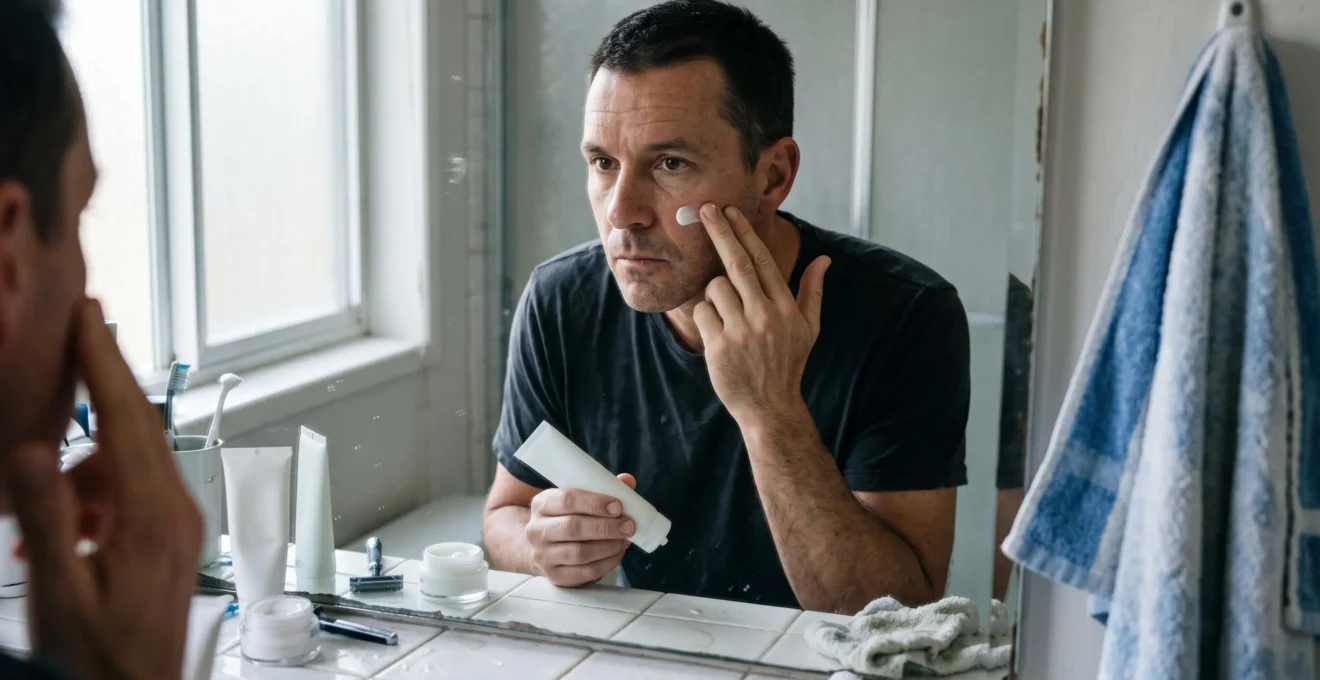
Fine lines around the eyes, uneven pigmentation and a rougher skin texture can prompt men to explore anti-aging skincare treatments. The difficult part is separating ingredients with a reasonable evidence base from expensive products that promise more than they can deliver.
For most men, the treatments worth considering begin with broad-spectrum sunscreen, moisturiser and, where appropriate, a gradually introduced retinoid. Vitamin C may provide an additional option for uneven tone or dullness. These products do different jobs, and none can permanently stop skin ageing or erase every established wrinkle.
A practical routine also needs to account for shaving, sensitivity, sun exposure and the time someone can realistically spend on skincare. Prescription treatments or professional assessment may be more useful than additional cosmetic products when concerns are persistent or medically significant.
The central question is therefore not how many anti-aging products to buy, but which measures address an identifiable concern without creating unnecessary irritation, expense or complexity.
Anti-aging skincare for men: the essentials
- Prioritise broad-spectrum SPF 30 or higher sunscreen and a suitable moisturiser before adding specialised treatments.
- Consider a retinoid for fine lines, uneven texture or tone, introducing it gradually and monitoring irritation.
- Judge products through consistent use and realistic expectations rather than instant effects, high concentrations or premium packaging.
- Why Can Daily Skincare Matter More Than Occasional Anti-Aging Treatments?
- How Can Men Add Anti-Aging Products Without Overloading Their Skincare Routine?
- Retinoid, Vitamin C or Moisturiser: Which Should Men Prioritise First?
- The Anti-Aging Skincare Mistake That Can Leave Skin Looking Worse
- When Should Men Seek Professional Advice for Age-Related Skin Concerns?
- How Can You Build a Three-Step Skincare Routine for Busy Mornings?
- Which Grooming Products Are Actually Worth Keeping in a Minimal Men’s Routine?
- How Can Men Build a Simple Skincare Routine They Will Actually Maintain?
Why Can Daily Skincare Matter More Than Occasional Anti-Aging Treatments?
Daily skincare matters because much visible skin ageing develops gradually, particularly through repeated ultraviolet exposure. Consistent sun protection helps prevent additional UV-related damage, while moisturiser supports the skin barrier and appropriate active ingredients may improve existing changes. Occasional treatments can offer cosmetic benefits, but they cannot replace the protective work of an everyday routine.
Ultraviolet radiation contributes to changes in collagen, pigmentation and skin elasticity over time. This cumulative process, known as photoageing, can appear as fine lines, uneven skin tone and roughness. Although genetics and natural ageing also play a role, UV exposure is an important modifiable influence.
Men who have spent years outdoors without regular sunscreen may notice these changes on frequently exposed areas such as the forehead, temples and around the eyes. However, the extent of damage varies with individual exposure, skin characteristics and protective habits. Male skin characteristics alone do not determine which treatments will work.
The American Academy of Dermatology’s guidance on selecting anti-aging skincare products recommends starting with sunscreen and moisturiser before investing in additional products. It advises broad-spectrum SPF 30 or higher and reapplication every two hours while outdoors, alongside protection appropriate to the conditions.
SPF 30+
The recommended minimum broad-spectrum sun protection factor in the American Academy of Dermatology’s general anti-aging skincare guidance. Sunscreen needs sufficient application and appropriate reapplication to provide its intended protection.
American Academy of Dermatology Association, product-selection guidance.
Compare this approach with purchasing an expensive facial, mask or treatment whenever fine lines become noticeable. Such treatments may temporarily improve hydration or appearance, but their results and costs vary. The available guidance does not establish that daily products outperform every professional treatment, nor does it provide a universal cost comparison.
For routine skincare, however, an inexpensive sunscreen used consistently can address an ongoing source of damage. A moisturiser provides regular barrier support, while a suitable retinoid may gradually improve existing texture and fine lines.
Expectations are important. Moisturiser can soften the appearance of fine lines relatively quickly, whereas other visible improvements generally require a longer period. Dermatology guidance indicates that many skincare products need at least six weeks and sometimes three months to show results.
Rather than treating each new wrinkle as a reason to purchase something else, establish reliable basics and assess whether a specific concern remains. That creates a useful foundation for introducing stronger ingredients without unnecessary experimentation.
How Can Men Add Anti-Aging Products Without Overloading Their Skincare Routine?
Men can add anti-aging products safely by introducing one new active ingredient at a time, keeping the existing routine stable and observing their skin over several weeks. This approach makes irritation easier to identify and avoids unnecessary overlap between treatments. A product should earn its place by addressing a specific concern rather than simply adding another step.
Begin with a gentle cleanser, moisturiser and sunscreen. Once these are comfortable to use consistently, select one targeted product. A retinoid may be appropriate for fine lines or uneven texture, while vitamin C could be considered for an additional tone-focused step.
Starting several serums, exfoliants and wrinkle creams together creates a practical problem: if redness, dryness or stinging appears, it becomes difficult to identify the cause. It also increases the likelihood that multiple products are performing similar jobs.
Timing and compatibility matter. A simple structure might place vitamin C before moisturiser and sunscreen in the morning, with a retinoid followed by moisturiser in the evening. These are examples of possible routines, not combinations that every skin type will tolerate.
Strong exfoliating acids and retinoids can both irritate the skin. Applying them together, especially when first starting treatment, may increase dryness or discomfort. Keeping them separate or omitting the exfoliant entirely is often a more conservative approach.
Evaluate a potential purchase against four questions:
- Does it identify a relevant active ingredient and explain its purpose?
- Does it provide enough formulation information to assess suitability, without suggesting that concentration alone determines performance?
- Are its claims realistic, rather than promising instant or permanent wrinkle removal?
- Does it address a concern that existing products do not already cover?
Transparent concentrations can be useful when comparing certain active products, but missing percentages alone do not prove that a formulation is ineffective. Ingredients, formulation, tolerability and evidence are more informative than a single number.
For men who shave regularly, product overload can be especially uncomfortable when active ingredients are applied to recently irritated skin. Persistent burning or flaking suggests that reducing the routine may be more useful than adding another corrective serum.
More products do not automatically produce better results. A sustainable routine should make each product’s role understandable and keep the skin comfortable enough for regular use.
Once a product proves tolerable and relevant, there may be no reason to introduce anything else. The next decision is choosing which ingredient deserves priority, not collecting every ingredient marketed for anti-aging.
Retinoid, Vitamin C or Moisturiser: Which Should Men Prioritise First?
Men should generally prioritise sunscreen and moisturiser before choosing a targeted anti-aging ingredient. Among treatments for fine lines and uneven texture, topical retinoids have a well-established role, although not every formulation works equally well. Vitamin C can be considered as a complementary antioxidant, particularly for uneven tone, rather than a substitute for sun protection.
A moisturiser supports the skin barrier and reduces moisture loss. By increasing hydration, it can also temporarily make fine lines look less pronounced. This immediate cosmetic improvement should not be confused with permanently correcting wrinkles or reversing deeper structural changes.
Retinoids are vitamin A derivatives used for concerns including uneven texture, pigmentation and fine lines. Retinol belongs to this family, while some other retinoids are prescription medicines. Their strength, tolerability and evidence vary by formulation and jurisdiction.
According to the American Academy of Dermatology’s guidance on retinoids and retinol, beginning with a less intensive formula and increasing use gradually can help reduce irritation. Moisturiser may also improve tolerability.
Vitamin C is often used in formulations intended to support antioxidant protection and improve the appearance of uneven pigmentation. Its performance depends on formulation and stability, and the supplied dermatology guidance does not establish that it should be prioritised over retinoids for wrinkle reduction. It remains an optional addition after the basics are working.
The following comparison helps connect each ingredient to a realistic skincare goal.
| Skin situation | First priority | Possible next step |
|---|---|---|
| Dry or easily irritated skin | Gentle cleansing, moisturiser and sunscreen | Consider a low-intensity retinoid cautiously when the skin is comfortable |
| Fine lines or rough texture | Sunscreen and moisturiser | Gradually introduce a suitable retinoid |
| Uneven tone after substantial sun exposure | Consistent sun protection | Consider a retinoid or discuss persistent pigmentation with a professional |
| Dullness with an otherwise stable routine | Maintain hydration and sunscreen | Consider a well-formulated vitamin C product |
Retinoid adjustment can involve dryness, peeling or temporary irritation. Beginning with a low-intensity product on alternate evenings, if tolerated and appropriate to its instructions, is a more measured strategy than immediate nightly use. A small amount is generally sufficient, but product-specific directions take precedence.
Temporary breakouts or irritation should not automatically be dismissed as normal purging. Persistent inflammation, significant discomfort or worsening skin warrants reassessment rather than forcing continued use.
Choose based on the concern that matters most and the product your skin can tolerate. The strongest available option is not necessarily the most useful one for a routine maintained over months.
The Anti-Aging Skincare Mistake That Can Leave Skin Looking Worse
One of the most counterproductive anti-aging skincare mistakes is using too many irritating active ingredients too aggressively. Combining strong retinoids, exfoliating acids and other intensive treatments can trigger redness, dryness, flaking and sensitivity. These reactions may make skin appear rougher or more uneven, even when the products are marketed as improvements for ageing skin.
The skin barrier helps retain moisture and protect against external irritants. When a routine repeatedly causes excessive irritation, the resulting discomfort and visible inflammation can undermine the original cosmetic goal.
Warning signs that a routine may be too harsh include:
- Stinging when applying a moisturiser that previously felt comfortable.
- Persistent tightness or flaking despite regular moisturising.
- Redness, discomfort or increased sensitivity after introducing new products.
- Worsening blotchiness or irritation around areas affected by shaving.
These symptoms are not a definitive diagnosis of barrier damage. Similar changes can occur with eczema, contact dermatitis, rosacea and other conditions. If symptoms persist or are severe, professional assessment is preferable to repeated experimentation.
When irritation develops after adding several products, temporarily simplify the routine. Stop the suspected irritating actives, use a mild cleanser and suitable moisturiser, and continue tolerable sun protection. If a sunscreen stings, seek advice about an alternative rather than abandoning UV protection altogether.
The American Academy of Dermatology’s recommendations for reducing wrinkles also caution against excessive product use because irritation can make signs of ageing more noticeable. Its practical advice favours realistic expectations and limiting unnecessary treatments.
“most products take at least six weeks to work. Sometimes it can take three months.”
Another common mistake is introducing a retinoid while neglecting daytime sun protection. Retinoids can increase sun sensitivity, and continued UV exposure can contribute to the pigmentation and visible damage the routine is intended to address.
Concentration and price can also be misleading shortcuts. A premium product is not automatically more effective, while an active that repeatedly irritates the skin is difficult to use consistently.
The objective is not to maximise the number or strength of treatments. It is to achieve worthwhile results without compromising comfort or ignoring symptoms that may require a different approach.
When Should Men Seek Professional Advice for Age-Related Skin Concerns?
Men should seek professional advice when a skin change is unexplained, persistent, suspicious or unresponsive to an appropriate basic routine. Mild dryness and early fine lines are often reasonable cosmetic concerns to manage at home. Changing moles, bleeding or non-healing lesions, and unexpected pigmentation changes require medical assessment rather than anti-aging products.
A dermatologist can distinguish cosmetic changes from conditions that may resemble ordinary ageing. Persistent redness, for example, may reflect rosacea or dermatitis rather than simply sensitive, mature skin. Acne scarring and certain pigmentation conditions may also require a more specific treatment strategy.
Medical assessment is particularly important for a mole that changes in size, shape or colour, or a lesion that becomes painful, itchy, inflamed, crusted or begins bleeding. The NHS guidance on melanoma symptoms also advises having new or unusual marks assessed when they persist for several weeks.
Size is not a reliable reassurance on its own. Although melanoma may have a diameter greater than 6 mm, it can also be smaller, particularly when identified early. Skin lesions cannot be reliably classified as harmless using a skincare product review or visual self-comparison alone.
Beyond identifying medical conditions, a dermatologist can assess whether a prescription retinoid, targeted treatment or procedure is appropriate. A professional can also help determine whether an existing cosmetic routine should be changed or simplified. Prescription access and referral arrangements differ across English-speaking countries.
Before a consultation, document the products currently used, their frequency and any recent changes. Record when the concern first appeared and whether it is improving, worsening or associated with itching, pain or bleeding. Dated photographs under reasonably similar lighting can help communicate visible changes, but should not delay assessment of a suspicious lesion.
The financial argument also deserves consideration. Buying multiple unsuitable products may create significant cumulative expense, while an appropriate consultation can reduce guesswork. This is a practical possibility rather than a quantified guarantee that professional care will always cost less.
A straightforward routine remains suitable for many mild concerns. Its limits matter just as much as its benefits, particularly when the next skincare decision involves an unexplained change rather than an established cosmetic goal.
How Can You Build a Three-Step Skincare Routine for Busy Mornings?
A practical three-step morning skincare routine consists of gentle cleansing, moisturising and applying broad-spectrum sunscreen. It focuses on keeping the skin comfortable and protected without requiring several specialised products. Men with little time can perform these steps in a short, repeatable sequence, adjusting cleansing or moisturising to their individual skin needs.
Begin with a gentle cleanser if needed to remove overnight oil, sweat or residue. Lukewarm water and a mild formulation are preferable to harsh scrubbing. Some people with dry or sensitive skin may find that a simple water rinse is enough in the morning.
Next, apply a moisturiser suited to the skin’s needs. A lightweight formulation may feel more comfortable on oily skin, while a richer product can be useful when dryness or shaving irritation is a recurring concern.
Finish with broad-spectrum 30 SPF or higher sunscreen, covering exposed skin according to the product instructions. Sunscreen is the final protective step in a basic skincare routine and needs reapplication as appropriate, particularly during extended outdoor exposure.
A moisturiser containing SPF can be a practical alternative when it provides adequate broad-spectrum protection and is applied in the required amount. However, a thin application may not achieve the labelled protection. A dedicated sunscreen may make adequate coverage easier for some users.
Retinoids are generally best reserved for the evening routine, following their product instructions and tolerability guidance. That keeps the morning focused on basic care and protection rather than introducing another potentially irritating step.
Set up a repeatable morning skincare routine
- Select a gentle cleanser. Check the product label and place one suitable option beside the bathroom sink.
- Choose a moisturiser. Identify a formulation your skin tolerates and keep it with the cleanser.
- Verify your sunscreen. Check that the label states broad-spectrum protection and SPF 30 or higher.
- Arrange the application order. Position cleanser, moisturiser and sunscreen in sequence so the routine requires no extra decisions.
- Record a consistency check. Mark completed mornings over the next week and note any dryness, stinging or skipped steps.
Convenience influences adherence. Keeping products visible near a toothbrush can connect skincare with an established habit. A small travel kit containing the same essentials also helps avoid replacing familiar products with unfamiliar alternatives during trips.
After a gym session, cleansing may be useful if sweat or residue has accumulated. Reapply moisturiser as needed and restore sunscreen protection before returning outdoors. The routine can remain simple without ignoring changes in activity or exposure.
A short routine is valuable because it is easier to repeat, including on busy days. Once those essentials become automatic, grooming products can be reviewed with the same preference for useful functions over additional purchases.
Which Grooming Products Are Actually Worth Keeping in a Minimal Men’s Routine?
A minimal men’s grooming routine should retain products that perform a clear, necessary function and remove those that simply duplicate another step. Sunscreen, a suitable cleanser and moisturiser form a sensible skincare foundation, while a retinoid may be worth adding for specific concerns. Beard products, fragrances, toners and additional serums are optional rather than universal essentials.
A product’s usefulness depends on the individual. Someone who shaves daily may benefit from a gentle shaving preparation and post-shave moisturiser, while someone with a beard may need different cleansing or conditioning products. Neither situation automatically requires a large collection.
The following framework helps distinguish essentials from products that may be situational.
| Product | Practical role | Decision |
|---|---|---|
| Broad-spectrum sunscreen | Helps protect exposed skin against UV damage | Keep as a daily protection priority |
| Gentle cleanser | Removes sweat, oil and accumulated residue | Keep if needed for comfortable cleansing |
| Moisturiser | Supports hydration and skin-barrier comfort | Keep, particularly when dryness occurs |
| Retinoid | May improve fine lines, texture or uneven tone | Consider if suitable and tolerated |
| Beard oil | Can condition facial hair or the underlying skin | Optional, based on actual need |
| Toner or additional serum | Varies considerably by formulation | Keep only if it adds a distinct benefit |
| Fragranced aftershave | Primarily scent or cosmetic experience | Optional; reconsider if it irritates skin |
Shaving technique can matter as much as the aftershave product. A clean, sharp blade and adequate lubrication may help reduce friction and discomfort. Men experiencing irritation can consider a gentle, fragrance-free moisturiser instead of an alcohol-heavy or strongly scented aftershave.
Buying decisions should reflect a defined concern. A product labelled specifically for men is not automatically more appropriate than an equivalent product without gendered branding. Check its intended function, relevant ingredients and suitability for your skin rather than relying on packaging or price.
Daily habits also influence appearance. Smoking and excessive UV exposure can contribute to visible skin ageing, while sleep and hydration may affect how rested or comfortable skin looks. These habits support overall wellbeing, but neither drinking extra water nor sleeping longer should be presented as a proven substitute for effective sun protection or targeted treatment.
Similarly, eliminating every optional grooming product is unnecessary. Fragrance or beard care can still be worthwhile for personal preference; they simply should not be mistaken for essential anti-aging treatments.
A smaller, useful collection makes it easier to track what works and replace only what is needed. The final challenge is designing the routine so it remains practical beyond the first few enthusiastic weeks.
Key takeaways for building a lasting routine
- Give each product one identifiable job: cleaning, hydrating, protecting or addressing a specific concern.
- Choose a level of treatment your skin can comfortably tolerate instead of pursuing maximum strength.
- Set a sensible review period and retain a basic fallback routine for days when time or energy is limited.
How Can Men Build a Simple Skincare Routine They Will Actually Maintain?
Men can build a maintainable skincare routine by choosing a few products with distinct functions, linking their use to existing daily habits and introducing targeted ingredients only when needed. The routine should remain manageable on busy days, with sunscreen and basic moisturising as priorities. Consistency and tolerance are more useful measures than the number of products involved.
Simple does not necessarily mean owning the absolute minimum number of products. It means removing duplication and making sure each essential function is covered. Cleansing removes accumulated residue when needed, moisturising supports comfort, sunscreen helps prevent UV-related damage, and an optional active targets an established concern.
For someone beginning from scratch, the following structure can be adapted without turning skincare into a demanding daily project.
| Time | Core routine | Optional adjustment |
|---|---|---|
| Morning | Gentle cleanse as needed, moisturiser, broad-spectrum SPF 30+ sunscreen | Consider vitamin C only after the basic routine is comfortable |
| Evening | Gentle cleanse and moisturiser | Add a suitable retinoid gradually if addressing fine lines or texture |
| Busy morning | Prioritise sunscreen and moisturising when needed | Skip non-essential serums rather than sun protection |
| During irritation | Use gentle, tolerable basic care and sun protection | Pause suspected irritating actives and seek advice if symptoms persist |
A fallback routine reduces the temptation to abandon skincare entirely after a missed evening or busy morning. For example, moisturiser and sunscreen can take priority when there is no time for a more elaborate sequence. Outdoors, sunscreen still needs to be used and reapplied appropriately.
The next principle is to avoid constant switching. Once a routine is tolerable, allow enough time to assess its effects. The American Academy of Dermatology’s guidance indicates that many skincare products need at least six weeks, with some requiring up to three months to show visible results. Retinoid results and individual responses can differ, so these are review guides rather than guaranteed deadlines.
Comparing photographs taken under similar conditions may help identify gradual changes in texture or tone. Also consider whether irritation has improved, whether the products are pleasant to use and whether the routine is sustainable within the available time and budget.
If a product produces persistent adverse effects, there is no benefit in completing an arbitrary trial period. Suitability and safety take precedence over a planned review date.
The treatments worth considering are therefore those with a meaningful role and a reasonable evidence base: consistent sunscreen, appropriate moisturising and carefully selected retinoids, with optional complementary products when an additional concern justifies them. Professional treatment remains appropriate when cosmetic skincare cannot adequately address the problem.
Start by checking the products already on the bathroom shelf. Keep those that perform a necessary job, establish reliable sunscreen use and select no more than one additional treatment to evaluate if a specific concern remains. A routine that fits ordinary life is a better starting point than one built around unrealistic promises.
At what age should men start using anti-aging skincare?
There is no universal age at which men need a dedicated anti-aging product. Broad-spectrum sunscreen is worthwhile before visible ageing appears because it helps prevent UV-related damage. Moisturiser can be introduced whenever needed for skin comfort, while targeted products such as retinoids are best considered according to individual concerns and tolerability.
Can men use the same anti-aging skincare products as women?
Yes. Sunscreens, moisturisers and many topical active ingredients are not inherently gender-specific. Product suitability depends more on skin type, sensitivity, formulation, shaving habits and the concern being treated than on whether the packaging is marketed to men or women.
How long should a man try a retinol product before assessing results?
Visible skincare improvements often require weeks to months. General dermatology guidance suggests that many products take at least six weeks, sometimes three months, although retinoid results vary by formulation and individual. Monitor tolerance throughout and do not continue through significant or persistent irritation simply to reach a review date.
Is an expensive anti-aging cream necessarily better than a basic moisturiser?
No. Price alone does not establish effectiveness. A basic moisturiser that suits the skin can provide useful hydration and temporarily reduce the appearance of fine lines. Additional active ingredients may have benefits for specific concerns, but those benefits should be assessed individually rather than inferred from premium branding.
Can skincare products completely remove deep wrinkles?
Over-the-counter skincare products should not be expected to completely remove established deep wrinkles. Moisturisers can temporarily improve the appearance of fine lines, while suitable retinoids may gradually improve some texture and wrinkle concerns. More pronounced changes may require professional assessment to discuss appropriate treatments, their limitations and potential risks.