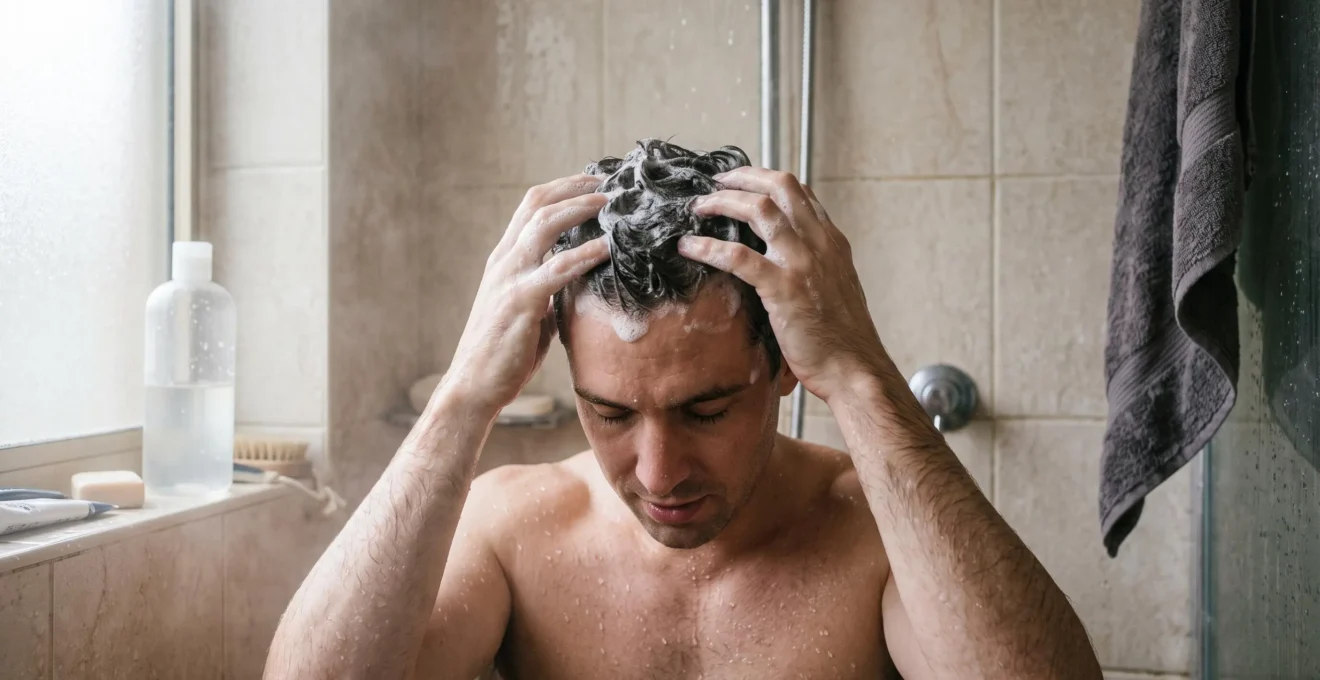
A comfortable scalp is the starting point for hair that looks clean, manageable and healthy. When the scalp feels itchy, produces excess oil or develops visible flakes, changing hairstyles or buying another grooming product may not address the underlying issue.
For most men dealing with occasional dryness, oiliness or mild discomfort, effective scalp care begins with a few straightforward habits: washing at a frequency that suits their needs, cleansing gently, rinsing thoroughly and choosing products that work with their hair texture.
The important distinction is between maintaining everyday scalp hygiene and treating a persistent skin condition. A sensible routine can help manage oil and residue, but it cannot diagnose or resolve every cause of itching or flaking.
Rather than adding more steps to the bathroom shelf, the aim is to make the existing ones work better. Small adjustments, observed consistently over several weeks, offer a more useful starting point than repeatedly changing products.
Scalp care essentials for men
- Focus shampooing on the scalp, use gentle fingertip movements and rinse thoroughly to remove accumulated oil and product residue.
- Choose washing frequency according to scalp oiliness, hair texture, activity and styling habits rather than following a universal schedule.
- Change one routine variable at a time, and seek professional advice when irritation persists, becomes severe or produces concerning symptoms.
- Why Can Scalp Problems Make Otherwise Healthy Hair Look Flat or Greasy?
- How Can You Care for Your Scalp Without Adding Extra Steps to Every Shower?
- Dry Scalp, Oily Scalp or Product Build-Up: How Can You Tell the Difference?
- The Scalp Care Mistake That Can Turn Mild Irritation Into a Persistent Problem
- When Should Persistent Scalp Irritation Be Checked by a Professional?
- How Can You Work Out How Often Your Hair Actually Needs Shampooing?
- Dry, Oily, Fine or Thick Hair: Which Products Should Men Prioritise?
- How Can Men Build a Hair Care Routine That Actually Matches Their Hair Type?
Why Can Scalp Problems Make Otherwise Healthy Hair Look Flat or Greasy?
Scalp problems can make otherwise healthy hair appear flat or greasy because oil, sweat, dead skin cells and styling-product residue accumulate around the roots. This build-up can weigh hair down, reduce its apparent volume and make it look less freshly washed. The appearance of the hair does not necessarily indicate damage to the strands themselves.
The scalp naturally produces sebum, an oil that helps moisturise and protect the skin. Sebum is not something to eliminate completely. Problems arise when excess oil combines with other substances and accumulates faster than it is removed.
According to the CDC guidance on hair and scalp hygiene, oil, dead skin, sweat, dirt and hair-product residue can collect on the scalp. This accumulation can contribute to greasy-looking hair and unpleasant odour.
Hair near the roots is particularly vulnerable to this effect. Even when the lengths feel soft and relatively clean, the roots may become clumped or heavy, reducing the separation between individual strands that normally gives hair a fuller appearance.
A useful first check is to compare the roots with the lengths:
- Greasy roots with relatively clean lengths: scalp oil or residue may be contributing more to the appearance than the hair’s overall condition.
- Greasy roots and lengths: natural oil distribution, heavy conditioning products or styling residue may be involved.
- Flat hair without noticeable oil: fine hair texture, haircut, humidity or styling technique may be more relevant than scalp hygiene.
Discomfort can make the situation more noticeable. Men who experience itching or tightness may touch, rub or rearrange their hair repeatedly. This can spread existing oil or styling residue and may aggravate already sensitive skin.
However, flaking and itching do not automatically mean the scalp is dirty. Dandruff and inflammatory conditions can occur despite regular washing.
The most useful next step is usually to improve cleansing technique before introducing a collection of new products.
How Can You Care for Your Scalp Without Adding Extra Steps to Every Shower?
You can improve scalp care without extending every shower by adjusting how you already wash your hair. Use comfortably warm rather than very hot water, distribute shampoo across the scalp with your fingertips, and rinse until the product is removed. These simple adjustments focus on effective cleansing while avoiding unnecessary friction and irritation.
Men often concentrate on which shampoo to buy while overlooking how it is applied. Shampooing primarily cleans the scalp, where sebum, sweat and residue accumulate. The hair lengths generally need less direct scrubbing.
A practical approach is to work shampoo gently across the scalp for approximately 30–60 seconds using the pads of the fingers. This is a technique suggestion, not a clinically established minimum massage duration.
Use fingertips rather than fingernails. Vigorous scratching is unnecessary for effective cleansing and can aggravate sensitive skin. Aim to move the fingertips over different areas of the scalp without applying uncomfortable pressure.
Three common habits are worth reviewing:
- Very hot water: it can worsen dryness or discomfort in susceptible skin. Lukewarm water is a more comfortable default.
- Aggressive scrubbing: applying greater force does not necessarily improve cleaning and may irritate the skin.
- Incomplete rinsing: residual shampoo or conditioning products can leave hair feeling coated and make it harder to judge whether the chosen formula suits the scalp.
Combined shampoo-conditioner products offer convenience, particularly after exercise or during rushed mornings. Their performance depends on the formulation and the individual’s hair type. A 2-in-1 product does not necessarily leave more residue than separate products, although some conditioning formulas may feel heavy on fine or oily hair.
If using a combined product, concentrate application on the scalp as directed and rinse thoroughly. When using a separate conditioner, applying it mainly to the mid-lengths and ends can help avoid unnecessary heaviness at the roots.
There is no need to add a dedicated scalp massage session outside the shower. A brief, gentle fingertip massage while shampooing provides a repeatable maintenance habit, even though specific scalp-health benefits from a particular massage duration remain unproven.
If careful washing still leaves the scalp tight, greasy or uncomfortable, the next step is to distinguish which problem is most likely occurring rather than automatically washing harder.
Dry Scalp, Oily Scalp or Product Build-Up: How Can You Tell the Difference?
Dryness, excess oil and product build-up can produce overlapping symptoms, but the timing and feel of those symptoms provide useful clues. Tightness after washing may suggest dryness, rapid root greasiness can indicate an oily scalp, and a coated sensation after repeated styling-product use may suggest residue. These patterns help guide routine changes, but they cannot establish a medical diagnosis.
Pay attention to what happens immediately after washing, later that day and before the next shampoo. This timeline is often more informative than looking at a few flakes in isolation.
| What to observe | Possible explanation | Reasonable first adjustment |
|---|---|---|
| Tightness, roughness or fine flakes shortly after washing | Dryness or irritation, possibly influenced by cleansing products or water temperature | Try gentler cleansing and lukewarm water |
| Shiny, greasy roots soon after washing | Higher sebum production or a washing interval that does not suit current needs | Review shampoo frequency and formula |
| Heavy, coated roots after repeated pomade, wax or dry-shampoo use | Possible styling-product accumulation | Check cleansing effectiveness and product quantity |
| Persistent itching, redness or recurring flakes | Possible dandruff, irritation or another skin condition | Consider appropriate treatment or professional assessment |
Flake appearance can offer additional context, but should not be treated as a definitive test. Small white flakes may occur with dryness or dandruff, while greasy-looking scales can accompany other scalp conditions. Colour and size alone cannot reliably distinguish them.
The relationship between dryness and oiliness is also easy to misunderstand. Harsh washing can make the scalp feel dry while natural sebum production continues. Although this combination may feel like the scalp is becoming oilier in response, evidence does not establish that washing too frequently necessarily triggers compensatory oil production.
For mild symptoms without concerning signs, a simple observation experiment can help. Use a gentle shampoo suited to your hair type, avoid introducing additional styling products and keep other habits consistent for one to two weeks.
Record whether tightness, greasy roots or a coated sensation changes. This is a way to identify routine-related patterns, not a diagnostic test for dandruff, eczema or other medical conditions.
If the scalp becomes more irritated, discontinue the suspected product rather than waiting to complete the observation period.
Once a likely pattern emerges, avoid correcting it with aggressive washing. That response can introduce a second problem without resolving the original one.
The Scalp Care Mistake That Can Turn Mild Irritation Into a Persistent Problem
A common scalp care mistake is responding to itching or flakes by scrubbing harder, increasing shampoo frequency unnecessarily or trying several strong products simultaneously. These reactions can irritate an already sensitive scalp, making it harder to identify the original problem. Gentle cleansing and controlled changes are usually a more sensible first response to mild, uncomplicated discomfort.
Itching creates an understandable temptation to scratch. Although scratching can provide temporary relief, repeated friction may damage the skin surface, intensify irritation and lead to further itching.
This produces a practical feedback loop: discomfort prompts scratching, scratching aggravates the affected area, and the resulting irritation makes the urge more difficult to ignore.
Excessive washing can introduce a similar problem when harsh cleansing products are involved. The scalp needs effective hygiene, but repeated exposure to irritating formulas or forceful rubbing may make dryness and sensitivity worse.
That does not mean frequent washing is inherently harmful. Men with oily scalps or fine, straight hair may benefit from washing more often. The problem is inappropriate cleansing intensity, not a particular number of showers.
Another frequent error is introducing an anti-dandruff shampoo, exfoliating scalp scrub and new styling product during the same week. If itching then improves or worsens, there is no reliable way to know which change mattered.
For mild irritation, use a more controlled adjustment process:
- Stop or reduce any newly introduced product that appears to cause discomfort.
- Use a gentle shampoo appropriate for your hair and scalp needs.
- Avoid vigorous scrubbing, scratching and unnecessary scalp exfoliation.
- Make one additional change only after observing the first adjustment.
- Reassess symptoms over a reasonable period rather than judging a routine after one wash.
Medicated shampoos are different from ordinary cleansing products. Some require a specific contact time or frequency to work properly. Their directions should be followed rather than diluted into a generic advice to wash less.
Persistent flakes may reflect dandruff or another skin condition rather than a simple cleansing error. In those cases, reducing irritation alone may not address the underlying cause.
When discomfort continues despite sensible adjustments, the decision shifts from optimising grooming habits to determining whether professional assessment is needed.
When Should Persistent Scalp Irritation Be Checked by a Professional?
Persistent scalp irritation should be assessed by a healthcare professional when symptoms do not improve with appropriate care, become severe or involve visible inflammation. Marked redness, swelling, pain, bleeding, patchy hair loss or worsening itching deserve particular attention. These symptoms may indicate a condition that requires treatment beyond ordinary shampoo and grooming adjustments.
Not all scalp flakes are caused by simple dryness. Dandruff, seborrhoeic dermatitis, eczema, contact dermatitis, psoriasis and some fungal infections can produce symptoms that overlap.
Distinguishing these conditions matters because their treatments differ. A shampoo or routine suited to an oily scalp may offer little relief from an inflammatory disorder or fungal infection.
The NHS guidance on dandruff symptoms and treatment recommends medical advice when dandruff remains after at least four weeks of anti-dandruff shampoo use, or when itching is substantial, symptoms are severe, or the scalp is red or swollen.
That four-week period concerns a trial of anti-dandruff shampoo. It is not a reason to delay care when symptoms are severe or concerning.
Seek assessment sooner if you notice:
- Significant pain, tenderness or swelling.
- Bleeding, broken skin or possible signs of infection.
- Sudden or patchy hair thinning, especially alongside scaling or inflammation.
- Rapidly spreading irritation or symptoms that interfere with sleep.
- A pronounced reaction following a new hair product.
A general practitioner or dermatologist can examine the scalp, review product exposure and consider whether targeted treatment or further investigation is necessary.
Depending on the findings, management may involve a medicated shampoo, a prescription treatment or investigation of a suspected infection. No single treatment is appropriate for every scalp complaint.
Professional assessment is a routine part of skin care, not an indication that a serious condition is necessarily present. It can also prevent months of trial and error with products that are not addressing the actual cause.
Once concerning causes have been addressed or excluded, everyday shampoo frequency becomes one of the most useful factors to personalise.
How Can You Work Out How Often Your Hair Actually Needs Shampooing?
The best shampooing frequency is the interval that keeps your scalp comfortable and your hair manageable without causing unnecessary dryness. Rather than following a fixed daily or weekly rule, observe how quickly your roots become oily, how your scalp feels and how your activities affect cleanliness. Adjust the schedule according to those patterns and your hair texture.
Two men with similar haircuts may need very different washing routines. Sebum production, natural hair texture, exercise, climate and styling-product use all affect how quickly the scalp and hair feel ready for another wash.
Dermatological advice also distinguishes between hair textures. The American Academy of Dermatology guidance on dandruff treatment explains that fine or naturally straight hair and oily scalps may require more frequent washing, while coarse, curly or coily hair generally calls for a different approach.
A practical starting method is to observe the scalp over seven days without deliberately extending the washing interval to the point of discomfort.
At the end of each day, note root greasiness, visible flatness, tightness, flakes and any itching. Also record exercise, heavy sweating and styling-product use.
Patterns are more useful than isolated observations. If the scalp repeatedly becomes oily and uncomfortable before the next scheduled wash, the interval may be too long or the cleansing method inadequate. If washing consistently leaves the scalp tight or the hair unusually rough, the product or frequency may need adjustment.
Find your scalp-friendly washing interval in five actions
- Record your current routine: write down the shampoo used and the days you normally wash, producing a simple seven-day baseline.
- Check the roots each evening: mark oiliness and flatness as low, moderate or high to create a daily appearance record.
- Record scalp comfort: note any itching, tightness or flakes so the log includes skin symptoms rather than appearance alone.
- Add relevant context: mark exercise, sweating and styling-product use beside each day’s observations.
- Choose one adjustment: identify a possible washing interval to test and compare comfort and appearance over the following week.
Daily shampooing is not automatically excessive, and skipping several days is not automatically beneficial. Both approaches can be appropriate under different conditions.
Frequency can also change over time. A new exercise schedule, warmer weather, a different haircut or heavier styling products may alter how often cleansing is needed.
Once the interval feels appropriate, choosing products that complement the scalp and hair type becomes much simpler.
Dry, Oily, Fine or Thick Hair: Which Products Should Men Prioritise?
Men should prioritise hair products according to both scalp condition and hair characteristics. Dry hair generally benefits from gentler cleansing and conditioning, oily roots require effective cleaning without unnecessary heaviness, fine hair often responds better to lightweight products, and thick or coarse hair may need more conditioning. The right match matters more than price, packaging or the number of products used.
Start by separating two questions: what does the scalp need, and what do the hair strands need? A man can have an oily scalp and dry ends, so choosing every product around a single label may create an unnecessary compromise.
| Hair characteristic | Prioritise | Watch out for |
|---|---|---|
| Dry hair | Gentle cleansing and conditioning that improves manageability | Repeated harsh cleansing and products that leave the hair rough |
| Oily roots | Effective scalp cleansing and lighter formulas where appropriate | Heavy products applied directly at the roots |
| Fine hair | Lightweight conditioners and styling products that do not noticeably weigh hair down | Excessive quantities of rich creams, waxes or oils |
| Thick or coarse hair | Sufficient conditioning, moisture management and suitable styling control | Products that leave lengths tangled, rough or difficult to manage |
Ingredient lists can provide clues, but the complete formulation matters more than one ingredient in isolation. Oils and butters are not automatically unsuitable for fine hair, nor are they automatically beneficial for every person with thick hair.
Instead, read the label for the product’s intended use, directions and formulation claims. Terms such as lightweight, rich conditioning or clarifying can help narrow options, but the result on your hair is the better practical test.
Clarifying shampoos deserve particular care. They can be useful when substantial styling-product residue is present, but frequent use may be uncomfortable for someone prone to dryness. They are not a universal replacement for regular shampoo.
Styling habits are another important factor. Pomades, waxes, gels and dry shampoos can accumulate when repeatedly applied without sufficient cleansing. Product choice should therefore account for how easily a formula washes out, not only how effectively it holds a hairstyle.
For men using substantial amounts of styling products, occasional clarifying may be helpful. The frequency should reflect actual residue and scalp tolerance rather than becoming another automatic step.
A simple product combination is often sufficient: a shampoo matched to scalp needs, conditioner where the lengths require it and a styling product that delivers the desired finish without excessive build-up.
A premium shampoo chosen for the wrong hair characteristics is not necessarily better than a basic formula that cleans comfortably and leaves the hair manageable.
With a suitable product selection and washing interval, the remaining task is to assemble those decisions into a routine that is easy to maintain.
Key takeaways before building your routine
- Separate scalp needs from hair-length needs: they do not always require the same type of product.
- Keep products that solve an observable problem and reconsider those that consistently leave residue, dryness or discomfort.
- Use a stable baseline to evaluate changes; a routine that is constantly replaced cannot reveal what works.
How Can Men Build a Hair Care Routine That Actually Matches Their Hair Type?
Men can build a suitable hair care routine by identifying their scalp condition and hair texture, choosing an appropriate washing interval and limiting products to those with a clear purpose. A basic routine of cleansing, conditioning when needed and styling is enough for many people. Occasional deeper cleansing should be considered only when product accumulation makes it useful.
The strongest routine is not necessarily the most elaborate one. It is the routine that can be repeated comfortably while keeping both the scalp and hair in a satisfactory condition.
Start with the scalp. Determine whether the main everyday concern is oiliness, dryness, mild flaking or product residue. If symptoms are persistent, severe or unexplained, do not assume they are simply a grooming issue.
Next, account for hair texture. Fine, straight hair may become visibly oily or flat sooner than coarse, curly or coily hair. Dry lengths may need conditioner even when the scalp itself produces plenty of oil.
A workable routine follows four practical stages:
- Wash when needed. Use a shampoo suited to your scalp and hair, concentrate cleansing on the roots and rinse thoroughly.
- Condition selectively. Apply an appropriate conditioner mainly to the hair lengths or ends when they need additional manageability or softness.
- Style with restraint. Choose a product suited to the desired finish and hair texture, using only the amount necessary.
- Clarify occasionally if justified. Consider deeper cleansing when substantial styling-product accumulation is evident, while avoiding unnecessary treatment of a dry or irritated scalp.
Not every stage is required at every wash. Someone with very short hair may need little conditioner, while someone with longer or coarse hair may find conditioning essential.
The routine should also respond to specific warning signs rather than expand indiscriminately.
If roots remain greasy soon after washing, review whether shampoo is reaching the scalp effectively, whether rinsing is complete and whether styling products are leaving residue. If the scalp feels tight or the hair becomes rough, consider gentler cleansing, cooler water or changes to frequency.
Persistent itching should not trigger an endless sequence of new shampoos. It may require targeted dandruff care or professional assessment, particularly when accompanied by redness, swelling or hair loss.
Evaluate changes over several washes and, where appropriate, a few weeks. Comfort and appearance are more meaningful indicators than the number of products on the bathroom shelf. A routine that works should be straightforward to repeat, not dependent on constant experimentation.
For the next week, keep your usual products consistent, pay attention to how the scalp feels between washes and make one clearly defined adjustment if needed. The goal is a comfortable scalp and manageable hair with as little unnecessary effort as possible.
Can men use the same shampoo throughout the year?
Yes, provided the shampoo continues to cleanse comfortably and suits the hair. Seasonal changes in sweating, climate or scalp dryness may justify adjustments, but there is no need to replace a product that consistently works well.
Is dandruff a sign of poor hygiene?
No. Dandruff is not caused by poor hygiene, although flakes may become more noticeable when hair is washed less regularly. Dandruff can have several contributing factors, and persistent cases may require appropriate anti-dandruff treatment rather than more aggressive cleansing.
Should you use conditioner if you have an oily scalp?
An oily scalp does not automatically mean the hair lengths have adequate conditioning. If the ends feel dry or difficult to manage, use a suitable lightweight conditioner primarily on those areas rather than applying a heavy formula directly to the roots.
Does a scalp massage make hair grow faster?
Gentle fingertip movements can help distribute shampoo during cleansing, but the evidence presented here does not establish that a brief scalp massage accelerates hair growth. It should be considered a cleansing technique rather than a proven treatment for thinning hair.
Do short hairstyles eliminate the need for scalp care?
No. Short hair may require less conditioning or styling, but the scalp still produces sebum and can accumulate sweat, dead skin cells and product residue. Regular, appropriate cleansing remains relevant regardless of hair length.