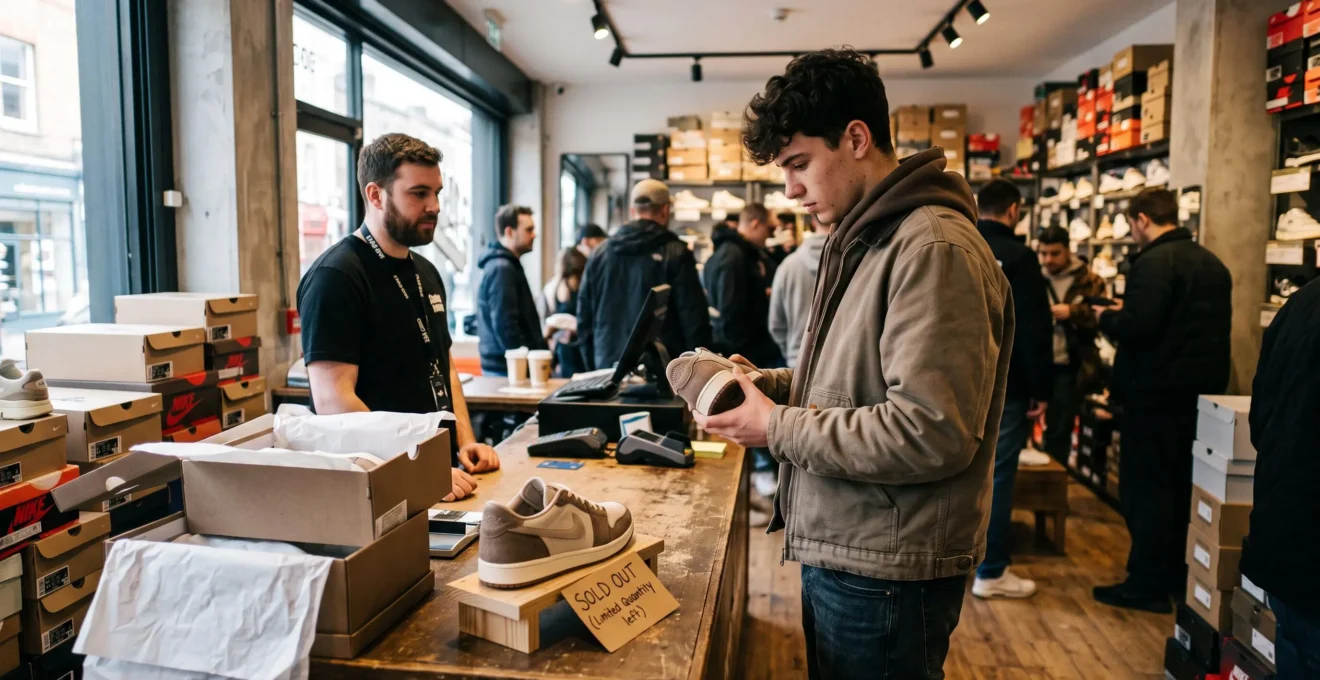
A limited-edition sneaker can absolutely be worth buying if the intention is to wear it. Scarcity does not automatically make a shoe more comfortable, durable, versatile or valuable to its owner. The real question is whether its design, construction and cultural relevance justify the price independently of its release status. That distinction matters because the economics of collecting and the practicalities of wearing often pull in opposite directions. A pristine pair may retain a stronger resale position, while regular use can create creasing, sole wear and visible changes that reduce its appeal to collectors. However, keeping a shoe unworn is not necessarily a better long-term decision either. Materials age, market demand changes and personal style evolves. For sneaker enthusiasts, the most sensible purchase is often the one that delivers genuine enjoyment without relying on an uncertain resale premium. Evaluating a release therefore requires looking beyond launch-day attention and considering how the sneaker will perform in an actual wardrobe, over multiple seasons and at a price that makes sense.
What Makes a Limited-Edition Sneaker Worth Buying?
- Judge the silhouette, materials, comfort and styling potential before considering scarcity or resale attention.
- Separate the shoe’s practical value from the additional amount charged for exclusivity, and establish a personal spending limit.
- Choose deliberately between wearing, keeping and reselling: each option involves different financial, practical and emotional trade-offs.
- Why Do Limited Sneaker Releases Feel More Desirable Before You Even See Them in Person?
- How Can You Judge a Limited-Edition Sneaker Before Paying Above Retail Price?
- Wear, Keep or Resell: What Should You Do With a Limited Sneaker Release?
- The Release-Day Mistake That Can Make You Overpay for Limited Sneakers
- When Is the Best Time to Buy a Limited Sneaker After Missing Retail?
- How Can You Read the Cultural References Behind a Streetwear Collection?
- Minimalist or Streetwear-Led: Which Urban Style Works Better for Daily Life?
- How Can Men Build an Urban Aesthetic That Works From Commute to Evening?
Why Do Limited Sneaker Releases Feel More Desirable Before You Even See Them in Person?
Limited sneaker releases can feel desirable before buyers examine the actual shoes because scarcity creates anticipation and perceived exclusivity. Restricted availability, release countdowns and waiting lists encourage people to treat access as part of the product’s value. However, that emotional response does not establish whether the sneaker deserves its price, suits an everyday wardrobe or offers lasting appeal.
The psychology behind limited drops is closely connected to perceived scarcity. When consumers believe a product may become unavailable, they can assign greater importance to securing it. A 2022 meta-analysis published in the *Journal of Retailing* examined 416 effect sizes across 131 studies and found that scarcity signals can strengthen purchase intentions. The researchers also distinguish between different forms of scarcity, including limited supply, demand-related scarcity and time restrictions. This provides useful context for sneaker releases, although the research covers multiple product categories rather than sneakers exclusively.
Brands and retailers can reinforce this perception through several mechanisms:
- Countdown timers: A visible deadline makes the release feel like an event that requires immediate attention.
- Limited quantities: Restricted availability creates the impression that missing the launch means losing access permanently.
- Raffles and waiting lists: The process of trying to secure a pair can become part of its perceived desirability.
- Social visibility: Release announcements, outfit posts and early purchase reactions repeatedly expose audiences to the same product.
These mechanisms can make a sneaker feel culturally important before its construction, fit or finish has been properly assessed. The distinction between **collectible value and wearable value** is therefore essential. A collector may appreciate a pristine pair because of its condition and limited availability. Someone intending to wear it may value comfort, versatility and the ability to use it regularly instead.
Social media can further blur the difference. When feeds repeatedly feature the same release, it becomes easy to mistake visibility for widespread agreement about quality. Yet attention does not reveal how many people actually intend to wear the shoe, how it performs on foot or whether demand will remain strong.
A useful first filter is surprisingly simple: would the silhouette still interest you if it were available as a general release at its normal retail price?
If the answer is no, the purchase may be driven primarily by exclusivity rather than design. That does not make collecting illegitimate, but it changes the justification for spending more.
131 studies · 416 effect sizes
A 2022 meta-analysis examined how product scarcity affects purchase intentions across different products and contexts. Its findings support the influence of scarcity signals, not a guaranteed increase in the resale value of limited sneakers.
Meta-analysis of product scarcity effects on consumer purchase intentions
The practical takeaway is to separate the excitement of obtaining a pair from the satisfaction of owning and wearing it. Once that distinction is clear, evaluating the actual product becomes much easier.
The next step is to inspect the sneaker as a physical product, because a compelling release story cannot compensate for uncomfortable construction, fragile finishes or a colorway that rarely works with existing clothes.
How Can You Judge a Limited-Edition Sneaker Before Paying Above Retail Price?
Before paying above retail, assess a limited-edition sneaker as though it were an ordinary shoe. Examine its materials, construction, fit, colorway and compatibility with your wardrobe, then compare its price with a similar general-release version. The additional amount should reflect something you genuinely value, not simply the difficulty of securing the release.
A practical assessment starts with materials. Leather can develop creases and a worn appearance through regular use, while suede and nubuck require more careful cleaning and protection. Some limited editions also introduce delicate coatings, unusual finishes or mixed materials that may look distinctive in promotional photographs but prove less forgiving during everyday wear.
Midsole construction deserves equal attention. The type of cushioning, overall flexibility and stability can influence whether the sneaker remains comfortable over a full day. A visually attractive release is not necessarily a good walking shoe, particularly if the underlying silhouette has a history of fit or comfort issues.
Colorway versatility is another important consideration. A pair designed around several contrasting colors, unusual textures or prominent decorative details may be harder to integrate into a daily wardrobe than a more neutral version of the same model.
Research should also extend beyond the release announcement. Look for:
- Reviews from regular wearers who discuss comfort after repeated use rather than only first impressions.
- On-foot photographs that show the proportions and materials under natural lighting.
- Feedback about previous general-release versions of the same silhouette.
- Longer-term observations of comparable limited editions, especially concerning creasing, outsole wear and finish durability.
- Available sizing information, including whether the model fits consistently with your usual size.
Previous versions are particularly useful because they help distinguish a genuinely improved construction from a new colorway attached to an established silhouette.
3,770 releases · 1,729,436 transactions
SneakerPulse‘s analysis of StockX transactions found that 48.7% of the releases studied resold above retail during their first 90 days. Only 34.4% achieved a premium sufficient to cover the seller fees estimated in the study. The sample includes different sneaker categories, not exclusively limited editions.
SneakerPulse analysis of 3,770 sneaker releases and resale prices
There are also hidden ownership costs. Delicate materials may require specialist cleaning products, replacement laces or insoles can add expense, and protective treatments may be unsuitable for certain finishes. A shoe that demands considerable maintenance is not automatically unsuitable for everyday use, but that maintenance should be part of the purchase decision.
The financial comparison can be reduced to two components:
- Shoe value: What would a comparable general-release version of the same silhouette cost?
- Scarcity premium: How much extra are you paying because this particular edition is harder to obtain?
For example, if a hypothetical general-release version costs $150 and a limited colorway costs $230, the additional $80 is the scarcity premium. This illustrative difference is not a market quotation or an estimate of resale value. It simply makes the buyer’s decision more transparent.
The premium may be justified by better materials, a meaningful collaboration, an especially desirable design or genuine personal attachment. If the only justification is that other people want the same pair, the purchase deserves more scrutiny.
Your Five-Step Limited Sneaker Buying Checklist
- Inspect the construction and materials. Deliverable: a written list of the main materials and any fragile finishes.
- Check real-world comfort feedback. Deliverable: two or more relevant on-foot reviews or wear observations.
- Compare the colorway with your existing clothes. Deliverable: three outfits that would work with the sneaker.
- Research the silhouette’s previous versions. Deliverable: a short comparison covering fit, comfort and durability.
- Calculate the scarcity premium against a comparable general release. Deliverable: a maximum purchase price that you are comfortable paying.
A limited sneaker becomes easier to justify when the product itself passes these tests. The more difficult question is what to do once the purchase has been made, especially when wearing it could affect its collector appeal.
Once the physical and financial assessment is complete, the decision becomes a personal one: whether the pair belongs in everyday rotation, deserves occasional use or should be sold while its condition remains intact.
Wear, Keep or Resell: What Should You Do With a Limited Sneaker Release?
The decision to wear, keep or resell a limited sneaker should depend on intended use, emotional attachment and tolerance for depreciation. Wearing maximizes practical enjoyment but changes the shoe’s condition. Keeping it preserves its unworn status for now, while reselling converts ownership into cash without relying on future market demand.
Each route serves a different purpose, and none is automatically the most intelligent choice.
| Decision | Best suited to | Main trade-off |
|---|---|---|
| Wear | Buyers who genuinely enjoy the design and want regular use. | Creasing, outsole wear and possible loss of resale premium. |
| Keep | Collectors with strong emotional attachment or a clear future ownership plan. | Storage requirements, material aging and uncertain future demand. |
| Resell | Owners who prefer the financial return to continued ownership. | Transaction costs, market fluctuations and the possibility of receiving less than expected. |
The first question should be how often the sneaker will realistically be worn. A pair that fits naturally into weekly outfits has a stronger practical case than one reserved indefinitely for an imaginary special occasion.
Emotional attachment also matters. A release connected to a particular artist, sporting moment or personal memory may be worth keeping even when its resale price is attractive. That is a legitimate reason to retain a sneaker, provided the owner understands the financial trade-off.
The less obvious option is **partial wear**. A limited pair does not have to become either a daily beater or a permanently sealed collectible. It can be reserved for occasions with lower exposure to rain, dirt and heavy physical activity, then rotated with more replaceable everyday trainers.
This approach does not preserve deadstock condition, but it can balance enjoyment and care. The important distinction is between protecting a shoe and refusing to use it indefinitely.
There is also a reason not to assume that keeping a sneaker unworn guarantees its long-term preservation. Some footwear materials deteriorate through aging even without regular use. A 2022 scientific study published in *npj Materials Degradation* examined naturally aged polyester urethane materials in shoe soles. The researchers documented degradation phenomena, including cracking and loss of material integrity, in the specific footwear materials they studied.
The findings should not be generalized to every modern sneaker. Different polyurethane formulations, sole constructions and storage environments behave differently. Nevertheless, the research illustrates why an unworn pair should not automatically be treated as a permanently preserved asset.
What Long-Term Shoe Storage Can Reveal About Material Aging
A scientific investigation published in 2022 examined footwear with polyester urethane soles that had been preserved in a museum environment for approximately three decades.
The study identified natural material degradation, including cracking, crumbling and loss of integrity. It demonstrates that certain polyurethane materials can deteriorate during storage, but does not establish a universal shelf life for sneakers or prove that wearing is always a better preservation strategy.
Reselling also requires realistic expectations. Market premiums fluctuate, and a pair that initially attracts strong attention may settle closer to retail once speculative demand cools. The analysis of StockX transactions discussed earlier found that fewer than half of the releases studied achieved a resale price above retail during their first 90 days. A profitable exit should never be assumed.
Keeping a pair makes the most sense when there is a genuine collection strategy: appropriate storage, a reason to retain it and an understanding of its condition over time. Without that plan, the choice is usually more straightforward: wear something you enjoy or sell it while you still prefer the financial outcome.
That decision should ideally happen before release day. Otherwise, the pressure to secure a hyped pair can turn a considered purchase into an expensive reaction.
The Release-Day Mistake That Can Make You Overpay for Limited Sneakers
The most expensive release-day mistake is assuming that missing retail means the sneaker must be purchased immediately on the aftermarket. That assumption creates artificial urgency, particularly when resale listings appear within hours of a launch. Waiting allows buyers to assess actual demand, compare available sizes and avoid paying a speculative premium before the market has had time to settle.
Release day combines several pressures. A raffle result, a sold-out notification or a queue that suddenly closes can make the purchase feel like a last opportunity. Resale marketplaces then offer an immediate alternative, often at prices influenced by early excitement rather than established demand.
However, the first aftermarket listings are not necessarily representative of the price at which a sneaker will consistently sell. Sellers may initially ask ambitious amounts, while buyers compete for access before meaningful transaction patterns emerge.
This distinction between asking prices and completed sales is important. A listing demonstrates what a seller hopes to receive. A completed transaction provides stronger evidence of what another buyer was actually willing to pay at that moment.
The risk is particularly relevant when someone intends to wear the sneaker. Paying a large premium immediately after a missed raffle can leave little room for value if the market cools or the shoe becomes more widely available.
A better approach begins with a maximum budget established before the release. This amount should include:
- The original retail price.
- Any acceptable premium for the limited colorway or collaboration.
- Potential marketplace and payment-related charges.
- Shipping costs and any other purchase expenses.
- The realistic amount you are willing to spend given the shoe’s expected use.
Consider a hypothetical buyer who would comfortably pay $180 for a sneaker and has decided that $40 is the maximum additional amount justified by its design and scarcity. The maximum acceptable purchase price is therefore $220 before any additional charges. If aftermarket listings exceed that limit, walking away is a rational decision rather than a missed opportunity.
Release-day urgency also creates practical risks. Buyers can choose the wrong size because they fear losing access, purchase a colorway they would normally reject or overlook seller verification. A questionable transaction can quickly turn an expensive sneaker purchase into a dispute involving authenticity, payment or delivery.
Patience is not a guarantee of a lower price. Some highly sought-after releases maintain strong demand, and particular sizes may become harder to find. But paying an immediate premium without evaluating alternatives is rarely a reliable way to protect value.
Once the immediate pressure has passed, the next question is when the aftermarket might offer a more reasonable opportunity and how to recognize the difference between temporary excitement and sustained demand.
When Is the Best Time to Buy a Limited Sneaker After Missing Retail?
There is no universal best time to buy a limited sneaker after missing retail. The most sensible purchase window depends on the model, available sizes, restock prospects and how quickly demand changes. For many releases, waiting beyond the initial launch period provides a clearer view of actual transaction prices, but a particular sneaker may maintain its premium.
A useful way to approach the aftermarket is to think in three broad stages.
- Initial release period: Early demand, speculation and competition for available pairs can influence asking prices. Listings may reflect sellers’ expectations rather than a stable market level.
- Cooling-off period: As more transactions occur, buyers gain a better indication of completed sale prices. Some releases become more accessible if initial excitement fades.
- Later market adjustment: Restocks, international availability, new colorways and changing consumer attention can alter demand. A model may become easier to find, although some editions retain their scarcity premium.
Historical transaction data can help explain why waiting is worth considering. SneakerPulse’s analysis of 1,287 releases tracked resale prices on GOAT and StockX after launch.
Across the analyzed releases, the median resale price was 10.0% below the launch-week level by week four.
The same analysis reported median declines of 14.1% by week 12 and 18.7% by week 26 relative to launch week. These results suggest that initial pricing can be a poor reference point for longer-term buying decisions.
However, the median describes the overall sample, not every individual model. Some sneakers maintain or increase their prices, and the study excludes releases without sufficient transaction activity. Its historical findings should therefore be used as context rather than as a forecast.
−10.0% · −14.1% · −18.7%
Median resale-price changes at weeks 4, 12 and 26 respectively, relative to launch week, across SneakerPulse’s analyzed sample of 1,287 releases. These figures do not predict the future price of a particular sneaker.
For a buyer interested in wearing the pair, waiting also has a practical cost. A sneaker purchased several months after launch may arrive after the most suitable weather or styling season. This does not make waiting a mistake, but it changes the value calculation.
Before paying an aftermarket premium, consider alternatives that are often overlooked:
- Retailer restocks: Check official retailer release calendars and restock announcements rather than relying exclusively on resale marketplaces.
- International releases: Some products become available through regional retailers or different release schedules. Check shipping, import charges, return conditions and seller legitimacy before purchasing internationally.
- Alternative sizes or colorways: A closely related version may deliver the same silhouette and everyday functionality without the same premium.
- Lightly used pairs: Collectors sometimes sell worn-once or carefully maintained sneakers at prices closer to retail. Inspect photographs, condition descriptions and authenticity protections before committing.
The most useful signal is not a single listing but the direction of completed transactions over time. Sustained premiums over several weeks suggest stronger demand than a temporary burst of expensive listings. Conversely, declining transaction prices may indicate that the initial scarcity premium is losing strength.
Price alone, however, does not explain why some releases remain meaningful to sneaker communities. Their cultural references can help distinguish a design with lasting relevance from one that mainly benefits from temporary exposure.
What Matters Before Choosing a Limited Sneaker
- A release’s scarcity premium is only worthwhile when its design and construction justify the additional spending.
- Market prices are uncertain, and historical resale trends cannot guarantee a profitable purchase or future exit.
- Everyday usefulness depends on more than durability: cultural relevance, personal style and wardrobe compatibility also influence whether a pair deserves regular wear.
How Can You Read the Cultural References Behind a Streetwear Collection?
Understanding the cultural references behind a streetwear collection helps determine whether a limited sneaker has meaning beyond its release-day popularity. References to sport, music, regional subcultures and archival footwear can give a design lasting relevance when they connect naturally to its visual language. A reference used mainly as seasonal marketing may generate attention without offering the same long-term personal appeal.
Sneaker design rarely exists in isolation. A colorway may reference a historic sporting uniform, a silhouette may revive an earlier era of basketball, or a collaboration may draw on a musician’s visual identity. These connections can influence how a shoe is understood within sneaker and streetwear communities.
The important distinction is between a reference that informs the design and one that simply provides a promotional story.
A meaningful cultural connection often appears consistently across several elements:
- Silhouette: The shoe’s shape may connect to a particular sporting period, performance tradition or archival model.
- Color palette: The chosen colors may refer to a team, city, music scene or established visual identity.
- Materials and details: Textures, stitching and construction choices may reinforce the collection’s original concept.
- Collaboration: A partner may contribute a recognizable design language rather than simply placing a name on an existing product.
- Naming and storytelling: The release name and supporting narrative can provide clues about its intended cultural context.
However, a compelling reference does not automatically make a sneaker better. The cultural story should be evaluated separately from construction quality, fit and price.
A useful research method is to trace the release backwards. Start with its name and collaborator, then identify the original cultural reference and examine whether that reference is visible in the product itself. Compare the design with relevant archival models or earlier collections, where reliable information is available.
This process also helps buyers avoid mistaking short-lived marketing for cultural significance. A collection may receive considerable attention because a celebrity wears it or a particular aesthetic becomes fashionable. That attention can disappear quickly if the design has little connection to the buyer’s own interests.
The most durable reason to purchase a culturally significant sneaker is personal relevance. Someone who follows a particular sport, music scene or design tradition may continue appreciating the shoe even after release-day attention fades.
Conversely, buying a pair solely because its cultural reference is currently popular can create an ownership mismatch. The sneaker may look impressive in a product campaign but feel difficult to integrate into everyday outfits.
Once the cultural and design elements make sense, the final practical consideration is how the sneaker interacts with the clothes worn around it. That is where minimalist and streetwear-led wardrobes offer different advantages.
Minimalist or Streetwear-Led: Which Urban Style Works Better for Daily Life?
A minimalist wardrobe generally makes it easier to integrate a distinctive limited-edition sneaker into everyday outfits because neutral clothing allows the footwear to become the main visual statement. Streetwear-led styling can create a stronger overall identity, but competing graphics, colors and proportions may reduce the sneaker’s individual impact. A hybrid wardrobe often provides the best balance between expression and practicality.
Minimalist styling typically relies on restrained colors, uncomplicated silhouettes and versatile basics. Dark denim, plain T-shirts, neutral knitwear and understated outerwear create a relatively flexible backdrop for more expressive footwear.
This approach works particularly well when the sneaker has an unusual colorway, prominent paneling or distinctive materials. The shoe becomes the focal point without requiring the rest of the outfit to compete for attention.
Streetwear-led styling takes a different approach. Graphic tops, oversized outerwear, statement accessories and wider silhouettes can create a more intentional visual identity. Limited sneakers may fit naturally into this environment, particularly when their design references a recognizable streetwear or sporting tradition.
The difficulty is balance. A highly distinctive sneaker combined with several equally prominent clothing pieces can make the outfit feel visually crowded.
Daily-life practicality also matters. An outfit that looks convincing in photographs may be less suitable for commuting, unpredictable weather or workplaces with specific dress codes.
| Consideration | Minimalist wardrobe | Streetwear-led wardrobe |
|---|---|---|
| Visual focus | Lets the sneaker carry the statement. | Creates a broader visual composition. |
| Color coordination | Usually easier with distinctive colorways. | Requires more attention to competing colors and graphics. |
| Everyday versatility | Often easier to adapt across casual settings. | Depends more heavily on the surrounding outfit and dress code. |
| Styling identity | Restrained and understated. | Expressive and culturally recognizable. |
| Protection from wear | Depends on the actual clothing and footwear choices. | Depends on the same practical factors, not the style category itself. |
A useful compromise is the hybrid approach: maintain a neutral everyday base and introduce one statement element. That element could be a limited sneaker, a graphic jacket or an accessory, rather than several competing pieces.
For example, a neutral hoodie, straight-leg dark denim and a limited sneaker with a distinctive colorway can create a deliberate outfit without requiring a complete streetwear wardrobe. Alternatively, a more expressive jacket can work with understated footwear.
Weather and commuting conditions should also influence footwear choices. Suede and delicate finishes may require more care in wet environments, while light-colored materials can show dirt quickly. Protective treatments may help in some cases, but compatibility with the shoe’s specific materials should be checked before application.
The aim is not to keep expensive sneakers away from everyday life at all costs. It is to match the shoe to the setting. A pair that is comfortable, versatile and appropriately maintained can become a useful part of regular rotation rather than an occasional styling prop.
That balance becomes especially important when building outfits for different parts of the day. A limited sneaker should complement the overall silhouette and remain appropriate as the setting changes, rather than dictate an entirely impractical wardrobe.
How Can Men Build an Urban Aesthetic That Works From Commute to Evening?
Men can build an urban aesthetic that works from commuting to evening by combining practical everyday clothing with a consistent silhouette and carefully chosen footwear. Straight or relaxed trousers, versatile outerwear and neutral layers create a flexible foundation. A limited-edition sneaker can then provide character, provided its materials, comfort and appearance suit the environments in which it will actually be worn.
The most effective starting point is proportion. Footwear changes how the rest of an outfit looks, particularly when a sneaker has a substantial sole, a wide profile or distinctive paneling.
A bulky silhouette generally works well with straight or relaxed trousers that maintain visual balance. A slimmer sneaker may suit tapered or more structured trousers, although the relationship between proportions matters more than following a rigid styling rule.
The wardrobe should also reflect real daily routines. A commuter who spends considerable time walking needs comfortable footwear and clothing that can handle changing temperatures. Someone moving between an office, casual meetings and evening social settings may benefit from layers that can be adjusted without changing the entire outfit.
A versatile foundation could include:
- Trousers: Straight-leg denim, relaxed chinos or understated technical trousers that work with different sneaker profiles.
- Upper layers: Plain T-shirts, sweatshirts, overshirts and knitwear that provide options for changing temperatures.
- Outerwear: A practical jacket or coat that complements the sneaker’s proportions and color palette.
- Accessories: A restrained bag, watch or cap that adds personality without overwhelming the footwear.
The sneaker should anchor the outfit rather than appear as an isolated purchase. This is particularly relevant for limited releases with strong visual identities. If the shoe contains several contrasting colors, repeating one of those tones subtly elsewhere in the outfit can create coherence without making the styling look overly coordinated.
Daily rotation also requires realistic maintenance. Different materials respond differently to moisture, dirt and cleaning products.
For leather, regular gentle cleaning and appropriate conditioning may help maintain appearance. Suede and nubuck generally require material-specific brushes and cleaners, while delicate coatings should be treated according to the manufacturer’s care guidance. Aggressive cleaning or unsuitable waterproofing products can cause additional damage.
A practical rotation strategy can reduce unnecessary exposure:
- Use everyday trainers for heavy walking, poor weather and activities likely to cause significant wear.
- Reserve delicate limited editions for suitable conditions and occasions.
- Clean visible dirt before it becomes difficult to remove, using products compatible with the materials.
- Allow footwear to dry naturally rather than exposing it to excessive direct heat.
- Inspect soles, adhesives and material condition periodically, especially when a pair has been stored for an extended period.
There is also an important emotional boundary. Some sneakers become so valuable to their owners, financially or personally, that wearing them in crowded, wet or unpredictable environments creates more anxiety than enjoyment. Recognizing that boundary is sensible. A limited pair does not have to accompany every outfit simply because it was purchased at a premium.
The ultimate measure of a wearable limited sneaker is integration. It should fit the owner’s lifestyle, complement existing clothes and provide enough comfort and practical value to justify its place in the rotation.
If a limited edition only looks appealing in its original box or in release-day photographs, its practical value may be limited. If it fits naturally into real routines, works with several outfits and remains enjoyable after the initial excitement disappears, wearing it can be the most rewarding reason to own it. Before buying another pair, consider how often it would genuinely leave the house and whether that use is worth the premium.
Do limited-edition sneakers lose value when you wear them?
Wearing limited-edition sneakers generally reduces their appeal to collectors who prioritize unworn, original-condition pairs. Creasing, outsole wear and changes to the materials can reduce resale prices. However, the financial impact varies by model, condition, demand and size. Wearing a sneaker does not necessarily eliminate its resale value, but buyers should not expect it to retain the same deadstock premium.
Are limited sneakers always more valuable than general-release models?
No. Limited availability does not guarantee strong resale demand. A sneaker can be difficult to obtain without attracting enough buyers to support a premium. Historical StockX transaction analysis from SneakerPulse found that 48.7% of the 3,770 releases studied resold above retail during their first 90 days. That sample covers multiple sneaker categories and does not establish the future performance of any particular limited edition.
Is it better to keep limited-edition sneakers in their original boxes?
Original boxes help keep a collection organized and can be useful for collectors, but they do not guarantee long-term preservation. Temperature, humidity, light exposure and the specific materials used in the shoe all influence storage outcomes. Certain polyurethane materials can degrade naturally over time, even when footwear is not regularly worn. Appropriate storage conditions matter more than simply keeping a pair sealed in its box.
How much above retail should you pay for a limited sneaker you intend to wear?
There is no universally correct premium. The acceptable amount depends on the sneaker’s design, construction, personal importance and expected frequency of use. Compare the price with a similar general-release model, account for additional purchasing costs and establish a maximum budget before checking aftermarket listings. If the premium exceeds the value you personally assign to the shoe, waiting or choosing an alternative is usually more sensible.
Can you wear expensive limited sneakers every day?
Yes, provided the sneaker is comfortable, suitable for the conditions and constructed for the intended use. However, delicate materials, light colors and unusual finishes may require additional maintenance. Rotating limited editions with everyday trainers can reduce exposure to unnecessary wear while still allowing regular enjoyment. The decision should reflect your lifestyle and willingness to accept changes in the shoe’s condition.