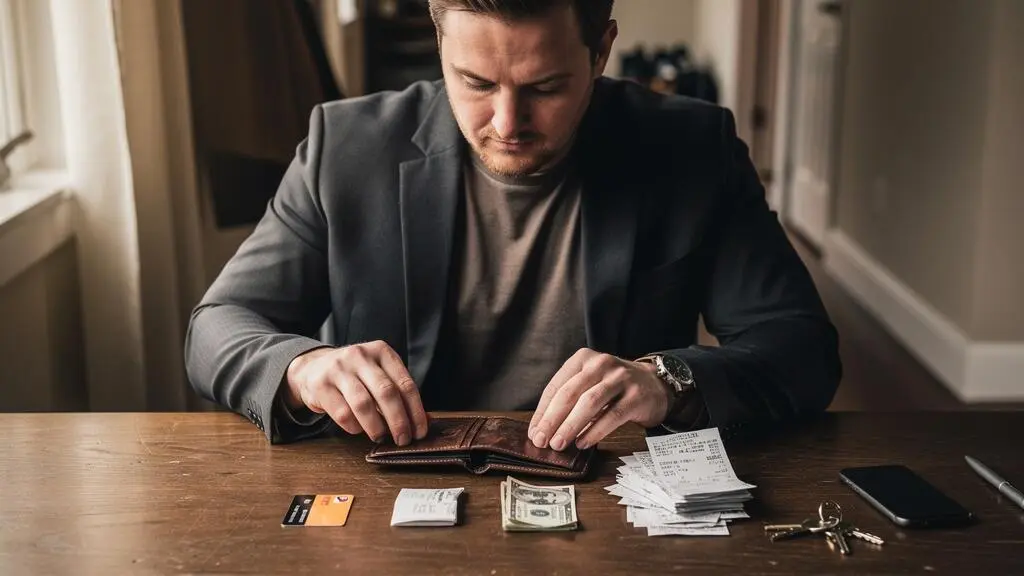
The best men’s wallet for everyday carry is the one that holds your genuine essentials without creating unnecessary bulk, slowing access or wearing out prematurely. For someone carrying a handful of payment cards and almost no cash, a slim cardholder may be the most practical choice. A traditional bifold remains useful when banknotes, receipts or additional cards are part of daily life. A zip wallet offers enclosed storage when keeping smaller contents together matters more than maintaining the thinnest profile.
Choosing between these formats is less about following a minimalist trend and more about understanding your habits. Pocket placement, card access, leather quality, clothing and maintenance all influence whether a wallet works comfortably over time.
A well-chosen wallet should also feel consistent with the way you dress. That does not require an expensive accessory or perfectly matching leather goods. It requires a sensible balance between function, restraint and everyday use.
Choosing the right everyday wallet
- Audit what you actually carry before choosing a smaller wallet format. Removing unnecessary contents is often more effective than changing accessories.
- Choose a cardholder for minimal card-based carry, a bifold for flexible cash and card storage, or a zip wallet when enclosed storage is a priority.
- Protect leather by avoiding overfilling and prolonged pressure, then coordinate your wallet’s colour and finish with the accessories you already wear.
- Why Do Many Men Carry More in Their Wallet Than They Actually Need?
- How Can You Slim Down Your Wallet Without Leaving Important Items Behind?
- Bifold, Cardholder or Zip Wallet: Which Format Suits Your Daily Carry?
- The Wallet Habit That Can Ruin Leather Even When the Material Is Good Quality
- When Is It Time to Replace a Men’s Wallet?
- How Can You Identify the Colours and Cuts That Actually Belong in Your Wardrobe?
- Leather, Suede or Woven Belt: Which Is Most Versatile for Everyday Wear?
- How Can Men Build a Personal Style That Feels Consistent Without Looking Overdone?
Why Do Many Men Carry More in Their Wallet Than They Actually Need?
Many men carry unnecessary wallet contents because adding items is easier than removing them. Receipts, loyalty cards and backup items accumulate without a regular reason to review them. Eventually, the wallet becomes a small storage archive rather than a tool for accessing essential cards and cash throughout the day.
Consider how an ordinary wallet fills up. A receipt gets tucked behind a banknote, a loyalty card stays after its last use, and an expired membership card remains because it is rarely noticed. None of these decisions creates much inconvenience individually. Together, however, they gradually change the wallet’s size and usefulness.
The consequences extend beyond a thicker pocket. Additional contents can distort a wallet’s shape, place pressure on seams and make frequently used cards harder to reach. A bulky wallet can also interrupt the clean line of tailored trousers or a fitted jacket, particularly when carried in a tight pocket.
The solution is a contents audit, not necessarily a new wallet. Empty everything onto a table and separate the contents into three groups:
- Used weekly: primary payment cards, regularly required identification and frequently used access cards.
- Used monthly: occasional cards or documents that may justify staying accessible, depending on their importance.
- Kept out of habit: old receipts, expired cards, unused memberships and items with no realistic everyday purpose.
Weekly essentials generally earn a place in the wallet. Monthly items require an additional judgment: are they difficult to retrieve elsewhere when needed? Habitual items usually belong in a drawer, a digital archive or the recycling bin, depending on what they contain.
The important distinction is between physical necessity and convenient availability. A payment card or identification document may need to remain with you, depending on your circumstances. An old receipt or seldom-used membership card usually does not.
Once the unnecessary items are gone, the next challenge is reducing what remains without removing something genuinely important.
How Can You Slim Down Your Wallet Without Leaving Important Items Behind?
To slim down your wallet safely, judge each item by the consequences of not having it when needed. Keep essential identification and payment options accessible, digitise compatible cards, and move occasional documents into a separate kit. A smaller wallet works only when its contents are reduced to match its intended capacity.
Frequency alone is not enough to decide what stays. A card used once a month might be essential in a particular situation, while a loyalty card used every week could be available digitally. Consequence matters as much as convenience.
Use three practical questions for each item: What happens if it is missing? Could another item or device serve the same purpose? Can it be retrieved before the next occasion when it is required?
For example, a regularly used payment card is usually worth keeping physically accessible. A backup payment card may also be sensible, particularly for someone who travels or occasionally encounters payment failures. Carrying several rarely used cards without a clear purpose, however, creates unnecessary bulk.
Supported loyalty cards, tickets and membership passes may be moved to a smartphone. Apple‘s instructions for using passes in Wallet explain how compatible passes can be added and presented. Availability depends on the issuing organisation, so check acceptance before discarding a physical equivalent.
Digital storage is not a universal replacement for identification, payment or access. Device failure, battery limitations and local requirements can make a physical item necessary. Emergency cash also deserves a deliberate location, whether that is the wallet itself or another secure place you reliably carry.
Your five-step wallet slimming checklist
- Empty every compartment. Produce a complete visible inventory of cards, cash, receipts and miscellaneous items.
- Mark each item by use and consequence. Create a keep, relocate or discard decision for every item.
- Verify digital alternatives. Identify which membership and loyalty cards work reliably on your phone and record those confirmed replacements.
- Choose your physical essentials. Assemble a compact daily set containing required identification, payment options and any necessary cash.
- Test the arrangement for one normal week. Record anything genuinely missed and adjust the final contents accordingly.
A useful approach is to maintain two configurations. Your everyday wallet contains your routine essentials, while a separate travel kit holds a passport, additional payment cards or documents required for a specific journey. Check the requirements of each destination rather than assuming your usual identification will be sufficient.
The common mistake is purchasing a slim cardholder and forcing all the old wallet contents into it. That does not solve overpacking; it transfers the problem to a smaller accessory.
With a realistic daily inventory established, choosing between a bifold, cardholder and zip wallet becomes considerably easier.
Bifold, Cardholder or Zip Wallet: Which Format Suits Your Daily Carry?
A cardholder generally suits someone carrying few cards and little cash, while a bifold provides more flexibility for banknotes and additional compartments. A zip wallet is useful when enclosed storage matters, particularly for mixed contents. The best format depends on your actual load, preferred pocket, access habits and tolerance for bulk.
Comparing wallets by appearance alone misses their most important differences. Two wallets can look similarly compact when empty but behave very differently once filled. The relevant question is not how thin a design appears in a product photograph, but how comfortably it carries your essentials during an ordinary day.
The distinction also appears in The Independent‘s tested men’s wallet comparison. Its product evaluations describe the practical compromise between compact construction, convenient card access and limited capacity for cash. Those observations concern the wallets tested rather than establishing a universal ranking of designs.
Use the following comparison to match construction with practical requirements. Capacity varies between individual products, so the descriptions are general tendencies rather than guaranteed specifications.
| Decision factor | Cardholder | Bifold | Zip wallet |
|---|---|---|---|
| Typical contents | Essential cards and minimal cash | Cards, banknotes and occasional receipts | Cards, cash and smaller loose items |
| Pocket profile | Usually the slimmest | Moderate, depending on contents | Often thicker due to closure and construction |
| Card access | Generally quick for frequently used cards | Requires opening the wallet | Usually requires opening the zip first |
| Cash handling | Limited on many designs | Convenient when a note compartment is included | Varies by internal layout |
| Best everyday fit | Minimalist commuter | Mixed card-and-cash user | User prioritising enclosed storage |
| Main compromise | Restricted storage | Can become bulky | Added thickness and an extra opening action |
For a minimalist commuter, a slim cardholder carried in a front trouser pocket or jacket pocket can provide quick access without visibly distorting clothing. Its limited compartments also encourage restraint, provided it is not overloaded.
A man who regularly handles cash, collects legitimate expense receipts or uses multiple cards may find a bifold more practical. The additional space is useful only when managed; it should not become permission to retain everything indefinitely.
For travel or situations involving coins and smaller contents, a zipped design can keep items enclosed. However, a zip wallet is not automatically more secure against theft, and its capacity should still match the intended load.
Finally, assess the wallet after loading it. An overfilled cardholder may stretch, making its initial compactness misleading. A slightly larger wallet that holds contents comfortably can be a better long-term choice than an undersized model under constant strain.
Whichever format suits your routine, preserving its shape depends heavily on how it is carried and maintained.
The Wallet Habit That Can Ruin Leather Even When the Material Is Good Quality
Regularly sitting on a thick wallet in a back trouser pocket can expose leather to repeated pressure, bending and friction. Over time, those stresses may deform the wallet and contribute to premature wear, regardless of leather quality. Removing the wallet before sitting and avoiding excessive loading are practical ways to reduce unnecessary strain.
Quality leather can develop an attractive patina, but normal surface ageing is different from structural deterioration. A wallet repeatedly compressed between the body and a chair must bend around its contents. The cards inside form relatively rigid sections, while the leather and stitching absorb much of the movement.
Thickness makes the situation worse. A heavily packed wallet creates more uneven pressure, and its compartments may remain stretched even after surplus contents are removed. Capacity discipline is therefore part of leather maintenance, not simply an organisational preference.
Overfilling causes another form of damage. Forcing additional cards into tight slots stretches the surrounding material, while overpacked banknote compartments can strain stitching. These are avoidable risks, even when a wallet is made from carefully selected leather.
Practical guidance from Intovention‘s leather-care recommendations addresses overpacking, moisture, direct heat and the restrained use of suitable conditioners. Its advice is product-care guidance rather than a controlled study measuring wallet lifespan.
For routine care, remove loose dirt gently and follow instructions appropriate to the specific leather finish. If the wallet gets wet, blot excess moisture and allow it to dry naturally at room temperature. Avoid radiators, hairdryers and prolonged exposure to strong heat.
Conditioner is not always necessary, and more is not automatically better. Where the manufacturer recommends it, use a suitable product sparingly and test it discreetly first. Suede, coated leather and specialist finishes may need different treatment.
Rotating between two wallets can be convenient for different carrying situations, although there is no established evidence in the supplied guidance that rotation alone extends lifespan. The more reliable principle is to minimise unnecessary pressure, moisture and overloading.
Watch for functional changes alongside cosmetic wear: card slots that no longer grip securely, stitching beginning to separate, persistent distortion or creases associated with weakened material. These are reasons to inspect the wallet rather than merely polish its surface.
When damage begins affecting how the wallet holds or protects its contents, maintenance becomes a repair-or-replacement decision.
When Is It Time to Replace a Men’s Wallet?
Replace a men’s wallet when wear compromises its ability to hold cards, cash or other essentials securely, or when structural damage cannot be repaired economically. Scratches, colour changes and ordinary patina do not automatically justify replacement. The deciding factor is whether the wallet still performs reliably, not simply how long it has been owned.
A leather wallet can acquire visible character without becoming less useful. Surface scuffs, softened edges and gradual colour variation are often cosmetic. In some leathers, these changes are part of the appeal of an accessory that has been used regularly.
Functional deterioration deserves closer attention. Cards that slide out without resistance, damaged seams that expose contents and a zip that no longer closes properly all affect the wallet’s primary purpose.
Instead of replacing a wallet at an arbitrary age, assess the nature of the damage.
| Condition | Practical response |
|---|---|
| Minor surface scuffs | Continue using it; consider appropriate care if recommended for the leather. |
| Dry-looking leather | Check the finish and manufacturer’s care guidance before applying a suitable treatment. |
| Localised loose stitching | Ask a leather repair specialist whether the seam can be restored. |
| Worn or damaged zip | Assess whether zip replacement is technically and economically worthwhile. |
| Card slots no longer retain cards | Seek a repair assessment; replace if secure retention cannot be restored. |
| Major structural deformation | Consider replacement when repairs cannot restore reliable everyday use. |
A cobbler or leather-goods repair specialist may be able to restitch a seam or address a damaged component. Conditioning, by contrast, is a maintenance measure rather than a structural repair and should not be expected to restore permanently stretched slots.
Replacement also offers an opportunity to correct a carrying mistake. If the old wallet failed because it was constantly overpacked, buying an identical model and transferring all its contents is unlikely to improve the underlying habit.
Before moving into a new wallet, repeat the contents audit. Transfer essential cards, remove expired items and check that every compartment closes naturally without pressure. During the first week, notice whether anything feels inconvenient or difficult to access.
If the new wallet becomes bulky immediately, the contents may be the problem. If a properly loaded design still feels awkward, its format may be unsuitable for your routine.
Once function and condition are under control, the next consideration is how the wallet fits the clothing and accessories you actually own.
How Can You Identify the Colours and Cuts That Actually Belong in Your Wardrobe?
Identify your wardrobe’s natural colour and silhouette preferences by examining the clothes, shoes and accessories you wear most often. Choose a wallet that complements those existing patterns rather than an imagined future wardrobe. Neutral leather colours and an appropriate profile usually make coordination easier, although personal preference remains more important than rigid matching rules.
A wallet is a small accessory, but it is repeatedly handled in public and can either complement or contrast with the rest of your clothing. Treating it as part of an existing wardrobe creates a more useful purchasing criterion than choosing a colour because it looks appealing in isolation.
Start with a simple diagnostic. Look at the shoes and belts you wear regularly, then identify the two or three most common colours. Do black shoes dominate your working week? Are dark-brown boots and tan casual accessories more frequent? These observations provide a practical starting point.
Black, dark brown and tan are useful options because they coordinate with many conventional men’s wardrobes. Their value is versatility, not any objective superiority over more expressive colours.
- Black leather: a straightforward choice for wardrobes dominated by black shoes, dark belts and restrained formal clothing.
- Dark-brown leather: adaptable to many smart-casual outfits, brown footwear and understated everyday accessories.
- Tan leather: appropriate for lighter, warmer or more relaxed wardrobes, particularly where natural leather tones already feature.
Colour is only half the decision. Wallet shape also affects how it works with clothing. A slim cardholder can fit discreetly into tailored trousers or a narrow jacket pocket, while a fuller bifold may feel more practical with casual jackets, relaxed trousers and traditional carrying habits.
These relationships are styling considerations, not fixed rules. A well-managed bifold can work with smart tailoring, and a minimalist cardholder can accompany a casual wardrobe.
Finish matters too. Smooth leather creates a cleaner, more formal impression, while visible grain or a softer texture may feel more relaxed. Choose what belongs alongside the accessories you already use rather than collecting multiple wallets for hypothetical outfits.
The same reasoning extends to belts, where colour, finish and material offer another opportunity to create subtle consistency.
Leather, Suede or Woven Belt: Which Is Most Versatile for Everyday Wear?
A smooth-leather belt is generally the most versatile single choice for a wardrobe that includes both smart and casual clothing. Suede offers a softer, textured alternative for relaxed tailoring, while woven belts tend to suit informal outfits. Coordinating belt and wallet colours can create consistency without requiring identical materials, shades or finishes.
The belt provides a useful reference point when choosing leather accessories because it connects footwear, trousers and the overall level of formality. Unlike a wallet, it is usually visible throughout the day, making its appearance a natural anchor for nearby accessories.
For a broad range of everyday situations, a simple smooth-leather belt with restrained hardware offers considerable flexibility. It can work with chinos, dark denim and many smart-casual combinations, although formal dress codes may require a more specific finish.
Suede introduces texture and a less polished appearance. It is particularly effective when paired with softer tailoring, suede footwear or clothing with a relaxed character. A woven belt can bring flexibility and visual interest to casual outfits, but may look less appropriate alongside structured formal clothing.
Exact colour matching is not essential. Permanent Style‘s discussion of matching leather accessories supports coordinating closely related leather colours rather than insisting on identical shades. Its advice principally concerns belts, shoes and bags; applying the principle to wallets is a reasonable styling extension rather than a formal rule.
For example, a dark-brown leather wallet can complement a medium-brown belt without looking mismatched. Similarly, the wallet and belt may differ slightly in grain or sheen while still belonging to the same visual family.
A highly polished formal belt can feel visually disconnected from an otherwise rugged, textured outfit. The same applies when an elaborate accessory draws unnecessary attention within a deliberately understated wardrobe. The goal is not perfect matching but a consistent degree of formality.
For a minimal accessories collection, one adaptable smooth-leather belt and one wallet in a related tone can cover many everyday situations. Additional pieces become useful when they serve genuinely different clothing requirements rather than merely repeating existing options.
Once these choices are aligned, everyday style becomes less about collecting accessories and more about repeating a few considered decisions.
Key takeaways before refining your everyday style
- Choose a wallet around the contents you regularly need, then allow its format to support your actual clothing and pocket preferences.
- Separate attractive natural ageing from damage that affects secure storage; care for leather without overloading or over-treating it.
- Coordinate accessories through compatible colours, textures and levels of formality rather than trying to make every item identical.
How Can Men Build a Personal Style That Feels Consistent Without Looking Overdone?
Men can build a consistent personal style by repeating a small number of practical choices across their clothing and accessories. A suitably sized wallet, complementary leather colours and restrained details create coherence without requiring exact matches. The aim is to make everyday items work together naturally, rather than attracting attention through excessive coordination.
A wallet is a useful place to begin because it is handled regularly, usually kept for a substantial period and does not require reorganising an entire wardrobe. A thoughtful choice can reinforce existing preferences for simplicity, texture or traditional craftsmanship without becoming the centre of an outfit.
Quiet consistency comes from compatible decisions. Someone who favours clean-cut trousers, plain shirts and understated shoes may prefer a slim leather cardholder in a restrained colour. Someone whose wardrobe centres on relaxed denim, casual jackets and boots may find a traditional bifold equally coherent.
Neither approach is inherently better dressed. The important point is that the wallet suits the individual’s practical routine and feels appropriate beside the clothes already worn.
Over-coordination can undermine that goal. Matching every accessory to exactly the same leather shade, finish and hardware can appear overly deliberate, especially when items are purchased only to complete a set. A more relaxed approach accepts subtle variation while keeping the overall palette consistent.
The same principle applies to quantity. Owning several nearly identical wallets or belts offers little benefit unless they solve different practical problems. Fewer well-aligned accessories can make daily decisions simpler while reducing unnecessary purchases.
Evaluate your everyday carry as a complete system. Are the contents genuinely useful? Does the format fit your pockets without creating a visible bulge? Is the leather in functional condition? Does the colour work comfortably with your usual belt and footwear? Can you access what you need without reorganising everything?
A wallet that satisfies those questions is already contributing to a coherent personal style, even if it is not a luxury item or part of a matching collection.
To put these principles into practice, empty your current wallet today, keep only the contents you genuinely require and test the result in your normal pockets. Then decide whether your existing wallet still works or whether a different format would genuinely improve your daily routine.
Should a men’s wallet be carried in the front or back pocket?
A front pocket is often more practical for a slim wallet because it avoids the repeated compression associated with sitting on a wallet in a back pocket. Comfort depends on trouser fit and wallet thickness. If you prefer carrying a wallet in your back pocket, remove it before sitting for extended periods.
Is an RFID-blocking wallet necessary for everyday use?
RFID-blocking material is an optional feature rather than a universal requirement. Its relevance depends on the contactless cards you carry, their security design and your particular concerns. It should not replace evaluating wallet capacity, construction and the security practices recommended by your card issuer. The supplied sources do not establish a measurable everyday benefit from RFID-blocking wallets.
Can a minimalist wallet still carry emergency cash?
Yes. Some cardholders include a dedicated compartment, money clip or folded-note section. Others are designed primarily for cards and offer limited cash storage. Check the actual wallet’s construction and test it with the cash you intend to carry rather than assuming every minimalist design accommodates banknotes equally well.
Does genuine leather automatically make a wallet durable?
No. Durability depends on the leather’s characteristics, construction, stitching, finish and everyday treatment. A leather wallet can wear prematurely if its compartments are constantly overstretched or it is exposed to excessive pressure, heat or moisture. Inspect construction quality and follow care guidance suited to the specific material.
Should a wallet match a watch strap, belt and shoes exactly?
Exact matching is unnecessary for most everyday wardrobes. Keeping leather accessories in related colour families and compatible levels of formality generally creates a balanced appearance. Subtle differences in shade and texture can look natural, particularly in casual or smart-casual clothing. Personal preference and context should guide the final choice.