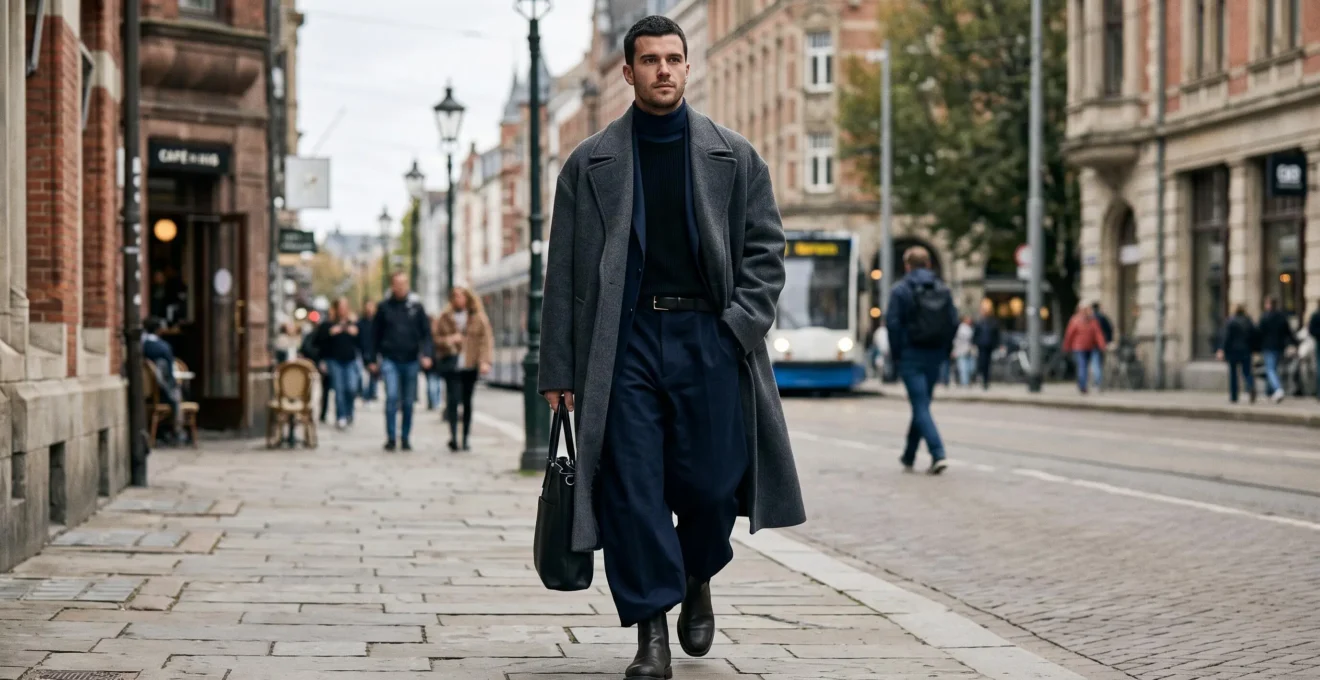
Oversized clothing looks intentional when its extra volume has a clear relationship with the rest of the outfit. The key is not to hide your body beneath less fabric, but to control where the fabric sits, how far it extends and how it moves. A generous jacket, relaxed shirt or wide pair of trousers can all work without making your silhouette disappear.
The difficulty is that oversized and poorly fitted clothing can look remarkably similar at first glance. Both create space around the body, but only a considered oversized fit maintains recognizable proportions. Shoulder placement, garment length, waist definition and footwear all influence that distinction.
You do not need to wear something tight to create balance. A slightly cropped top, an exposed waistband, a clean trouser break or a structured shoe can provide enough definition. Even a fully relaxed outfit can work when its proportions and fabrics have been chosen deliberately.
The most reliable approach is to start with one oversized garment, establish a visible point of structure and evaluate how the outfit behaves while standing, sitting and walking.
Oversized clothing: the essential fit principles
- Control length before width: generous proportions can work, but excessive hems and sleeves often obscure the silhouette.
- Keep at least one visual anchor: a defined waist, structured shoulder line, visible wrist or clean shoe transition makes volume easier to read.
- Build volume gradually: start with one relaxed piece, assess its movement and add another only when the outfit retains a coherent shape.
- Why Is Proper Oversized Clothing Different From Just Buying a Bigger Size?
- How Can You Wear an Oversized Jacket Without Making the Rest of the Outfit Look Heavy?
- Oversized Shirt, Trousers or Jacket: Which Is Easiest to Wear First?
- The Length Mistake That Makes Oversized Clothes Look Ill-Fitting
- When Should You Add a Second Oversized Piece to the Same Outfit?
- How Can You Combine Wide Trousers With a Relaxed Top Without Losing Shape?
- Wide Trousers or Oversized Outerwear: Where Should You Add Volume First?
- How Can Men Build a Personal Style That Feels Consistent Without Looking Overdone?
Why Is Proper Oversized Clothing Different From Just Buying a Bigger Size?
Proper oversized clothing is designed with additional space in specific parts of the garment, while simply buying a bigger size enlarges an existing pattern. An intentionally oversized jacket might have dropped shoulders and a wider body without unnecessary length. A standard jacket bought two sizes larger may instead develop excessively long sleeves, awkward armholes and an uncontrolled silhouette.
The difference begins with garment construction. Designers can increase shoulder width, lower armholes, adjust sleeve proportions and reshape the body independently. Sizing up a conventional garment generally changes multiple dimensions together, even when only additional width is wanted.
In a fitting room, examine three areas before looking at the size label:
- Shoulder placement: a moderate drop just beyond the shoulder bone can create a deliberate relaxed line. A seam falling far down the upper arm may also be intentional in an extreme design, but it requires closer attention to sleeve shape.
- Sleeve length: the cuff should stop at a deliberate position. Exposing the wrist or keeping a ribbed cuff clearly defined often prevents excess fabric from covering the hands.
- Body length: many versatile oversized shirts and jackets finish around the hips. A top extending toward mid-thigh creates a different, longline proportion that needs more deliberate styling.
These checkpoints are practical starting points, not universal measurements. A deliberately dramatic streetwear garment may depart from all three and still achieve its intended appearance.
Next, assess whether the outfit communicates a deliberate choice. A roomy jacket over a more closely fitted shirt, with a visible belt or defined footwear, generally has clearer boundaries than an equally roomy jacket over several shapeless layers. The eye can identify the oversized garment as one component rather than interpreting the entire outfit as uncontrolled.
Alterations can sometimes rescue a garment bought too large. A tailor may shorten sleeves, adjust hems or reduce excess width at the sides, depending on construction. However, substantially changing shoulder width or armhole placement is often complex and may not be worthwhile. Ask a tailor to assess those structural problems before purchasing.
Movement also matters. Raise your arms, turn your shoulders and sit down. Intentional volume should provide usable ease rather than merely creating loose fabric in a static mirror pose.
Once the garment itself fits as intended, the next challenge is balancing its volume against everything worn around it.
How Can You Wear an Oversized Jacket Without Making the Rest of the Outfit Look Heavy?
An oversized jacket looks lighter when the rest of the outfit provides contrast in volume, length or structure. Straight trousers, a visible waistband, a more fitted inner layer or an open jacket front can prevent the upper body from becoming one continuous block. The objective is not necessarily to make every other garment slim, but to preserve recognizable boundaries.
Use volume as a counterweight. A broad wool jacket over a neat knitted top and straight-leg trousers creates a clear division between the upper and lower body. By comparison, pairing the same jacket with a very long hoodie and heavily pooling trousers can conceal both the waist and the leg line.
Opening the jacket is another useful adjustment. Two visible front edges create vertical lines, while the inner layer provides a narrower central area. This can make the outfit appear less dense than when a broad jacket is fully fastened.
A partially tucked shirt or visible belt can reinforce that division. With a long jacket, keeping the inner top relatively short can help maintain the impression of leg length without requiring tight clothing.
Fabric choice is equally important. Two jackets with identical measurements may have different visual effects:
- A firm, densely woven fabric holds its shape and makes the shoulders and edges more pronounced.
- A softer fabric drapes closer to the body and allows folds to move during walking.
- Heavy surface texture, substantial lapels and prominent pockets can make an already broad jacket appear more substantial.
Neither a rigid nor a fluid fabric is inherently better. A structured coat can create a crisp outer silhouette, while a softer jacket may suit a relaxed outfit. The relevant question is whether its shape complements the clothing underneath.
Pay attention to less obvious sources of bulk. Filled jacket pockets distort the hem, stacked cuffs collect fabric around the wrists, and a thick scarf can expand the neckline considerably. Removing one of these elements may be more effective than changing the trousers.
Try the jacket both open and closed, then inspect the outfit from the side. A combination that looks balanced from the front may still accumulate fabric around the torso and hips.
A jacket can anchor an entire outfit, but it is not necessarily the easiest oversized garment to experiment with first.
Oversized Shirt, Trousers or Jacket: Which Is Easiest to Wear First?
An oversized shirt is usually the easiest starting point because it can be tucked, left open, layered or worn buttoned to change its proportions. Wide trousers come next: they offer considerable styling flexibility but require more attention to hems and footwear. An oversized jacket is generally the most demanding because its volume dominates the outfit.
This ranking reflects how easily each garment can be adjusted during styling, rather than a universal rule about difficulty.
An oversized shirt offers several practical options. Wear it open over a closer-fitting T-shirt, tuck it into trousers to define the waist, or leave it untucked with a cleaner, narrower lower half.
Before buying, lift your arms and check whether the shirt pulls uncomfortably or rises excessively. Notice whether the fabric maintains an attractive shape or collapses into folds around the waist. A crisp cotton shirt and a lightweight, fluid shirt can behave very differently despite sharing similar dimensions.
Wide trousers require a more precise assessment of the hem. Try them with the shoes you intend to wear most often, then walk several steps. Look for an intentional break instead of uncontrolled gathering around the ankles.
For an oversized jacket, check shoulder placement, sleeve length and arm movement. Try it over the type of layers you would actually wear rather than judging it over an unusually thin or thick top.
A useful learning sequence is to wear one oversized item with familiar, relatively structured clothes for several outings. Observe what changes when you sit, walk or add a weather-appropriate layer.
For example, hypothetical outfit combinations for a beginner include an oversized Oxford shirt with straight chinos, or wide tailored trousers with a regular-fit knitted top. Both isolate one major change in proportion.
Only introduce another oversized garment once you understand which parts of the original outfit must remain defined. This makes experimenting more predictable and reduces unnecessary purchases.
Whichever piece comes first, its length will often determine whether the final silhouette feels controlled or excessive.
The Length Mistake That Makes Oversized Clothes Look Ill-Fitting
The most common proportion problem is treating oversized as synonymous with long. Clothing can be extremely wide while remaining relatively short, and that contrast often makes the volume look deliberate. A top that extends too far below the hips or trousers that gather heavily over the shoes can visually shorten the legs and obscure the body’s natural divisions.
Length determines where one garment ends and the next begins. When an oversized shirt extends well below the crotch and the trousers have substantial excess fabric at the hem, the outfit may lack a recognizable waist or ankle transition.
Consider these practical reference points:
- Oversized shirts and T-shirts: a hem around the upper to lower hip is a versatile starting range. Longer designs can work, particularly when tucked or balanced with other proportions.
- Wide trousers: a clean hem may skim the shoe, form one deliberate break or finish noticeably above the ankle. The right result depends on the design and intended footwear.
- Oversized jackets: shorter jackets can define the waist, while longer coats establish a different vertical outline. Both need purposeful relationships with the trouser length.
The useful test is to identify the point where the silhouette appears to shorten or collapse. If the upper body looks unusually long, check the top hem. If the lower leg disappears into folds, inspect the trouser break. If the hands are obscured, adjust the sleeve length.
There is no single ideal trouser break. GQ‘s men’s wide-leg trouser styling recommendations discuss choosing the break according to the intended effect, including ankle exposure or fabric pooling. The important distinction is whether that length serves the outfit rather than occurring accidentally.
Similarly, GQ’s explanation of the rule of thirds in menswear presents shorter tops and higher-rise trousers as a way to establish a clear visual division. The rule of thirds is a styling framework, not a compulsory mathematical formula for every body type.
A tailor can often refine this relationship without changing the garment’s intended width. Shortening trouser hems, jacket sleeves or certain tops may be more practical than searching for an entirely different size. The feasibility and cost depend on the garment’s construction and finish.
Five checks before committing to an oversized fit
- Put on the complete outfit, including shoes, and take a full-length front photograph showing the overall proportions.
- Identify one visible structural anchor, such as the waistband, wrist or shoe transition, and note which one provides definition.
- Check the top hem against the hips and crotch, then mark whether it needs to stay, be tucked or be shortened.
- Walk several steps and photograph the trouser hem over the chosen footwear, recording whether the break is clean or excessive.
- Fold or pin one problematic hem temporarily, compare the before-and-after appearance, and record the alteration worth discussing with a tailor.
Once garment lengths are under control, combining multiple relaxed pieces becomes considerably easier.
When Should You Add a Second Oversized Piece to the Same Outfit?
Add a second oversized piece when the outfit still has an identifiable structure after the additional volume is introduced. That structure might come from a visible waistband, a shorter upper layer, clearly defined footwear or contrasting fabric rigidity. Two relaxed garments can work together, but their lengths, shapes and movement must complement rather than obscure one another.
The most important decision is where the additional volume will sit. A broad, structured jacket over fluid trousers creates contrasting types of fullness. A very long, soft top over equally soft, wide trousers may instead concentrate folds around the torso and hips.
Volume can be distributed in different directions. A boxy jacket that finishes near the hip creates a broad upper outline without necessarily covering the upper legs. A fluid pair of trousers introduces movement below a comparatively stable top.
These combinations make the outfit easier to interpret because one garment’s construction helps distinguish it from the other.
Waist definition does not require a tight belt or a fitted top. A shorter hem revealing the trouser waistband may be enough. Alternatively, an open outer layer can expose the boundary between the shirt and trousers.
Full oversized streetwear looks are a deliberate exception. They may combine a generous hoodie, wide trousers and substantial footwear while concealing the waist entirely. In these outfits, consistent color, controlled garment lengths and intentional shoe proportions can replace conventional waist definition.
That approach is more demanding because there are fewer conventional fit cues. It is not inherently incorrect, but accidental fabric accumulation becomes more noticeable.
Use a simple photograph test before leaving home. Take a full-length photograph from a normal viewing distance and look for at least one clear point of structure: shoulder, waist, wrist, ankle or footwear boundary.
If none is visible, first try shortening or tucking a layer, opening the jacket or changing the shoes. Removing one oversized piece is another option, but not an automatic requirement.
One of the most useful applications of these principles is the combination of wide trousers with an equally relaxed top.
How Can You Combine Wide Trousers With a Relaxed Top Without Losing Shape?
Wide trousers and a relaxed top work best when at least one element reintroduces a clear shape. This can be achieved by tucking the top, choosing contrasting fabric structures, exposing the waistband or adding a more defined outer layer. The goal is to create a recognizable relationship between the torso and legs without relying on tight clothing.
The waistband is often the easiest place to establish that relationship. A full tuck produces a defined separation, while a front tuck reveals part of the waist without removing the relaxed effect at the sides and back.
A shorter, boxy shirt can provide similar definition without being tucked at all. The hem ends at a deliberate point, allowing the wide trousers to remain visually prominent.
MR PORTER‘s editorial on wide-leg trouser proportions recommends balancing fuller trousers with smaller or slightly cropped upper garments and discusses boxy shapes as an alternative to long, draping tops. This is one editorial approach rather than a universal fit rule.
Material contrast offers another method. A substantial cotton overshirt can maintain a recognizable outline above fluid, wide trousers. Conversely, pairing a very soft, long top with extremely fluid trousers may allow the fabrics to collapse into one continuous silhouette.
The shoes then become particularly influential. Leather boots and substantial derbies can provide a defined base, especially with heavier trousers. However, more streamlined loafers or slim sneakers can also work when the trouser hem is controlled.
The distinction is not simply between chunky and delicate footwear. GQ presents substantial footwear in certain wide-leg combinations, while MR PORTER’s editorial also advocates narrower shoes. Both approaches can work because the effect depends on trouser width, fabric weight, hem length and the style being pursued.
For example, a hypothetical outfit of high-rise charcoal wide trousers, a slightly cropped cream overshirt and black loafers creates definition through the waistband, color contrast and clean shoe transition. None of the garments needs to fit closely.
If the proportions still feel unclear, change only one variable at a time. Tuck the top before replacing the shoes, or adjust the hem before adding another layer. This makes it easier to identify the actual cause of imbalance.
The remaining question is which part of the outfit should receive additional volume first, especially when choosing between everyday trousers and outerwear.
Wide Trousers or Oversized Outerwear: Where Should You Add Volume First?
Start with wide trousers if you want a relaxed silhouette that remains visible throughout the day and can be integrated into your existing wardrobe. Choose oversized outerwear first if you frequently wear jackets or coats and want one garment to change the overall silhouette. The best choice depends on climate, daily routines, clothing preferences and how often your outer layer stays on.
Wide trousers offer a relatively adjustable starting point. Their effect can be changed through the rise, length, footwear and upper garment. A simple fitted knit, regular shirt or cropped jacket may already provide enough contrast.
They do, however, draw attention to the relationship between the waist and shoes. A trouser shape that works with boots may need a different hem treatment when worn with lower-profile sneakers.
Oversized outerwear has greater visual impact immediately. A broad coat can change the proportions of an otherwise conventional shirt-and-trousers outfit. It can also establish structure through shoulders, lapels and a firm outer silhouette.
The limitation is that this effect may disappear when the coat comes off. Someone who spends most of the day in an office, for example, should evaluate the outfit without its outer layer rather than relying on the coat to create definition.
The following comparison can help clarify the choice.
| Decision factor | Wide trousers first | Oversized outerwear first |
|---|---|---|
| Everyday visibility | Remains part of the outfit indoors | Depends on whether the outer layer stays on |
| Main fit challenge | Hem length, waist and footwear | Shoulders, sleeves and layering |
| Existing wardrobe | Works with many conventional tops | Can transform simple existing outfits |
| Visual impact | Changes the lower-body silhouette | Dominates the overall silhouette |
| Best starting context | Regular indoor wear and adaptable casual outfits | Frequent outerwear use and colder-weather dressing |
Your build and comfort preferences also matter. Try both options rather than assuming that a particular height or body shape automatically rules out one type of volume. The important test is how the garments distribute space around your own proportions.
Style consistency should influence the purchase too. Formal-looking oversized outerwear may be difficult to combine with heavily distressed streetwear trousers unless the contrast is intentional. Matching the formality and fabric character of garments can be more important than matching their degree of looseness.
The strongest long-term choice is usually the one that reinforces an existing wardrobe rather than requiring several additional purchases to make it wearable.
Key takeaways for building a consistent look
- Choose a repeatable proportion rather than changing the entire silhouette with every purchase.
- Keep a small number of familiar styling constants, such as a preferred palette or a recognizable footwear shape.
- Judge each oversized purchase by how well it combines with your current wardrobe, not by how striking it looks in isolation.
How Can Men Build a Personal Style That Feels Consistent Without Looking Overdone?
A consistent personal style comes from repeating a few recognizable choices rather than applying every styling technique at once. Oversized clothing can become one of those choices, alongside preferred colors, fabrics and footwear. The key is to establish simple rules that make individual outfits feel connected without turning every look into a demonstration of the same trend.
Start by choosing two or three constants that reflect your preferences. They might be a neutral color palette, one clear point of structure in every outfit or a preference for generous trousers with shorter tops.
These constants provide direction without requiring identical clothing. A relaxed office outfit and a casual weekend look can share similar proportions while using different fabrics and levels of formality.
Consistency comes from repetition. Wearing a particular trouser shape regularly makes it a recognizable part of your wardrobe. Switching unpredictably between unrelated silhouettes, fabrics and styling ideas can make each outfit feel disconnected, even when the individual garments are attractive.
Oversized clothing should therefore be treated as one ingredient rather than the entire definition of your style. A boxy overshirt might work with tailored trousers one day and relaxed denim the next. It does not require every accompanying item to become larger.
Before buying an oversized garment, imagine at least three outfits using clothes you already own. Include the actual shoes, trousers and outerwear you would pair with it.
If the garment works only with other items you would also need to buy, reconsider whether it belongs in your wardrobe. An exceptional statement piece can still be worthwhile, but it should be a conscious exception rather than an accidental shopping pattern.
There is also no need to use every proportion technique simultaneously. A cropped jacket, pronounced belt, dramatic trouser width and extremely substantial shoes may compete for attention. Choosing one dominant feature often produces a more coherent result.
Develop a repeatable dressing routine: select the piece that carries the most volume, identify the visible anchor and check the complete outfit while moving. Over time, this process becomes a practical instinct rather than a complicated set of rules.
For the next outfit, choose one oversized garment you already own, combine it with familiar pieces and photograph the result from the front and side. Make one adjustment to length, layering or footwear, then compare the two versions. That small experiment is a more useful step toward personal style than adding another oversized purchase.
Can shorter men wear oversized clothing without looking shorter?
Yes. Height alone does not determine whether oversized clothing works. Shorter tops, a visible waistband and controlled trouser hems can help preserve a clear division between the torso and legs. Focus on the proportions of individual garments rather than avoiding volume altogether.
Should oversized clothing always be worn with slim-fit pieces?
No. Slim garments are one way to create contrast, but they are not essential. Structured fabrics, shorter hems, visible waistbands and intentional footwear can all provide definition while allowing both the upper and lower body to remain relaxed.
Can oversized clothes work in a smart-casual or office wardrobe?
Yes, depending on the workplace dress code. Wide tailored trousers, boxy shirts and relaxed coats can look considered when their fabrics, lengths and finishes align with the required level of formality. Clean hems and well-maintained footwear are particularly useful in these settings.
How can you tell whether oversized clothing looks good while moving?
Walk, sit, turn and raise your arms while wearing the complete outfit. Check whether the trousers catch beneath the shoes, the top rides up excessively or the jacket restricts movement. A short walking video can reveal how fabric gathers and falls more clearly than a static mirror check.
Is it better to alter oversized clothes or buy a smaller size?
That depends on the construction. Shortening an excessive hem or sleeve may preserve the intended oversized silhouette. If the shoulders, armholes or overall pattern are fundamentally wrong, choosing a garment designed with the desired proportions is often more practical. Consult a tailor before attempting substantial structural changes.