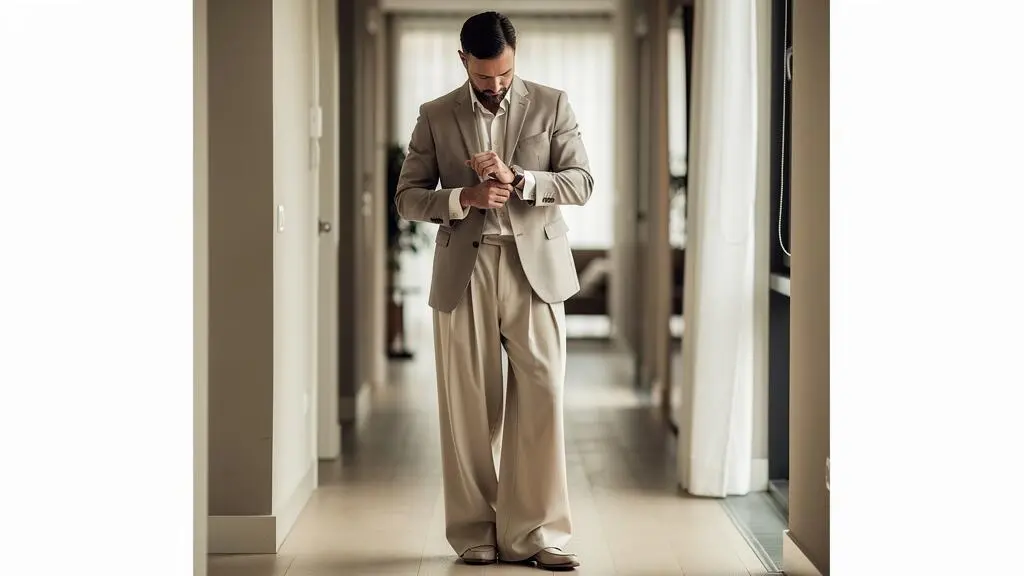
Relaxed clothing does not have to conceal your shape. The difference between a deliberately loose outfit and one that looks several sizes too large usually comes down to proportions, garment length and a few carefully defined points of structure.
Wide trousers, roomy shirts and oversized jackets can all contribute to a considered everyday wardrobe. The challenge is deciding where additional fabric improves movement and where it interrupts the silhouette. A well-positioned shoulder, a visible waist or a controlled trouser hem can give the eye enough definition to understand the rest of the outfit.
The most useful approach is to distinguish relaxed cuts from genuinely oversized designs, then experiment with volume without changing everything at once. Rather than following a rigid rule that one half of an outfit must always be slim, consider how each garment hangs, interacts with the others and performs throughout an ordinary day.
Relaxed menswear: the essential principles
- Keep at least one visual anchor, such as a defined shoulder, visible waist, wrist or clean trouser hem.
- Balance garment lengths and fabric structure when combining loose tops with wide trousers.
- Introduce relaxed proportions gradually, prioritising comfort, movement and alterations that genuinely improve fit.
- Why Do Relaxed Silhouettes Often Look More Modern Than Tight-Fitting Clothes?
- How Can You Combine Wide Trousers With a Relaxed Top Without Losing Shape?
- Straight, Relaxed or Oversized: Which Fit Works Best for Your Everyday Wardrobe?
- The Proportion Error That Makes Relaxed Clothing Look Two Sizes Too Big
- When Should You Move From Slim Fits to More Relaxed Clothing?
- How Can You Wear an Oversized Jacket Without Making the Rest of the Outfit Look Heavy?
- Wide Trousers or Oversized Outerwear: Where Should You Add Volume First?
- How Can Tailored Cuts Improve a Man’s Silhouette Without Feeling Too Tight?
Why Do Relaxed Silhouettes Often Look More Modern Than Tight-Fitting Clothes?
Relaxed silhouettes can look more contemporary because they replace closely outlined body contours with controlled volume, movement and deliberate proportions. Their modern appearance depends less on how much fabric they contain than on how that fabric is organised. A defined shoulder, neat collar or intentional hem can make generous clothing feel designed rather than accidentally oversized.
Close-fitting garments follow the body’s outline, while relaxed garments create space between fabric and skin. That space changes how clothing hangs, folds and moves. It can give an outfit a softer appearance without necessarily making it less precise.
However, relaxed and oversized are not interchangeable descriptions. A relaxed fit typically allows additional room in selected areas, such as the chest, seat or thighs, while maintaining recognisable garment proportions. An oversized fit makes the increased scale itself a prominent design feature, potentially through wider shoulders, extended sleeves or a longer body.
These are descriptive categories rather than universally standardised measurements. A deliberately oversized shirt may have dropped shoulders, while a relaxed shirt may retain a conventional shoulder position with additional room through the torso.
The distinction is explained in Man of Many‘s relaxed-fit styling article, which presents volume and proportion as complementary considerations rather than opposing choices.
Consider two hypothetical outfits. The first combines a loose sweatshirt extending well below the hips, heavily pooling trousers and a wide, unstructured jacket. Without a clear point of definition, the individual garments can merge into one broad outline.
The second uses similarly roomy trousers and sweatshirt but introduces a shorter jacket with a recognisable shoulder line. The silhouette remains comfortable, yet the jacket establishes where the upper body ends and the legs begin.
This is why structure matters more than tightness. The goal is not to reveal every contour but to provide enough visual information for the overall proportions to make sense.
Relaxed dressing also offers room for personal interpretation. Some men favour precise tailoring with fuller trousers; others prefer softer streetwear combinations. Neither approach requires adopting maximum volume throughout an outfit.
Once that distinction is clear, the next challenge is combining two loose garments without letting their proportions compete.
How Can You Combine Wide Trousers With a Relaxed Top Without Losing Shape?
Wide trousers and a relaxed top can work together when the outfit retains a visible midpoint and controlled lengths. A partial tuck, defined waistband or hip-length jacket can separate the upper and lower body. Fabric contrast and an intentional trouser hem then prevent the combination from appearing like one continuous column of loose material.
Begin with the waist. If a shirt hangs loosely over wide trousers, its hem can obscure the waistband and shorten the apparent leg line. A small front tuck or a naturally shorter top restores that division without making either garment tight.
A belt can provide the same reference when the waistband remains visible. Alternatively, a short boxy jacket can frame a longer shirt while establishing an upper-body boundary.
The aim is not to force a narrow waist but to make the outfit’s construction readable.
Trouser length becomes especially important when both halves are generous. A hem that falls cleanly onto the shoe provides a controlled endpoint. Excessive, unintended stacking can add visual weight at the bottom and make the trouser leg look longer than planned.
Pooling fabric is not automatically a mistake. Deliberate pooling can be part of a particular styling approach, provided the trouser fabric, footwear and overall proportions support it. The essential distinction is between an intentional drape and uncontrolled excess length.
GQ‘s advice on styling wide-leg trousers discusses how cropped jackets, higher rises, footwear and fabric choices change the appearance of wider cuts. These are practical editorial recommendations, not universal fit standards.
Fabric combinations provide another useful adjustment. A fluid cotton or lightweight knit top can sit well above trousers made from firmer cotton or structured wool. Conversely, a more substantial overshirt can provide definition above softly draping trousers.
Two fluid fabrics can also work together, but their combined movement may create less obvious separation. In that case, controlling the waist and hems becomes more useful.
Be particularly attentive to the combination of a long loose top and long wide trousers. When the waist, wrists and trouser endpoints are all obscured, the outfit may lose its internal reference points.
A shorter sleeve, partial tuck or adjusted trouser hem can restore definition without requiring a narrower garment.
Choosing the appropriate degree of looseness becomes easier when straight, relaxed and oversized cuts are treated as different wardrobe tools.
Straight, Relaxed or Oversized: Which Fit Works Best for Your Everyday Wardrobe?
Straight fits are generally the most adaptable starting point, relaxed fits provide extra movement while maintaining conventional proportions, and oversized fits make volume a stronger visual statement. The best everyday choice depends on your existing clothes, preferred level of structure, body proportions and daily activities rather than a single fashionable silhouette.
These categories overlap between brands. A garment labelled straight by one manufacturer may resemble another brand’s relaxed offering. Compare the actual cut instead of relying exclusively on the product description.
Use the following comparison as a practical framework, not a standardised sizing chart.
| Fit consideration | Straight | Relaxed | Oversized |
|---|---|---|---|
| Shoulder | Usually close to the natural shoulder | Often conventional or softly extended | May be deliberately dropped or enlarged |
| Chest and torso | Moderate ease | More room without necessarily increasing length | Prominent volume, sometimes with added length |
| Sleeves | Controlled width and length | Additional room, generally manageable length | May be wider, longer or both |
| Trousers: seat and thigh | Balanced room with a relatively consistent line | More ease through movement areas | Volume may become the central design feature |
| Hem | Relatively conventional | Fuller or wider, with controlled length | Potentially exaggerated width or deliberate pooling |
| Everyday application | Easy integration with varied outfits | Comfortable daily wear with styling flexibility | Statement piece requiring closer proportion checks |
For an existing wardrobe dominated by slim knitwear, fitted shirts and conventional jackets, straight trousers may be the simplest change. Relaxed trousers offer a more noticeable shift while remaining compatible with many of those pieces.
Oversized clothing is often easiest to integrate as one dominant volume element, such as a roomy jacket over straight trousers. That is a useful starting point, not a prohibition against wearing several oversized garments together.
Relaxed pieces can also work from head to toe because they may add room while preserving recognisable shoulders, waists and hems. Even then, proportion checks remain necessary.
Body frame influences how garments appear, but it should not dictate rigid rules. The same trouser width can read differently according to height, build and footwear. Permanent Style’s observations about fuller tailored trousers illustrate why measurements need context rather than universal cutoffs.
Daily movement matters just as much as the mirror. A wide coat may look attractive standing upright but feel cumbersome on public transport. Very long trousers may interfere with cycling, while restrictive thighs may make sitting uncomfortable.
Try a garment while walking, sitting and reaching. A visually appealing fit that consistently obstructs normal activities is unlikely to become a successful everyday staple.
Whatever category you choose, the next step is recognising when deliberate ease crosses into a scale mismatch.
The Proportion Error That Makes Relaxed Clothing Look Two Sizes Too Big
The most common proportion error is increasing width and length everywhere without preserving any points of definition. A dropped shoulder, extended sleeve, long body and wide hem can collectively overwhelm an outfit, even when each feature looks reasonable alone. Correcting one or two dimensions often restores balance without sacrificing the relaxed character of the garment.
This is a problem of scale rather than size labels. A garment may technically match your usual size while its intended design creates more volume than you want. Conversely, an oversized piece may be correctly sized according to its manufacturer’s measurements.
Assess the shoulder first. On a conventionally constructed shirt or jacket, the seam usually provides a useful indication of where the garment is intended to sit. If it extends considerably beyond the natural shoulder, consider whether the dropped position is intentional and whether the sleeve still hangs appropriately.
Next, check the sleeve. A cuff covering much of the hand may be part of a deliberate oversized design, but it may also indicate excess length. If the sleeves constantly obstruct your hands, shortening them could make a meaningful difference.
Finally, examine where the body hem ends. A loose top finishing at the widest part of the hips can create a broader horizontal line, particularly with wide trousers. A slightly shorter hem or defined waistband may improve the relationship between upper and lower body.
None of these observations establishes a universal defect. Dropped shoulders and longer sleeves can be deliberate styling decisions. What matters is whether the garment behaves as intended and works with the rest of the outfit.
The one-anchor-point principle offers a simple correction: keep at least one identifiable reference, such as the wrist, waist, ankle or a clearly structured collar. It is an aesthetic guideline rather than a scientifically validated measurement rule.
Different builds also change the effect of volume. A tall or broad frame may make substantial garments appear differently proportioned than they do on someone with a narrower or shorter frame. Neither body type is inherently excluded from oversized clothing.
Five fit checks before keeping a relaxed garment
- Check the shoulder. Stand naturally in front of a mirror and photograph the seam placement. Record whether any extension is deliberate or looks unsupported.
- Test the sleeves. Reach forward and bend your elbows. Note whether the cuffs stay usable or repeatedly cover your hands.
- Locate the hem. Compare the garment untucked, partially tucked and beneath a shorter layer. Save a photograph of the clearest proportion.
- Identify an anchor. Look for a visible wrist, waist, ankle or structured collar. Write down which element gives the outfit definition.
- Make a specific decision. Record whether to keep the garment unchanged, try another size, request one alteration or return it.
Use these observations collectively. A single dropped seam or broad hem does not automatically mean a garment is wrong; it becomes relevant when the overall outfit loses the shape you want.
Once you can identify those differences, moving beyond a slim-fit wardrobe becomes a manageable process rather than an all-or-nothing decision.
When Should You Move From Slim Fits to More Relaxed Clothing?
Consider moving from slim to relaxed fits when your clothes consistently restrict movement, require frequent adjustment or no longer reflect the appearance you want. The transition does not need to happen all at once. Replacing one restrictive pair of trousers with a properly proportioned relaxed pair is often a practical first experiment.
Functional problems provide the clearest evidence. Trousers that pull across the thighs when sitting, shirts that strain when reaching or jackets that restrict ordinary arm movement may not offer enough ease for your daily routine.
These issues do not necessarily mean the entire fit category is unsuitable. Sometimes a different size, rise, fabric or pattern resolves the problem. But repeated discomfort across several pieces can justify exploring roomier cuts.
Style preferences are another legitimate reason. Slim clothing is not inherently outdated, and relaxed clothing is not automatically more flattering. Menswear silhouettes change over time, but the relevant question is whether your existing garments still communicate the look you prefer.
A gradual transition is easier to manage than replacing everything. Begin with trousers because they can often be combined with fitted knitwear, conventional shirts and existing outerwear.
For example, a hypothetical first update might replace narrow chinos with fuller straight-leg trousers while keeping the same fine-gauge sweater and leather shoes. The following purchase could introduce a relaxed overshirt, allowing you to assess different proportions separately.
There is also a risk in buying vague intermediate cuts simply because they appear less intimidating. A garment that is neither comfortably roomy nor clearly structured may fail to deliver the purpose of either fit.
Choose according to the room and silhouette you actually need, not merely the terminology printed on a label.
The transition can initially feel unfamiliar, particularly when you are accustomed to clothing that follows your body closely. A relaxed garment creates a different outline, but it does not necessarily make the wearer appear larger or less defined. Its effect depends on cut, material and the proportions of the complete outfit.
Permanent Style‘s discussion of wider trousers and alterations provides a firsthand example of changing preferences gradually. It also explains that some tailored trousers can be widened where their construction includes sufficient seam allowance, although this is not possible with every garment.
Before discarding existing trousers, ask a competent alterations specialist whether an adjustment is technically feasible. Changes to leg width are construction-dependent, and correcting the rise can be significantly more difficult.
Outerwear can then introduce more visible volume, provided its length, fabric and relationship with the trousers remain controlled.
How Can You Wear an Oversized Jacket Without Making the Rest of the Outfit Look Heavy?
An oversized jacket looks more balanced when its generous upper-body volume is offset by a clearer leg line, controlled length or visible opening at the front. Straight or tapered trousers are an accessible starting point, while a lighter inner layer can create vertical separation. The objective is to prevent several heavy elements from merging visually.
Start by examining where the jacket finishes. A boxy jacket ending near the hip can establish a strong upper-body shape while leaving the full leg line visible. A long oversized coat creates a different effect, covering more of the trousers and making the overall silhouette more continuous.
Neither length is inherently incorrect. A longer jacket simply requires closer attention to the amount of volume below it.
With a roomy hip-length jacket, straight trousers may provide enough contrast. With a mid-thigh coat, a relatively clean trouser leg or a controlled hem can prevent the lower half from adding unnecessary weight.
Opening the jacket can change its appearance substantially. Worn open over a lighter shirt or fine knit, the garment creates two vertical edges framing the torso. Buttoned over a thick sweater, the same jacket may present a broader uninterrupted mass.
Both arrangements can be appropriate, particularly in different weather conditions, but they produce distinct visual results.
Fabric weight adds another dimension. Dense denim, substantial wool and thick quilted constructions can create more apparent bulk than a similarly cut jacket in a lighter fabric. Some fabrics also stand away from the body, while others hang closer to it.
Consequently, jacket width and material should be considered together. A broad but fluid outer layer may look less imposing than a shorter garment made from particularly stiff cloth.
Footwear and trouser hems also affect the overall balance. A clean trouser endpoint, whether at the shoe or slightly above it, can make the lower half easier to read. Visible ankles are one option, but not a requirement in cold weather.
For a practical starting outfit, combine an oversized wool jacket with a fine knit, straight trousers and relatively simple footwear. Adjust only one component at a time until the volume feels deliberate.
Roomier trousers are still possible. The challenge is retaining enough contrast through length, fabric or structure so that the jacket remains the dominant element rather than competing with everything underneath.
That raises a broader wardrobe question: whether the first substantial increase in volume should come from trousers or outerwear.
Wide Trousers or Oversized Outerwear: Where Should You Add Volume First?
For many men, wider trousers are the more flexible first purchase because they can work with existing shirts, knitwear and jackets. Oversized outerwear changes the proportions of the entire upper body and demands more attention to layering. Climate, daily activities and your current wardrobe can nevertheless make an oversized jacket the more practical starting point.
Wide trousers generally require fewer adjustments elsewhere. A slim or straight shirt can sit above them, while an existing jacket may provide the structure needed to keep the look intentional.
The main decisions concern trouser rise, leg width, hem length and footwear. Once these work together, the rest of the wardrobe can remain relatively familiar.
Oversized outerwear introduces a different problem. Its shoulders, armholes, body width and length affect how everything underneath fits and appears. A jacket that works over a T-shirt may behave differently over a thick sweater.
Layering capacity is not simply a matter of buying a larger size. The jacket needs appropriate room through the shoulders, chest and sleeves without unnecessary pulling or collapsing.
Seasonal use is another consideration. During warmer months, breathable wide trousers can introduce a relaxed silhouette without requiring an additional outer layer. In colder weather, roomier outerwear may be functionally useful because it accommodates knitwear and other layers.
In that situation, an oversized jacket may be the more sensible first purchase, particularly if the existing trousers already provide enough comfort and movement.
When combining wide trousers with oversized outerwear, identify which garment will establish the strongest visual statement.
- Jacket-led outfit: choose a noticeably oversized coat with relatively controlled straight or relaxed trousers.
- Trouser-led outfit: combine wider, fuller trousers with a shorter structured jacket that reveals more of the leg line.
- Volume throughout: retain a clearly positioned waistband, recognisable shoulder structure or an intentional contrast between garment lengths.
The third approach can work, but it requires more attention because neither half automatically provides a counterweight to the other.
Consider a hypothetical commuter who already owns several fitted sweaters and conventional coats. Wide trousers are likely to integrate easily with those garments. By contrast, someone who regularly layers heavy knitwear beneath outerwear may find more immediate value in a generously cut coat.
Neither decision should be based exclusively on trends. The strongest choice solves an existing wardrobe problem while offering combinations that are comfortable enough to wear repeatedly.
Whichever garment leads, a small amount of tailored structure can make the complete silhouette more defined without making it restrictive.
Key takeaways before refining your fit
- Prioritise precise placement at construction points rather than making every garment narrower.
- Use relaxed ease where movement matters, particularly through the chest, seat and thighs.
- Consider limited alterations before replacing a garment that otherwise fits and performs well.
How Can Tailored Cuts Improve a Man’s Silhouette Without Feeling Too Tight?
Tailored cuts can improve a man’s silhouette by positioning seams, shoulders, collars and waistbands accurately while allowing comfortable room elsewhere. Good tailoring is not synonymous with a close fit. A jacket with defined shoulders and a relaxed chest, or trousers with a secure waist and fuller thighs, can provide shape without restricting movement.
The important distinction is between structural precision and bodily compression. Tailoring establishes where a garment should sit and how its fabric should fall. It does not require every section to follow the body closely.
For a tailored jacket, the shoulder is particularly influential. Its shape helps determine how the sleeve hangs and how the garment presents the upper body. The collar and front should also sit cleanly rather than showing unexplained pulling or buckling.
Permanent Style’s video on jacket fit demonstrates how shoulder construction and the behaviour of the jacket front affect fit. Its guidance allows variation in shoulder width according to design rather than imposing a single rigid position.
This distinction is useful when introducing relaxed garments. A jacket can have clearly defined shoulders while retaining enough space across the chest for comfortable movement. Likewise, trousers can sit securely at the waist without being narrow through the seat or thigh.
When trying on relaxed clothing, assess these areas separately:
- Shoulders: check that the intended shoulder construction hangs naturally and does not create unwanted collapse or pulling.
- Collar: confirm that it sits comfortably without persistent gaping or pressure.
- Sleeve length: look for a functional endpoint that suits the garment and allows normal hand movement.
- Trouser waist: ensure the waistband remains secure during walking and sitting without digging in.
- Chest, seat and thighs: allow enough ease for bending, reaching and sitting comfortably.
These fit points do not need identical treatment. An overshirt with intentionally dropped shoulders should not be judged by precisely the same shoulder-position expectations as a traditional tailored jacket.
Alterations can provide a bridge between off-the-rack clothing and a more individual fit. Shortening sleeves or adjusting a trouser hem may improve the proportions of an otherwise successful garment without reducing the room that made it attractive.
Other changes are more complicated. Reshaping a jacket’s shoulders, substantially modifying its armholes or changing the rise of trousers can be difficult or impractical. Some garments contain usable seam allowance; others do not.
Ask an alterations specialist to evaluate the construction and provide a quote before assuming that adjustments will be economical. A simple alteration may be worthwhile, but extensive work can cost more than choosing a better-fitting garment initially.
The strongest tailored-relaxed combinations preserve comfort where it is useful and definition where it supports the desired silhouette. That might mean fuller pleated trousers with a precise waistband, a relaxed blazer with coherent shoulder construction, or a roomy shirt with properly finished sleeves.
For your next fitting, choose one relaxed garment you already own, identify its strongest structural feature and test one adjustment to its length or styling. Compare the result while standing, sitting and walking before deciding whether any alteration or replacement is necessary.
Can shorter men wear wide-leg trousers?
Yes. Wide-leg trousers are not reserved for a particular height. Their appearance depends on the relationship between leg width, rise, length, footwear and upper-body proportions. A controlled hem and a visible waistband can help establish a clear leg line, but there is no universal trouser width that suits everyone of a given height.
Should relaxed trousers sit higher on the waist?
A higher rise can help define the waist and give a fuller trouser leg a clear starting point, particularly when combined with a tucked shirt or shorter jacket. However, the most suitable rise depends on the trouser’s construction, your proportions and comfort when sitting. Higher is not automatically better.
Can relaxed clothing still look appropriate in a smart-casual office?
Relaxed clothing can work in many smart-casual environments when it retains clean finishing, controlled hems and recognisable structure. Fuller wool trousers with a collared shirt or softly tailored jacket provide one possible combination. The appropriate degree of volume still depends on the workplace’s dress expectations.
How can you stop wide trousers from looking messy around your shoes?
Check how the fabric falls when standing and walking. If the hem bunches excessively or catches beneath the shoe, an adjustment in length may help. A cropped hem, gentle break or deliberately pooled finish can all be valid choices; the important point is that the result matches the fabric, footwear and intended styling.
Is it better to size up or buy clothing designed with a relaxed fit?
Clothing designed as relaxed often provides additional room in selected areas while keeping other dimensions proportionate. Simply sizing up may increase sleeve length, body length and shoulder width together. Compare garment measurements and try both approaches where possible, since sizing systems and intended designs vary between manufacturers.