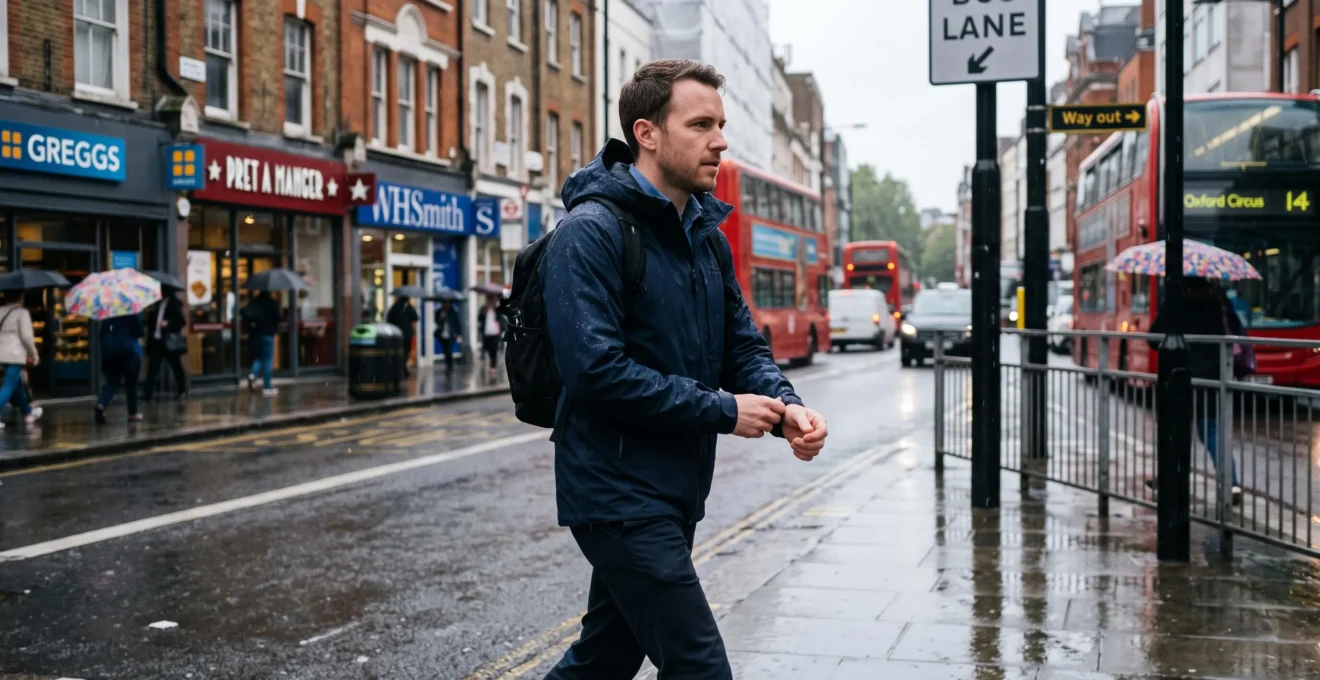
The most useful technical textiles for everyday city clothing are not necessarily the most waterproof, expensive or lightweight. They are materials that balance weather protection, breathability, abrasion resistance, comfort and an appearance suitable for ordinary urban settings. A breathable softshell, tightly woven cotton jacket or lightweight waterproof laminate can each work well, depending on how long its wearer spends outdoors.
A short walk between a train station and an office places different demands on clothing than a cycling commute through persistent rain. The first situation may call for a quiet, water-resistant fabric that looks natural over a shirt. The second may justify a fully seam-sealed shell with a functional hood and adjustable cuffs.
Understanding fabric construction also helps distinguish useful performance features from impressive but unnecessary specifications. Membrane design, face-fabric durability, moisture management and maintenance requirements can matter more than the technical terminology on a product label.
Technical fabrics for city wear: the essentials
- Choose water-resistant woven fabrics or softshells for short, intermittent exposure; consider a fully waterproof jacket for sustained rain.
- Evaluate construction, seam sealing, ventilation, fit and abrasion resistance rather than relying on fabric weight or headline ratings.
- Build a flexible wardrobe with moisture-managing base layers, appropriately warm mid-layers and outerwear that complements everyday clothing.
- Why Do Some Technical Jackets Resist Rain Better Without Feeling Heavy?
- How Can You Check Whether a Technical Fabric Will Actually Work for Daily Commuting?
- Waterproof or Water-Resistant: Which Fabric Makes More Sense for Urban Wear?
- Why Maximum Weather Protection Can Be the Wrong Choice for a Daily Jacket
- When Should You Reproof or Replace a Technical Jacket?
- How Can You Match Functional Fabrics to Work, Travel, and Everyday Weather?
- Bomber, Overshirt or Shell: Which Lightweight Jacket Suits Your Daily Routine?
- How Can Men Layer Clothes Without Adding Unnecessary Bulk?
Why Do Some Technical Jackets Resist Rain Better Without Feeling Heavy?
Lightweight technical jackets can resist rain because their waterproof barrier is integrated into the fabric rather than supplied by a bulky, separate garment lining. Laminated membranes, protective coatings and compact layered constructions provide weather resistance without necessarily adding much weight. However, the finished jacket’s comfort and durability depend on more than its waterproof barrier.
The distinction begins with how a jacket is constructed. A typical waterproof fabric combines an outer face textile with a membrane or coating that restricts liquid water penetration. Different constructions determine how the inner surface is protected and how much additional material is required.
| Construction | How it works | Practical urban advantage | Main consideration |
|---|---|---|---|
| 2-layer | Outer fabric bonded to a waterproof barrier, with a separate hanging liner | Often softer and quieter for everyday use | The additional lining can increase garment weight and bulk |
| 2.5-layer | Outer fabric and waterproof barrier with a thin protective treatment inside | Lightweight and compact when packed | The inner protection may be less robust under prolonged abrasion |
| 3-layer | Outer fabric, waterproof barrier and protective inner textile bonded together | Generally robust and suitable for frequent use | Feel, weight, stiffness and price vary considerably between products |
These distinctions are explained in REI‘s rain jacket buying guide, which also emphasizes ventilation, seam sealing and garment features. A three-layer fabric is not automatically heavier than every two-layer alternative; actual textile choices and garment design determine the result.
Hydrostatic head describes resistance to water pressure, commonly reported in millimetres. A breathability figure expressed in grams per square metre over 24 hours describes moisture-vapour transfer under a particular test method. Some specifications instead use RET, a resistance-to-evaporative-heat-transfer measure in which lower values indicate less resistance.
These numbers answer different questions. High hydrostatic resistance helps keep external water out, but it does not guarantee comfortable moisture transfer. Similarly, breathability figures obtained using different test methods cannot be reliably ranked as though they were identical measurements. Performance also changes with temperature, humidity, activity and ventilation.
For durability, consider the face fabric’s denier, weave, abrasion resistance and reinforcement. Denier describes yarn linear density, not finished textile toughness. A low-denier jacket can be waterproof yet vulnerable to repeated friction from a backpack strap. A heavier face fabric may offer greater abrasion resistance, but weave, fibre, finishing and construction still matter.
Touch and sound also deserve attention. Crumpling a jacket can reveal whether it feels stiff, noisy or uncomfortable, but a papery texture does not reliably identify polyurethane coatings or predict their lifespan. Product construction details and care information are more useful for assessing likely longevity.
A practical urban jacket should provide enough rain protection without sacrificing comfort during the many hours when rain is absent. That balance becomes easier to judge when the garment is tested in realistic commuting positions rather than assessed solely on a hanger.
How Can You Check Whether a Technical Fabric Will Actually Work for Daily Commuting?
To determine whether a technical fabric works for commuting, test the complete jacket against your actual journey: rain exposure, movement, backpack friction, temperature changes and cleaning requirements. Inspect seam sealing, closures, hood adjustment and ventilation, then wear the jacket while sitting and reaching forward. A comfortable standing fit alone is not enough.
Begin with the details that prevent water entering through openings and construction points. For a fully waterproof garment, check whether the manufacturer specifies complete seam sealing rather than taping only the shoulders, hood or other selected areas.
A water-resistant zipper is not necessarily watertight. Its performance depends on the closure design and whether a storm flap protects it. Similarly, a good hood must remain positioned when the head turns, while cuffs and hem adjustments need to close comfortably without restricting movement.
The sit-and-move test reveals limitations that are easy to miss during ordinary fitting. Sit on a bench, extend your arms as though holding bicycle handlebars or a train handrail, and lean slightly forward. Repeat the movement while wearing your regular work bag.
Watch whether the jacket hem rides above the waistband, the shoulders become tight or the sleeves expose the wrists. Listen for loud fabric rustling. A noisy shell may be tolerable outdoors but irritating in a quiet office, meeting room or shared workspace.
Next, investigate the fabric’s maintenance requirements. Check whether it can be machine washed, which detergents are recommended and whether tumble drying or other care procedures are permitted. A jacket requiring inconvenient treatment may not suit someone who wears it through crowded transport, road spray and everyday dirt.
Water beading can provide a useful indication of the outer durable water-repellent (DWR) finish. With a retailer’s permission, observe whether a small amount of water beads consistently on a sample. Uneven beading may indicate contamination, wear or inconsistent repellency, but it does not establish that the waterproof membrane is defective.
Five checks before buying a commuter jacket
- Map your exposure: record whether your normal journey involves brief showers, extended walking or cycling in rain. Deliverable: a written description of your typical wet-weather commute.
- Verify construction: inspect the product specifications for waterproof construction, seam sealing, closure protection and ventilation. Deliverable: a feature list with any unknowns marked.
- Test movement: sit, reach forward, turn and lean while wearing your normal layers and bag. Deliverable: a recorded pass or fail for shoulder comfort, sleeve coverage and hem position.
- Assess everyday comfort: check fabric noise, pocket access, hood adjustment and appearance over work clothing. Deliverable: a short list of practical annoyances or advantages.
- Read the care instructions: identify washing restrictions, permitted drying methods and compatible maintenance products. Deliverable: a care routine you can realistically follow.
Passing these tests matters more than having the longest list of technical features. Once the jacket fits your movements and maintenance routine, the next decision is whether its level of waterproofing matches the amount of rain you actually encounter.
Waterproof or Water-Resistant: Which Fabric Makes More Sense for Urban Wear?
Water-resistant fabric usually makes more sense for short, intermittent urban rain exposure, especially when breathability, softness and appearance matter throughout the day. Fully waterproof fabric becomes more useful when walking or cycling in persistent rain. The deciding factor is how long and how intensely the garment will be exposed, not simply which label advertises stronger protection.
Water-resistant fabrics slow water penetration but are not intended to keep the wearer dry indefinitely under sustained rain or pressure. A water-repellent finish can make droplets bead and roll away, while a tightly woven fabric can offer some protection through its structure.
A waterproof garment combines a suitable waterproof barrier with seam construction and closures designed to prevent water penetration. A waterproof textile alone does not guarantee that the finished jacket is waterproof. Rain can still enter through unsealed seams, openings or poorly protected closures.
The term “showerproof” is less precise. It commonly suggests protection against relatively light or brief rain, but it does not establish a standardized level of garment performance. Product-specific construction details provide a more reliable guide than the wording alone.
For a hypothetical commuter who walks briefly from home to a station and later from the station to an office, a matte nylon overshirt or closely woven cotton-blend jacket with appropriate water repellency may be sufficient. It can integrate more naturally with chinos, knitwear and casual tailoring than a heavily featured outdoor shell.
By contrast, a hypothetical cyclist exposed to continuous rainfall has a stronger reason to prioritize sealed seams, a protective hood or alternative head protection, compatible cuffs and effective ventilation. The cycling position also places repeated pressure on the shoulders and sleeves, increasing the importance of fit and abrasion resistance.
Waterproofing involves a comfort trade-off. Even breathable waterproof membranes have finite moisture-transfer capacity. During brisk walking or cycling, perspiration may accumulate faster than it escapes, especially when the exterior fabric becomes saturated or humidity is high. External dryness and internal comfort are different performance measures.
A useful alternative is dense woven material, including Ventile-style cotton. According to Ventile‘s official fabric information, Ventile Classic uses extra-long-staple cotton yarns in an exceptionally tight weave to provide water and wind resistance without a conventional waterproof membrane.
Because this type of material does not rely on a membrane for its stated weather resistance, membrane delamination is not a relevant failure mode for that construction. However, abrasion, seam leakage and changes in fabric condition remain possible. Dense weaving should not be mistaken for the sustained rain protection of a fully seam-sealed waterproof shell.
| Daily exposure | Suitable fabric approach | Primary reason |
|---|---|---|
| Brief outdoor transitions | Water-resistant twill, dense woven cotton or lightly treated synthetic fabric | Emphasizes comfort, appearance and sufficient protection for limited exposure |
| Variable weather with moderate walking | Breathable softshell or lightweight protective outerwear | Balances wind resistance, movement and occasional rain |
| Persistent rain during long walks or cycling | Waterproof laminate or coating with fully sealed seams | Provides stronger protection during sustained exposure |
The most appropriate choice is the garment that stays comfortable across the whole day, not only during the wettest part of the journey. This becomes particularly important when advanced weather protection introduces stiffness, heat retention or styling compromises.
Why Maximum Weather Protection Can Be the Wrong Choice for a Daily Jacket
Maximum weather protection can be excessive for everyday city clothing because the benefits of a highly protective shell may be outweighed by reduced ventilation, stiffness, noise or an overly technical appearance. Most daily jackets need to function across changing indoor and outdoor environments. The best choice therefore balances weather resistance with comfort, durability and visual versatility.
A jacket intended for extended exposure to heavy rain often emphasizes comprehensive coverage, adjustable openings and protective fabric construction. Those features are valuable when weather protection is the dominant requirement, but they can become inconvenient during a typical office commute.
Consider a journey involving outdoor walking, a crowded train and a heated workplace. A sealed jacket that performs well in cold rain may feel excessively warm on transport. Without practical ventilation, opening the front zipper or removing the garment may be the only effective way to release heat quickly.
This is a problem of heat and moisture management, not simply waterproof fabric quality. Some advanced shells provide excellent moisture transfer and purpose-built ventilation, while some less protective fabrics also trap heat. Actual performance depends on the complete garment and its operating conditions.
The second consideration is the relationship between comfort, durability and appearance. A shell can be technically capable yet unsuitable over a button-down shirt if its fabric produces noticeable rustling, its cut is excessively generous or its oversized hood dominates the silhouette.
For professional and social settings, a quiet matte surface, restrained hardware and a clean hem may be more useful than additional outdoor-oriented features. Technical functionality does not require conspicuous logos, bright contrast panels or an expedition-style silhouette.
Durability also requires a more nuanced assessment than simply choosing the highest specification. Membranes, coatings, protective linings and seam tape can experience deterioration through use, contamination, abrasion or inappropriate care. Yet properly washing a technical jacket is not inherently destructive; suitable cleaning is an important part of maintaining its performance.
A heavily used jacket with reinforced contact points may last well, while a minimal ultralight shell may show wear under repeated backpack friction. Neither maximum waterproofing nor a premium membrane label guarantees a longer service life.
Apply a simple decision rule: choose maximum rain protection when sustained exposure is a regular part of the journey. Otherwise, prioritize comfortable breathability, sufficient weather resistance, manageable care and compatibility with everyday outfits.
A simpler jacket can be the more versatile long-term purchase when its protection is adequate for the route. Whatever construction is chosen, routine maintenance often determines whether that protection remains dependable.
When Should You Reproof or Replace a Technical Jacket?
Reproof a technical jacket when its outer water-repellent finish no longer works after suitable cleaning and drying, provided the waterproof barrier remains intact. Consider repair or replacement when inspection reveals significant delamination, deteriorating seam tape or persistent water penetration associated with structural damage. A jacket that stops beading water is not necessarily worn out.
The first diagnostic step is distinguishing DWR failure from waterproof-barrier failure. A DWR treatment encourages water to bead on the face fabric. When that finish becomes less effective, the textile may darken and absorb surface water, a condition often called wet-out.
Wet-out can make a jacket feel colder or more humid because the saturated outer material interferes with moisture transfer. However, the membrane underneath may still be preventing rainwater from penetrating.
If the interior becomes wet, do not immediately assume membrane failure. Perspiration, condensation, water entering through openings and seam leakage can produce similar symptoms. Check where moisture appears, whether the outer fabric is saturated and whether visible damage is present.
For maintenance, begin with the garment’s own care label and manufacturer instructions. Patagonia‘s waterproof jacket care instructions explain how dirt and body oils can affect DWR performance and why appropriate washing and drying may restore water repellency before additional treatment becomes necessary.
For garments compatible with the procedure, controlled drying heat can help reactivate the finish. Some manufacturers also provide instructions for careful low-temperature ironing when tumble drying is unsuitable. Neither method should be used against the garment’s care restrictions.
If cleaning and permitted drying fail to restore beading, a compatible DWR treatment may be appropriate. Spray-on treatments allow the user to target the garment’s exterior, while wash-in products can treat accessible fabric surfaces more broadly. Selection should follow the jacket manufacturer’s guidance, especially when inner layers have distinct moisture-management functions.
A practical maintenance sequence is:
- Inspect the care label and check the inner surface for visible damage.
- Wash using a suitable product and the permitted temperature and cycle.
- Dry or reactivate the finish only through the method allowed for the garment.
- Check whether water beads again on the outer surface.
- If needed, apply a compatible reproofing treatment according to its instructions and reassess performance.
Replacement becomes more relevant when structural defects cannot be repaired economically or reliably. Look for membrane delamination, bubbling or flaking inner layers, extensive coating deterioration and seam tape that has separated from the fabric.
These signs are particularly important when buying second-hand or heavily discounted technical clothing. A jacket can look almost unused outside while its inner waterproof construction has deteriorated. Turn it inside out and inspect the shoulders, hood, neck, cuffs and areas that repeatedly fold.
Persistent odour alone is not proof that a jacket has lost its waterproof properties. Likewise, repeated wet-out does not automatically indicate irreversible membrane damage. A fixed replacement interval is less informative than the garment’s condition and actual performance.
Maintenance can preserve the value of a well-chosen textile, but it cannot compensate for a fabric that never suited the wearer’s routine. Matching materials to work, travel and weather reduces that mismatch from the beginning.
How Can You Match Functional Fabrics to Work, Travel, and Everyday Weather?
Match functional fabrics to the demands of each activity rather than selecting one highly technical material for everything. Office clothing benefits from quiet surfaces, a clean appearance and comfortable movement. Travel clothing benefits from wrinkle recovery, manageable drying time and easy care. Weather-focused commuting requires protection calibrated to the actual duration and intensity of exposure.
The same fabric can behave differently depending on garment structure. A tightly woven nylon twill may look restrained in an overshirt, while the same fibre family used in a thin, glossy shell can appear distinctly athletic.
For office wear, prioritize matte, stable fabrics that sit comfortably against ordinary work clothing. Softshells with an understated finish, dense twills and certain compact synthetic blends can provide flexibility and modest weather resistance without drawing attention to technical construction.
When comparing fabrics, check their appearance after sitting. Some textiles recover quickly from temporary folds, while others retain pronounced creases around the lap, elbows or waist. The actual weave, fibre blend and finishing process determine the result; synthetic composition alone does not guarantee wrinkle resistance.
Travel presents another set of priorities. Lightweight polyester and nylon constructions often offer useful quick-drying properties, particularly when the fabric does not absorb much moisture. Merino wool can offer comfort and useful odour-management characteristics, but drying speed and durability vary with fabric weight and construction.
For trips involving repeated wear, a garment that can be washed according to its label and dried overnight in suitable conditions may offer more practical value than a marginal improvement in a rain-resistance specification. Drying performance depends on humidity, airflow, fabric thickness and how much water the garment retains.
A simple comparison can be made by washing travel garments using their care instructions, hanging them in a ventilated indoor area and checking whether they are dry when needed the next morning. Avoid placing garments directly on hot radiators unless their care instructions permit that treatment.
| Setting | Useful fabric characteristics | What to prioritize when choosing |
|---|---|---|
| Office and client meetings | Matte softshell, dense twill, restrained stretch blends | Quiet movement, shape retention, clean surface and appropriate appearance |
| Business and leisure travel | Quick-drying lightweight synthetics, suitable merino blends, wrinkle-resistant weaves | Packability, care simplicity, drying time and comfort during repeated wear |
| Short urban commutes | Water-resistant woven fabrics and breathable light outerwear | Mobility, moderate weather resistance and easy integration with work clothing |
| Extended wet-weather journeys | Waterproof laminates with sealed seams and ventilation | Reliable coverage, functional closures and moisture management |
Wardrobe compatibility deserves equal consideration. A high-gloss technical shell may appear out of place over tailored trousers and formal shoes, whereas a matte jacket with discreet pockets can bridge the difference between functional and conventional clothing.
An alternative is to place technical features in less visible garments: moisture-managing undershirts, stretch trousers or thin insulating layers. The outer garment can then provide the desired visual style without carrying every performance function itself.
Once the required fabric properties are clear, the next choice concerns garment shape. A bomber, overshirt and shell can contain similar technical fibres but deliver quite different combinations of protection, layering flexibility and urban appearance.
Bomber, Overshirt or Shell: Which Lightweight Jacket Suits Your Daily Routine?
Choose an overshirt for predominantly indoor days and easy integration with everyday outfits, a bomber for casual warmth and short outdoor transitions, or a technical shell for longer exposure to wind and rain. None is universally superior. The right silhouette depends on weather exposure, how many layers you wear and how formal your daily clothing needs to look.
These three designs are structurally different, even when manufacturers use similar synthetic fabrics or water-repellent treatments.
A bomber jacket typically has a short body, close-fitting cuffs and a gathered or fitted hem. This can help contain warmth and create a compact silhouette. However, conventional bomber designs rarely provide the hood coverage, sealed seams or adjustable protective features of dedicated rain shells.
A technical bomber made from dense nylon or a treated woven fabric can be a useful compromise for someone whose day mixes transport, walking and casual professional settings. Its limitations become apparent during persistent rain, particularly around the neck and front closure.
An overshirt offers a different advantage: restrained styling. Shirt-like collars, uncomplicated pockets and relatively flat construction make it easy to combine with trousers, knitwear and casual tailoring.
Its main weakness is weather protection. Most overshirts have ordinary seams and closures rather than a sealed rainwear construction. They can handle mild conditions when made from appropriate fabric, but they are not substitutes for dedicated waterproof outerwear.
A technical shell provides the strongest potential weather protection of the three silhouettes. Depending on the design, it can offer sealed seams, a protective hood, adjustable openings and pockets positioned for access while carrying a bag.
The trade-off is visual versatility. Some shells have generous cuts designed for bulky outdoor layers, prominent hardware and fabric surfaces that look distinctly technical. Others use understated colours and simplified construction that work well in city settings.
| Design | Best suited to | Structural limitation | Styling consideration |
|---|---|---|---|
| Bomber | Mixed indoor-outdoor days, casual offices and short commutes | Usually limited rain protection around the neck and openings | Short hem and casual appearance |
| Overshirt | Office-focused schedules, door-to-car travel and mild weather | Typically little protection during sustained rain | Easy to coordinate with smart-casual clothing |
| Shell | Cycling, long walks and frequent wet-weather journeys | Potential ventilation, fit and bulk compromises | Requires attention to fabric finish, cut and visible hardware |
Fit should be tested with both the thinnest and thickest combinations you actually wear. A generously cut shell can billow over a single shirt, while a slim overshirt may become restrictive over knitwear. Check the relationship between sleeve length, shoulder mobility and jacket hem rather than choosing solely by labelled size.
Pockets and hoods create another practical distinction. A commuter who regularly needs a hood and protected storage may benefit from a shell. Someone who carries an umbrella and prefers minimal visible hardware may find an overshirt or bomber more adaptable.
The silhouette should support the rest of the outfit rather than dictate it. Once an outer layer is chosen, controlling the thickness and function of the garments beneath it becomes the final step toward comfortable city dressing.
Key takeaways before building your layers
- Identify which garment provides weather protection before adding insulation underneath it.
- Prioritize freedom of movement and compatible sleeve, collar and hem shapes over stacking multiple thick garments.
- Build combinations that can be adjusted when moving from cold streets into heated transport and workplaces.
How Can Men Layer Clothes Without Adding Unnecessary Bulk?
Men can layer technical clothing without unnecessary bulk by assigning distinct functions to their garments: a thin base layer manages perspiration, a mid-layer supplies warmth and an outer shell provides wind and rain protection. The goal is not to wear as many layers as possible, but to create a combination that stays comfortable during movement and remains visually balanced.
Effective layering begins with moisture management. A lightweight merino or synthetic base layer can help manage perspiration close to the skin. Merino absorbs and transports moisture differently from typical polyester fabrics, so the best option depends on personal comfort, garment construction and anticipated activity.
The middle layer is primarily responsible for insulation. A thin fleece, compact knit or low-profile insulating garment can provide useful warmth without the visual mass of a thick jumper. Insulation still needs to be matched to conditions: thinner does not automatically mean equally warm.
The outer layer protects the system from wind and precipitation. This division of responsibilities follows the principles described in REI’s clothing layering advice, which distinguishes moisture-managing base layers, insulating mid-layers and protective outer shells.
These functions are not exclusive. Many fabrics contribute to more than one requirement, and there is no need to reject a garment simply because it provides both insulation and moisture management. The important point is to avoid redundant clothing that creates heat and bulk without providing a useful additional benefit.
Visual bulk is often created by overlapping garment details rather than fabric thickness alone. Two substantial collars can push against each other, while multiple gathered cuffs create pronounced ridges around the wrists. An overshirt beneath a fitted shell can also introduce excess material around the shoulders and upper arms.
To keep the silhouette clean, combine low-profile collars, relatively flat cuffs and compatible garment lengths. A thin crew-neck base layer under a low-collar fleece leaves more room for a jacket collar than several high-neck garments stacked together.
Hem placement matters as well. A mid-layer that extends substantially below the shell can disrupt the intended proportions and become exposed to rain. A mid-layer that bunches at the waist may restrict movement. The correct relationship depends on the garments’ cuts and the desired appearance.
Temperature regulation requires the same attention as styling. An outfit that feels comfortable while standing on a cold platform may become too warm during a brisk walk or crowded train journey. Opening a vent, unzipping the shell or removing the mid-layer can reduce heat accumulation without requiring a complete change of clothes.
For colder commutes, evaluate the combination after some movement as well as while standing still. Perspiration can affect comfort and thermal performance, especially if damp clothing remains against the skin when activity stops. Insulation behaviour varies between fibres and garment constructions, so fabric thickness alone cannot predict warmth in use.
A practical daily combination might be a lightweight merino undershirt, a slim insulating layer and a matte weather-resistant jacket. For sustained rain, the outer garment can be replaced with a waterproof shell while retaining the other layers when conditions justify them.
Before buying another technical garment, assemble your existing layers and wear them through a representative commute. Note where warmth, moisture, restriction or visual bulk becomes a problem. Replace or add only the component that fails the test, rather than rebuilding the entire outfit around a more technical jacket.
Is a softshell jacket waterproof enough for everyday city use?
A softshell can be suitable for everyday city use when rain exposure is short or intermittent. Many provide wind resistance, stretch and some water repellency, but typical softshell construction does not offer the same sustained rain protection as a fully seam-sealed waterproof jacket. Always check the specific garment’s construction and intended use.
Does a higher fabric denier always mean a more durable jacket?
No. Denier measures yarn linear density, not overall garment durability. A higher-denier face fabric may help resist certain types of wear, but weave, fibre type, finishing, abrasion testing, reinforcements and sewing quality also matter. Assess these factors alongside the jacket’s intended exposure to backpack straps and repeated movement.
Can a waterproof jacket look appropriate with business-casual clothing?
Yes. A waterproof jacket with a matte surface, restrained hardware, a relatively clean silhouette and suitable proportions can work with business-casual clothing. Try it over the shirts, trousers and knitwear you normally use. An understated design may be easier to integrate than a highly visible outdoor-oriented shell.
Should a technical jacket be washed less often to protect its waterproof membrane?
Not necessarily. Dirt, oils and contaminants can interfere with a jacket’s water-repellent finish, so avoiding cleaning altogether can reduce performance. Follow the specific garment’s care label and manufacturer guidance for detergent, washing and drying. Appropriate maintenance can restore water repellency without replacing the jacket.
Which technical textile is best for a compact travel wardrobe?
There is no single best textile for every travel wardrobe. Lightweight nylon or polyester blends can provide useful packing and quick-drying characteristics, while merino garments can offer comfortable moisture management and useful odour-control properties. Select fabrics according to climate, planned activities, washing access, drying conditions and the level of formality required during the trip.