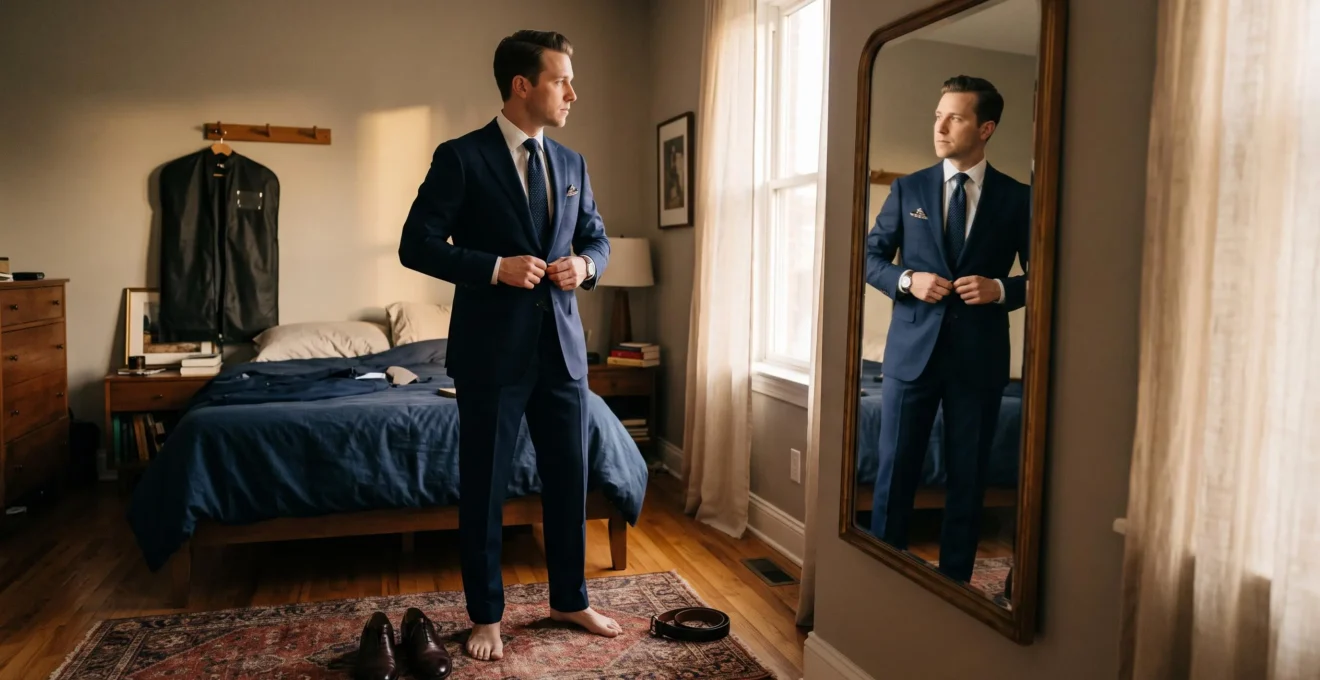
Getting men’s formal attire right means dressing for the occasion rather than simply wearing the smartest clothes available. A beautifully tailored suit can look entirely appropriate at a wedding yet feel excessive at a relaxed restaurant dinner. Conversely, an elegant blazer and trousers may be insufficient for a ceremony with a defined formal dress code.
The solution is to establish the expected level of formality before choosing individual garments. Start with the invitation, consider the venue and time of day, then build an outfit whose suit, shirt, footwear and accessories communicate the same degree of refinement. Good fit and careful preparation matter just as much as the clothing itself.
This approach works across weddings, business functions, formal dinners and ceremonies, although dress-code terminology varies between English-speaking countries. British etiquette, for example, distinguishes black tie from morning dress, while private events in other settings may interpret the word “formal” differently. When expectations remain uncertain, confirming them with the host is more reliable than making assumptions based on appearance alone.
Men’s formal attire: the essentials
- Choose the dress code before the outfit. The invitation, venue and occasion determine whether a lounge suit, dinner suit or smart separates are appropriate.
- Prioritise fit and consistency. Correct shoulders, trouser length, footwear and restrained accessories make an outfit look intentional.
- Prepare the complete outfit before the event. Alterations, a full fitting and final garment care prevent avoidable mistakes.
- Why Can the Same Suit Be Appropriate at One Event and Wrong at Another?
- How Can You Build a Formal Outfit Without Missing the Small Details?
- Lounge Suit, Dinner Suit or Smart Tailoring: Which Does the Occasion Require?
- The Formalwear Mistake That Can Make a Good Suit Look Wrong
- When Should You Prepare Your Outfit Before a Wedding or Formal Event?
- How Can You Dress Elegantly for Dinner Without Looking Overdressed?
- Silk, Knitted or Textured Tie: Which Works Best for the Occasion?
- How Can Men Build Elegant Outfits Without Wearing a Full Suit?
Why Can the Same Suit Be Appropriate at One Event and Wrong at Another?
The same suit can be appropriate at one event and unsuitable at another because formality depends on the occasion, not just the garment. A navy lounge suit may be ideal for a daytime wedding but inadequate for an evening gala requiring black tie. The invitation, setting and accompanying accessories determine whether the outfit meets expectations.
Every dress code establishes an informal formality floor and ceiling: a minimum standard guests should meet and an upper boundary beyond which their clothing may look excessive. These boundaries are useful guidelines rather than universally fixed rules. At a business ceremony, a dark suit and conventional tie might sit comfortably within the expected range. At a black-tie dinner, the same combination falls below the standard.
The suit itself also sends signals. A matte navy wool suit with notch lapels and two buttons communicates conventional business or social formality. A darker suit with peak lapels or a double-breasted configuration can appear more ceremonial, depending on its styling. Fabric sheen, lapel shape and button arrangement influence the impression, but none automatically converts a lounge suit into eveningwear.
Consider a hypothetical guest wearing one navy suit to three occasions:
- Afternoon wedding: with a white shirt, understated silk tie and polished leather shoes, the suit may fit the occasion perfectly.
- Business reception: the same suit remains suitable, although a quieter tie or more restrained accessories may be preferable.
- Black-tie evening gala: the suit no longer meets the stated dress code, regardless of its quality or price.
A practical way to predict the room is to examine three factors: venue, time and expected guest attire. A ballroom, formal evening schedule and traditionally dressed audience suggest a higher standard than an informal restaurant gathering. However, time and venue are clues, not replacements for explicit instructions.
The Canadian Heritage protocol guidance on dress for national ceremonies identifies the host as the authority on guest attire and treats a lounge suit as the default when an invitation does not specify dress. That rule applies to its official ceremonial context; it should not be assumed to govern every private event internationally.
Both extremes can create a mismatch. A dinner jacket at an ordinary daytime gathering may suggest that the guest misunderstood the occasion, while open-collar separates at a strict formal ceremony may signal insufficient attention to the invitation. At traditionally formal events, underdressing can be particularly conspicuous, but neither error is universally worse.
Once the appropriate level is established, the next challenge is ensuring that every component supports it rather than introducing conflicting signals.
How Can You Build a Formal Outfit Without Missing the Small Details?
Build a formal outfit from the main garments outward: choose the correct suit, add an appropriate shirt and tie, then coordinate footwear and accessories. Check leather colours, metal finishes, trouser length and shirt cuffs before leaving. A restrained combination with consistent details usually looks more polished than one overloaded with decorative accessories.
Start with the suit because it establishes the outfit’s shape, colour and overall degree of formality. A dark wool suit offers a versatile foundation for many occasions requiring conventional tailored clothing. Next, select a shirt with a collar that sits neatly against the neck and supports the intended tie knot without spreading or collapsing.
Footwear deserves attention before smaller accessories. Dark, well-maintained leather oxfords are a dependable choice for many formal lounge-suit outfits. Depending on the dress code, polished derbies may also work. Black tie has more specific eveningwear expectations, so everyday business footwear should not be treated as automatically interchangeable with it.
Leather and metal coordination then provide visual consistency. The Art of Manliness guide to matching belts with outfits recommends coordinating formal shoes and belts in colour and finish, while keeping buckles consistent with other visible metal accessories.
For example, black shoes, a black leather belt and a watch with a black leather strap create a cohesive combination. The buckle, watch case and cufflinks can also share broadly compatible metal tones. These are traditional styling conventions, not requirements for identical materials or colours in every circumstance.
Different textures can work together. Matte wool, polished leather and silk provide contrast without necessarily competing. The objective is to control their visual emphasis. A highly reflective tie, conspicuous cufflinks and bright pocket square worn together may create more attention than the occasion calls for.
A useful one-accent rule is to choose one noticeable decorative element and keep the others quiet. If the tie carries a pattern, use a discreet pocket square or omit it. If a lapel accessory is appropriate for the ceremony, avoid adding unnecessary embellishments elsewhere.
Before leaving, inspect the details people notice at close range:
- Jacket sleeves should generally reveal a small amount of shirt cuff.
- Trousers should fall cleanly over the selected shoes without excessive bunching.
- The shirt collar should support the tie knot and sit comfortably around the neck.
- Temporary stitching securing jacket vents should be removed, along with any transport stitching that is intended to be opened.
- Shoes should be clean, with finishes appropriate to the dress code.
With the individual pieces coordinated, the remaining decision is whether the occasion actually calls for a conventional suit, dedicated eveningwear or a more flexible tailored combination.
Lounge Suit, Dinner Suit or Smart Tailoring: Which Does the Occasion Require?
A lounge suit is the conventional choice for many business and social occasions requiring a suit and tie. A dinner suit is appropriate when an evening event specifies black tie. Smart tailoring combines coordinated separates for occasions permitting greater flexibility. The invitation takes precedence over assumptions based on the venue or time.
These categories differ in both their construction and their purpose.
- Lounge suit: a matching tailored jacket and trousers, ordinarily accompanied by a dress shirt, tie and formal shoes when the dress code calls for traditional suit attire.
- Dinner suit: formal eveningwear, typically incorporating a dinner jacket with suitable lapel facings, matching formal trousers, an evening shirt, a black bow tie and appropriate black footwear.
- Smart tailoring: a coordinated jacket and trousers that are not part of the same suit, styled with a shirt, suitable shoes and optional accessories according to the occasion.
Traditional British etiquette distinguishes additional categories, including morning dress and white tie. Debrett’s guide to events and dress codes associates black tie with formal evening occasions and describes morning dress as suitable for certain formal daytime ceremonies. Those distinctions matter because an invitation specifying morning dress or white tie cannot simply be satisfied by choosing a darker lounge suit.
For everyday decision-making, the wording of the invitation provides the strongest initial direction.
| Invitation or setting | Likely appropriate choice | When to clarify |
|---|---|---|
| Black tie | Traditional dinner suit with prescribed evening accessories | Ask if the invitation includes an unfamiliar variation or allowance. |
| Lounge suit or business formal | Matching suit, dress shirt, tie and formal leather shoes | Clarify unusual ceremonial requirements. |
| Formal wedding | A conventional suit may be suitable, depending on local custom and the invitation. | Ask whether black tie or morning dress is intended. |
| Dress smart or smart casual | Coordinated jacket and trousers with appropriately refined footwear | Clarify if the event is ceremonial or unusually formal. |
| Upscale evening event without a code | A dark lounge suit may be a cautious starting point. | Contact the host before assuming black tie is expected. |
The word “formal” requires particular care. In some North American social contexts, formal evening attire may imply black tie. In other settings, a conventional dark suit may be acceptable. Treating the term as a guaranteed synonym for lounge suit would therefore be misleading.
Smart tailoring offers flexibility when the dress code permits it. For example, a navy blazer with charcoal trousers, a white shirt and dark leather derbies can create an elegant reception outfit. The contrasting jacket and trousers should look deliberately paired, not like mismatched pieces of two suits.
Nevertheless, separates do not replace specified formalwear. The same blazer outfit that looks confident at a restaurant reception may be inappropriate for a wedding ceremony requiring a lounge suit or a dinner with an explicit black-tie instruction.
When the invitation is ambiguous, a short question to the host can prevent an expensive wardrobe mistake. Asking whether guests are expected to wear lounge suits or black tie is clearer than asking vaguely how smart everyone will be.
Once the correct category has been chosen, its success depends less on how expensive the garments are than on how accurately they fit the wearer.
The Formalwear Mistake That Can Make a Good Suit Look Wrong
The most consequential mistake in an otherwise appropriate formal outfit is poor fit. Incorrect shoulder width, a gaping collar or excessive trouser fabric can undermine even an expensive suit. A moderately priced suit with sound proportions and carefully completed alterations often looks better than a premium garment that does not follow the wearer’s shape.
Fit influences the complete silhouette. When jacket shoulders extend beyond the natural shoulder line, the fabric can collapse or create an exaggerated shape. When the waist is too tight, the front of the jacket may pull around the fastening button. Excess fabric can make the outfit appear untidy even when its colour and styling are correct.
Four areas deserve particular attention during a mirror fitting:
- Shoulders: the jacket shoulder should broadly align with the natural shoulder, without obvious overhang or restrictive pulling. The appropriate position also depends on the jacket’s intended construction.
- Collar: the jacket collar should rest against the shirt collar without a conspicuous gap when standing naturally.
- Button closure: the jacket should fasten without pronounced horizontal tension or excessive loose fabric around the torso.
- Trousers: the hem should fall neatly over the shoes. A clean single break is a traditional option, although no break or a slight break can also suit particular cuts.
Sleeve length matters as well. Jacket sleeves that cover the hands conceal the shirt cuffs and make the proportions appear less controlled. Sleeves that are excessively short can be equally distracting.
Off-the-rack sizing often produces compromises because one body measurement determines the garment size while several others may differ from the manufacturer’s proportions. A man might size up to accommodate his chest, only to find that the sleeves are too long and the jacket lacks definition at the waist.
This is where alterations become valuable. Sleeve shortening, trouser hemming and modest waist adjustments are commonly considered, although feasibility depends on seam allowances, garment construction and the amount of correction required.
Structural fit problems are different. Significant shoulder-width changes and major jacket-length alterations are usually difficult, costly or impractical. Small adjustments may sometimes be technically possible, but they should not be assumed when purchasing a suit.
The most reliable buying strategy is therefore to select a jacket with satisfactory shoulders, overall length and collar behaviour before planning refinements elsewhere. A tailor can then assess which adjustments are worthwhile. Minor alterations may be more economical than replacing a suit, but this depends on the garment and the work required.
Perform a final fitting while standing, sitting and walking. A suit that photographs well in a stationary mirror but restricts movement can still be unsuitable for an event involving dining, standing or dancing.
Even the best-fitting suit requires enough preparation time to be cleaned, pressed, checked and worn comfortably on the day.
When Should You Prepare Your Outfit Before a Wedding or Formal Event?
Begin preparing formalwear several weeks before an important event, especially if buying a suit or arranging alterations. Complete a full outfit fitting several days beforehand, check footwear comfort and organise pressing before the final day. The exact schedule depends on tailor availability, travel and garment condition, so confirm deadlines with the relevant providers.
Preparation works best as a reverse timeline rather than one large task left until the evening before the event. A practical schedule might look like this:
| Time before the event | Recommended preparation | Reason |
|---|---|---|
| 3–6 weeks | Confirm the dress code, select garments and book alterations if needed. | Allow time for fitting appointments and possible corrections. |
| 1–2 weeks | Check alteration progress, inspect accessories and begin testing new shoes indoors. | Identify missing items and potential discomfort. |
| 3–5 days | Wear the complete outfit for a full rehearsal. | Check fit, comfort and coordination under realistic conditions. |
| 1–2 days | Arrange appropriate pressing or steaming, clean shoes and pack carefully. | Reduce last-minute garment care and travel problems. |
| Event day | Dress with sufficient time for a final inspection. | Avoid rushed adjustments and overlooked details. |
These intervals are planning suggestions, not guaranteed alteration turnaround times. A tailor may need more or less time depending on workload and the complexity of the work.
A full dress rehearsal is especially important because garments can behave differently together. Trousers that looked correctly hemmed while barefoot may appear too long with the chosen shoes. A tie knot may crowd the shirt collar, and a belt may affect the drape of the waistband.
Five checks to complete before the event
- Confirm the dress code: save the invitation wording or a written clarification from the host.
- Complete the outfit fitting: check the suit with its intended shirt and shoes, and record any remaining adjustments.
- Lay out every accessory: place the tie, belt, socks, watch and other required items together so missing pieces are immediately visible.
- Test comfort: walk, sit and stand in the complete outfit, noting any rubbing, restriction or garment displacement.
- Prepare a ready-to-wear outfit: check that garments are clean and pressed, shoes are maintained and everything needed is packed or laid out.
Weather creates another possible complication. Before travelling, review the forecast and choose outerwear suitable for both the conditions and the occasion. A refined dark overcoat is often more harmonious with a formal suit than an obviously casual outer layer. If rain is expected, consider a discreet umbrella and suitable protection for leather shoes.
For destination weddings or business trips, packing deserves particular care. A suitable garment bag, carefully folded accessories and an understanding of available pressing services can help reduce problems on arrival. A spare shirt or tie may also be useful where travel disruptions or stains are plausible.
Last-minute preparation rarely ruins an outfit through one dramatic mistake. More commonly, several avoidable details accumulate: wrinkled trousers, poorly maintained shoes, an uncomfortable collar and adjustments that were never completed.
With the clothing ready, it becomes easier to make smaller style adjustments for occasions that call for elegance without the full ceremonial treatment.
How Can You Dress Elegantly for Dinner Without Looking Overdressed?
For a dinner without a strict dress code, aim for a polished outfit that reflects the restaurant, occasion and expected company. A fitted jacket, smart trousers and quality leather shoes often provide sufficient elegance. An open-collar shirt, matte fabrics and minimal accessories can reduce formality without making the outfit look careless.
Dinner occasions vary considerably. A business dinner following a conference has different expectations from an anniversary celebration or a relaxed restaurant gathering among friends. Before selecting clothes, assess three questions: how formal is the venue, what is being celebrated and how are the other guests likely to dress?
When the expected standard is uncertain, targeting the middle of the plausible range is often sensible. A navy or charcoal jacket, well-fitted trousers and a structured shirt can look refined without implying that the evening requires black tie.
Several controlled substitutions help lower the formality of an outfit:
- Remove the tie: an open collar works well for many restaurant dinners when the invitation does not require traditional formal dress.
- Choose matte fabrics: wool and subtly textured tailoring often appear quieter than highly reflective materials.
- Adjust the shoes: dark leather derbies or refined loafers can soften the appearance compared with more formal oxfords.
- Simplify the accessories: omitting the pocket square or decorative lapel accessories produces a cleaner silhouette.
Restraint matters more than the number of elegant items. A carefully fitted jacket and simple shirt can look sophisticated because their proportions and textures work together. Adding a shiny tie, ornate pocket square and conspicuous jewellery may instead suggest an outfit assembled to attract attention.
Evening lighting can influence how colours and textures appear. Navy, charcoal, dark brown and other deeper shades often create a composed appearance after dark. Very lightweight, visibly casual fabrics that suit a sunny daytime gathering may feel less appropriate in a traditionally formal dining room.
This does not mean that every dinner calls for dark tailoring. Seasonal conditions, regional customs and the nature of the restaurant still matter. A summer celebration may welcome lighter fabrics and colours, while a business dinner may favour conventional tailoring.
A hypothetical example illustrates the adjustment: a guest planning to wear a navy suit, bright silk tie and pocket square to an upscale but relaxed dinner could retain the jacket, replace the matching suit trousers with complementary tailored trousers and leave the collar open. The resulting outfit remains deliberate while communicating less ceremony.
There is one important exception. If the invitation specifies black tie or another formal code, the expectation takes priority over personal preferences for relaxed elegance. Simplification is appropriate only when the occasion permits it.
When a tie remains appropriate, its fabric and texture offer another precise way to control how formal the outfit appears.
Silk, Knitted or Textured Tie: Which Works Best for the Occasion?
Smooth silk ties are generally well suited to traditionally formal lounge-suit occasions, while textured silk offers a slightly softer effect. Knitted ties usually appear more relaxed and work particularly well with smart tailoring. The correct choice depends on the dress code, shirt collar, jacket fabric and the visual emphasis the tie creates.
A tie occupies a prominent position at the centre of an outfit. Its surface, shape and knot can therefore shift the perceived formality of the entire combination.
Permanent Style‘s guide to tie materials and textures distinguishes the polished appearance of satin silk from the more relaxed character of knitted silk, wool and linen. This hierarchy is specialist menswear guidance rather than a universal regulation, but it provides a practical basis for selecting neckwear.
| Tie type | Visual character | Suitable occasions |
|---|---|---|
| Smooth silk or satin silk | Refined surface, potentially noticeable sheen | Formal lounge-suit events, weddings and ceremonies where a necktie is appropriate |
| Textured woven silk | Subtle depth, controlled shine | Business functions, weddings and sophisticated social occasions |
| Knitted silk | Pronounced texture, frequently a squared end | Smart tailoring, relaxed receptions and less formal dinners |
| Wool or linen | Matte finish and seasonal texture | Less formal tailored outfits where the material suits the season |
Not all silk ties are equally shiny. Grenadine has an open, textured weave, while other woven silks may feature a tighter surface or visible slubs. Textured materials can make a formal outfit feel less rigid without sacrificing refinement.
The collar and tie knot should also work together. A substantial tie may create a bulky knot that overwhelms a narrow collar opening. A finer tie or smaller knot can produce better proportions. Conversely, a wider collar may accommodate a larger knot, provided the fabric remains manageable.
Colour and pattern offer additional control. Deep burgundy, navy and muted tonal designs are often dependable with dark suits. A small geometric pattern or understated texture can add interest without dominating the outfit. Large, vivid patterns draw more attention and may be better reserved for occasions where personal expression is expected.
A knitted tie can look excellent with a navy blazer and grey trousers, but it generally makes a conventional wedding suit appear more relaxed. Similarly, a highly lustrous satin necktie can seem unnecessarily ceremonial when paired with a casual dinner outfit.
Importantly, the black bow tie prescribed by traditional black-tie attire is a separate dress-code requirement. A regular silk necktie, regardless of its quality, is not an equivalent substitute for it.
Rather than selecting a tie in isolation, examine it alongside the shirt and jacket in natural light. The most successful combination maintains balance between colour, surface texture and knot size.
Where the occasion permits even greater flexibility, the same principles of proportion and coordination can produce an elegant outfit without a matching suit at all.
Key takeaways before choosing separates
- Coordinated separates should look intentionally different in colour or texture, rather than like two pieces from mismatched suits.
- Shirts and footwear can move the same jacket-and-trouser combination towards business elegance or refined casual dressing.
- An explicitly stated dress code overrides the flexibility of smart tailoring, regardless of how elegant the separates look.
How Can Men Build Elegant Outfits Without Wearing a Full Suit?
Men can dress elegantly without a full suit by combining a well-fitted tailored jacket with complementary trousers, a suitable shirt and carefully chosen shoes. The jacket and trousers should have deliberate contrast in colour or texture. This approach works particularly well for smart dinners and receptions, but it cannot replace formalwear when the invitation specifies a stricter dress code.
A matching suit provides coordination automatically because its jacket and trousers share the same cloth. When wearing separates, that built-in consistency disappears. The outfit therefore needs a new organising principle: compatible proportions, clear visual contrast and a consistent degree of formality.
The simplest method is to choose one neutral foundation and build around it. Charcoal or mid-grey tailored trousers are particularly versatile because they work with several jacket colours without looking like an incomplete matching suit.
For example, a navy blazer with charcoal trousers is a familiar and balanced combination. A textured brown wool jacket can also work with grey trousers for a more relaxed look. If choosing checked tailoring, keep the other major garment comparatively quiet so that competing patterns do not dominate.
Contrast should be visible enough to look deliberate. Two pieces in almost identical shades of navy may resemble a mismatched suit when their fabric textures or dye tones differ slightly. Greater contrast, whether in colour or material, helps establish that the garments were intentionally selected as separates.
Once the jacket and trousers are coordinated, the shirt and footwear determine how elegant or casual the result becomes.
| Component | More formal appearance | More relaxed elegance |
|---|---|---|
| Jacket | Structured navy blazer | Softly tailored navy or textured jacket |
| Trousers | Pressed charcoal wool trousers | Mid-grey or textured tailored trousers |
| Top | Crisp dress shirt, with a tie if appropriate | Open-collar shirt, fine knit polo or refined turtleneck |
| Shoes | Polished leather oxfords or derbies | Dark leather loafers or understated derbies |
| Accessories | Coordinated leather and restrained details | Minimal accessories, with an emphasis on texture |
The difference is not simply the removal of a tie. A structured shirt, pressed trousers and polished footwear create a more formal impression even without matching suiting. Softer tailoring and knitwear make the same basic combination more relaxed.
The limitations remain essential. A blazer and trousers should not be substituted for a dinner suit at a black-tie event. Traditional formal weddings or ceremonies that require a lounge suit, morning dress or another specified category also call for the requested garments.
Funerals deserve particular care because traditions vary across families, communities and countries. A dark suit is a cautious choice for many conventional services, but the family’s instructions and cultural expectations should guide the decision. Separates are not automatically inappropriate everywhere, nor are they universally acceptable.
For occasions without a fixed dress code, coordinated separates can offer useful versatility. A well-fitting navy blazer, neutral tailored trousers and two appropriate shirt options can cover a range of dinners and receptions through small, controlled adjustments.
For the next event, start by reading the invitation carefully, decide whether matching formalwear is required and assemble the complete outfit in advance. That simple sequence makes it easier to dress appropriately without adding unnecessary formality.
Can men wear a black suit instead of a tuxedo to a black-tie event?
A standard black business suit is not the traditional equivalent of a dinner suit or tuxedo. Black tie normally calls for dedicated eveningwear, including the appropriate jacket, trousers and bow tie. If obtaining a dinner suit is difficult, ask the host whether alternatives are acceptable rather than assuming a dark suit meets the requirement.
Are brown shoes acceptable with a navy suit at a formal wedding?
Brown leather shoes can complement a navy lounge suit at many weddings, particularly when the dress code allows conventional daytime tailoring. Darker brown generally creates a more restrained appearance than lighter shades. For especially traditional ceremonies, black shoes may be the safer option. Brown shoes are not an appropriate substitute for the prescribed black footwear of traditional black-tie attire.
Should a suit jacket remain buttoned when sitting down?
A conventional single-breasted lounge-suit jacket is generally unbuttoned when sitting to avoid pulling and unnecessary creasing. It can be fastened again when standing. Double-breasted jackets follow different conventions and are commonly kept fastened while standing. The precise practice depends on the garment’s design and the setting.
Can a man wear no tie to a wedding if the invitation does not specify a dress code?
Possibly, but the absence of a stated dress code does not automatically mean ties are optional. Consider the ceremony’s setting, time of day and cultural expectations. For a traditional wedding where the level of formality is uncertain, a suit and tie is generally a cautious starting point. The host or wedding party can clarify whether open-collar tailoring is appropriate.
Is a pocket square necessary to make a formal suit look complete?
No. A pocket square is an optional finishing detail for most lounge-suit outfits. A plain white square can provide understated contrast, but leaving the breast pocket empty is also acceptable. For traditional black tie, a white pocket square is a classic choice rather than a substitute for any essential dress-code element.