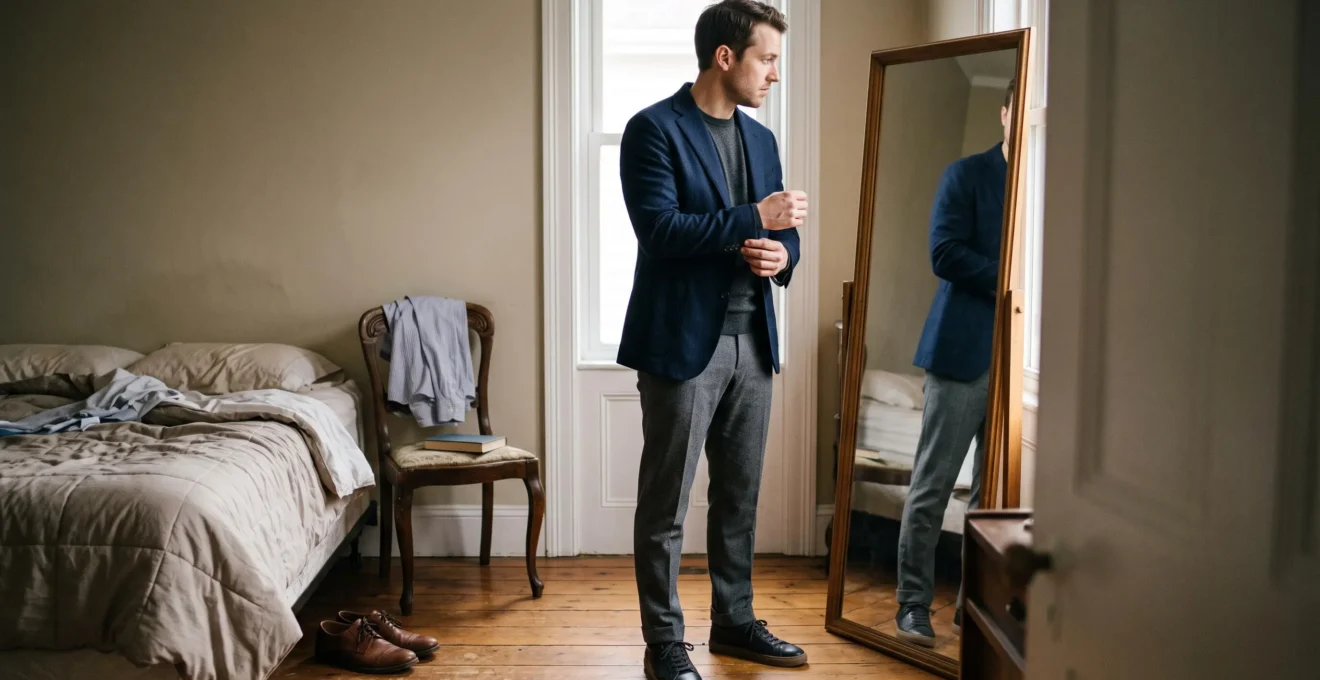
Smart-casual dressing becomes difficult when the occasion gives you little guidance. An office allows jeans but expects professionalism. A dinner reservation sounds special without being formal. A weekend gathering calls for effort, but a suit would feel excessive.
The solution is not to collect more clothes or automatically wear a blazer. It is to build outfits whose individual pieces communicate a similar level of formality, then adjust one element to suit the occasion. Well-fitting chinos, dark jeans, softly tailored trousers, knitwear and versatile jackets provide enough flexibility for most situations where smart casual is appropriate.
Start with the trousers, choose a compatible upper layer and finish with footwear that supports the overall impression. Fabric texture, garment construction and fit often matter more than whether an item has traditionally been labelled formal or casual.
These principles work across many English-speaking settings, although workplace policies, restaurant expectations and local conventions always take precedence over general style advice.
Smart-casual dressing at a glance
- Keep most garments within a similar formality range, using one refined element to elevate relaxed foundations.
- Choose trousers according to the setting: chinos for flexibility, dark jeans for relaxed occasions and tailored trousers when additional polish is needed.
- Use a versatile blazer, thoughtful footwear or a refined knit to adjust the outfit without changing everything.
- Why Do Some Smart-Casual Outfits Look Effortless While Others Feel Confused?
- How Can You Build a Smart-Casual Outfit That Works for Work and Dinner on the Same Day?
- Chinos, Tailored Trousers or Dark Jeans: Which Works Best for Smart-Casual Dressing?
- The Smart-Casual Mistake That Makes an Outfit Look Like an Incomplete Suit
- When Should You Make a Smart-Casual Outfit More Formal During the Day?
- How Can You Dress Elegantly for Dinner Without Looking Overdressed?
- Structured, Unstructured or Knitted Blazer: Which Is Most Versatile?
- How Can Men Build Elegant Outfits Without Wearing a Full Suit?
Why Do Some Smart-Casual Outfits Look Effortless While Others Feel Confused?
Effortless smart-casual outfits usually work because their garments belong to compatible levels of formality. A relaxed blazer, fine knit, chinos and understated shoes create a consistent impression. Confused outfits often combine pieces that signal conflicting occasions, such as formal suit trousers, a sporty hoodie and heavily technical trainers. The problem is usually compatibility rather than clothing quality.
Consider clothing on a practical formality spectrum. At one end sit performance sportswear, distressed denim and athletic footwear. Moving upward are clean casual basics, chinos, knitted polos and understated sneakers. Soft tailoring, wool trousers and leather shoes occupy a more refined middle range, followed by business suits and formal eveningwear.
This is a styling tool, not a universally recognised ranking. Permanent Style‘s seven levels of formality offer a more detailed editorial framework, showing how jacket construction, trousers, colour and pattern influence an outfit’s overall character.
A useful starting principle is to avoid mixing too many distant formality levels. Two neighbouring ranges can work together naturally; three widely separated ones require considerably more care.
For instance, a knitted polo, navy chinos and brown suede loafers create a coherent dressed-up casual outfit. Replacing the loafers with brightly coloured running shoes may change the message substantially, particularly if the occasion calls for understated clothing.
Compare that with wearing polished suit trousers and a formal business shirt beneath an obviously casual jacket. Each piece may be attractive individually, but the combination can look like formal clothing that has been partially dismantled rather than a deliberate casual outfit.
When uncertain, use a simple substitution test:
- Identify the garment that appears significantly more formal or casual than everything else.
- Imagine replacing only that garment with a more compatible alternative.
- Keep the replacement if the overall outfit becomes easier to understand at a glance.
The fear of looking as though you are trying too hard often encourages unnecessary informality. Yet removing every refined element can make an outfit appear underconsidered. Instead, aim for a visible but controlled degree of effort.
There is no established universal rule that observers prioritise outfit coherence over brand or price. As a practical styling judgment, however, checking how garments relate to one another is more useful than relying on an expensive individual piece to rescue an inconsistent combination.
Once the outfit feels coherent, adapting it to different situations becomes much easier. The next challenge is making the same foundation work from morning to evening.
How Can You Build a Smart-Casual Outfit That Works for Work and Dinner on the Same Day?
Build a work-to-dinner outfit around neutral trousers, a refined shirt or knit and adaptable footwear. Choose a base that already suits the more casual setting, then identify one change that can elevate it for the other occasion. Swapping shoes, adding a blazer or changing the outer layer usually makes more sense than carrying an entirely separate outfit.
Suppose your working day involves a relaxed office, followed by dinner at a moderately upscale restaurant. Start with charcoal trousers and a navy fine-knit sweater. Clean leather sneakers may be appropriate for the office, while dark loafers can make the same combination look more refined for dinner.
Alternatively, keep the shoes and add an unstructured blazer. This creates a stronger sense of occasion without introducing the rigidity of a business suit.
The right adjustment depends on what each venue expects. Bright colours, lightweight casual fabrics and conspicuously athletic shoes often emphasise relaxation. Darker tones, richer texture and restrained accessories may create a more evening-oriented impression, although these effects are contextual rather than fixed dress-code rules.
Use the day’s calendar to decide whether a change is worthwhile.
| Daytime and evening schedule | Starting outfit | Recommended adjustment |
|---|---|---|
| Casual office and informal dinner | Chinos, knitted polo, understated sneakers | None, provided the restaurant welcomes casual clothing |
| Smart-casual office and nicer restaurant | Dark trousers, fine knit, leather shoes | Add an unstructured blazer |
| Client-facing work and relaxed dinner | Tailored trousers, open-collar shirt, blazer | Remove the blazer if appropriate |
| Relaxed workplace and special dinner | Dark chinos, refined knit, clean footwear | Change into loafers or add a dressier outer layer |
These are illustrative combinations, not guarantees of admission to a particular venue or compliance with an employer’s dress policy.
The common mistake is making the daytime outfit unnecessarily formal because of the evening plans. A crisp business shirt, structured suit jacket and highly polished formal shoes may feel awkward at a relaxed dinner, even after the jacket comes off.
Instead, choose the foundation around the less formal context, provided it still meets any mandatory daytime dress code. Add refinement when required rather than building a fully formal outfit and attempting to dismantle it later.
If carrying additional clothing is inconvenient, prioritise pieces that perform in both settings. A well-chosen lightweight blazer can be worn, carried or removed. Dark, plain leather shoes may also bridge situations more easily than highly specialised footwear.
That foundation is particularly effective when your trousers already sit comfortably between professional and relaxed dressing. Choosing them carefully reduces the number of adjustments needed elsewhere.
Chinos, Tailored Trousers or Dark Jeans: Which Works Best for Smart-Casual Dressing?
Chinos are a useful everyday default for smart-casual dressing, dark jeans work particularly well in relaxed offices and social settings, and tailored trousers provide greater polish when an occasion is uncertain. None is universally best. The right choice depends on dress codes, fabric, fit, weather and how naturally the trousers combine with your existing shoes and upper layers.
These three categories overlap more than their names suggest. A sharply cut cotton trouser may look considerably dressier than a washed, loose-fitting chino. Likewise, dark plain denim generally appears more refined than distressed or heavily faded jeans.
As discussed in Permanent Style’s trouser formality comparison, drape, fabric construction and the surrounding garments influence how different trouser styles work with jackets and shoes. Chinos are not automatically compatible with every tailored blazer.
Use the comparison below as a practical wardrobe guide rather than an absolute ranking.
| Criterion | Chinos | Tailored trousers | Dark jeans |
|---|---|---|---|
| Typical formality | Casual to moderately smart | Smart to relatively formal | Casual to moderately smart |
| Useful settings | Office, dinner, weekend | Client-facing work, polished dinners, professional events | Relaxed office, social occasions, weekend |
| Seasonal flexibility | Broad, depending on cotton weight | Broad, depending on wool, cotton or blends | Broad, with weight affecting comfort |
| Care considerations | Many are machine washable | Care varies; some require professional cleaning | Many are machine washable, subject to the label |
| Compatible upper layers | Polos, casual shirts, knitwear, suitable blazers | Refined knitwear, shirts, tailored jackets | Knitwear, casual shirts, textured or soft jackets |
| Main limitation | Very casual fabric can conflict with formal tailoring | May seem overly formal with sporty clothing | May be excluded by workplace or venue policies |
Fabric selection changes the result. Heavyweight denim can create a substantial, deliberate silhouette, while a dark, clean surface often contributes more to perceived smartness than a selvedge label alone. Lightweight cotton chinos may feel more appropriate in warmer weather. Wool flannel can add texture and softness to tailored trousers in cooler conditions.
Wrinkle behaviour and maintenance cannot reliably be determined from these categories alone. Fibre composition, finishing, construction and manufacturer instructions all matter. Check the care label before assuming that wool trousers need dry cleaning or that every chino can safely be machine washed.
Fit is equally important. Use these checkpoints when trying trousers on:
- The waistband should stay comfortably in place without excessive pressure or constant adjustment.
- The seat should allow sitting and movement without pronounced pulling.
- The thigh and knee should have enough room to follow the natural leg shape.
- The leg opening should work with your intended footwear rather than catching awkwardly around it.
- The hem should fall deliberately, whether you prefer little break or a modest fold over the shoe.
Overly tight trousers can distort the silhouette; excessive length can produce uncontrolled pooling. Neither problem is corrected by expensive fabric.
For a small wardrobe covering several settings, start with neutral chinos or softly tailored trousers according to your workplace. Add dark jeans if your regular social environments welcome denim.
After settling on trousers, the next compatibility challenge is the jacket. The closer it resembles formal suit tailoring, the more carefully its relationship with your trousers needs to be considered.
The Smart-Casual Mistake That Makes an Outfit Look Like an Incomplete Suit
An outfit can resemble an incomplete suit when its jacket and trousers appear almost matched but differ noticeably in fabric, colour or finish. A formal suit jacket paired with similar-looking trousers can suggest that the original matching pair is missing. Deliberate contrast, compatible textures and less formal supporting garments help separate intentional smart-casual tailoring from accidental mismatching.
The central problem is the near-match. Imagine pairing a navy worsted suit jacket with trousers in a slightly different navy. From a distance, the outfit may resemble a suit. Up close, the mismatch becomes obvious, particularly if one fabric is smoother or more reflective than the other.
A clearer distinction generally works better. Consider a grey herringbone sport coat with navy chinos, or a textured navy blazer with mid-grey wool trousers. The garments are visibly separate, yet their overall formality remains compatible.
Contrast need not mean using dramatically different colours. Fabric texture, pattern, weight and construction can provide separation within a restrained palette.
However, wearing different colours does not automatically make two garments compatible. An exceptionally smooth, structured business jacket may still look out of place with faded jeans or soft jersey trousers.
That creates the second version of the incomplete-suit problem: the jacket and trousers contrast successfully, but the shirt and shoes keep the entire outfit anchored in conventional office formality.
For example, a rigid navy suit-style jacket, plain white business shirt and formal black lace-ups can feel inconsistent with relaxed cotton trousers. Replacing the shirt with a fine knit or choosing less formal leather footwear may create a more deliberate balance.
Use a mirror check before leaving:
- Would the jacket and trousers plausibly be mistaken for a slightly mismatched suit?
- Does the jacket’s texture complement the trousers rather than compete with them?
- Do the shirt, knit and shoes support the intended level of formality?
If the outfit looks like a suit missing one component, increase the contrast or soften the upper layer. If it resembles ordinary weekend clothing, introduce one refined element instead.
Making that distinction in advance also gives you control over how formal you appear later in the day, especially when professional circumstances change unexpectedly.
When Should You Make a Smart-Casual Outfit More Formal During the Day?
Make a smart-casual outfit more formal when the occasion calls for stronger professional credibility, clearer respect for the setting or a more deliberate first impression. Client meetings, interviews, presentations and unfamiliar workplaces are common triggers. Usually, one measured adjustment—such as adding a blazer or changing into a collared shirt—is enough without turning the outfit into full business attire.
The relevant question is not whether formal clothing is inherently more respectful. It is whether your appearance matches the expectations of the people and environment involved.
Situations worth assessing include:
- Meeting a client, customer or external partner for the first time.
- Attending an interview or visiting an unfamiliar workplace.
- Giving a presentation or representing an organisation publicly.
- Participating in professional photography or a recorded presentation.
- Entering a meeting where you are less familiar to the group or uncertain about established norms.
A simple elevation ladder helps prevent excessive changes. Begin with a refined knit and smart trousers. Add a compatible blazer when necessary. For another step, replace the knit with a collared shirt beneath the blazer. Add a tie only when the setting warrants one.
These are possible combinations rather than mandatory stages. A shirt without a jacket may suit some workplaces better than knitwear with one, and clothing policies should always be checked.
Before a client meeting, for example, a man already wearing dark trousers, a white shirt and loafers may only need to put on a mid-grey blazer.
When expectations are uncertain, slightly more polished clothing can be a sensible precaution, particularly for first impressions. Nevertheless, there is no universal evidence-based rule that being overdressed is always better than being underdressed. In creative, highly casual or practical working environments, excessive formality can be just as conspicuous as insufficient effort.
If you arrive wearing more formal clothing than everyone else, adjust gradually. Remove your blazer if appropriate, loosen an unnecessary tie or roll your shirt sleeves neatly when the circumstances permit. One small adjustment usually preserves the coherence of the outfit better than attempting to change its entire character.
Five checks before leaving for a mixed-occasion day
- Identify the strictest dress requirement. Write down the event or meeting where clothing expectations are least flexible.
- Select one neutral foundation. Lay out trousers and a shirt or knit that meet the requirements of your normal daytime setting.
- Choose the appropriate formal adjustment. Identify the blazer, shirt or footwear change that will suit the more demanding occasion.
- Check the complete outfit. Take a mirror photo to confirm that the colours, textures and fit remain coherent after the adjustment.
- Prepare the transition. Decide which item you will carry, add or remove, and note when the change should happen.
Evening occasions require a slightly different judgment. Rather than increasing formality automatically, they often reward thoughtful texture, well-chosen shoes and an understanding of the venue.
How Can You Dress Elegantly for Dinner Without Looking Overdressed?
Dress elegantly for dinner by matching the restaurant, host and occasion rather than automatically reaching for a suit. Well-fitting trousers, a refined knit or open-collar shirt, and appropriate leather footwear can create a polished appearance. Darker colours, interesting textures and an optional blazer help communicate effort without making the outfit unnecessarily formal for a relaxed evening.
Start by assessing the environment. A neighbourhood restaurant, an upscale dining room and a private celebration may have very different expectations, even when all three involve dinner reservations.
Check the restaurant’s website, current photographs and any published dress requirements. If the invitation comes from a host, consider the event’s purpose and the guidance provided. For a professional dinner, company expectations and the people attending may matter as much as the venue.
The Emily Post Institute‘s dress-code guide describes dressy casual as a balance between casual and formal attire. Its examples include socialising after work and dinner at a nice restaurant, with blazers, suitable trousers and open-collar shirts among the options for men.
Dressy casual and smart casual are not always used identically, however. Their overlap provides a useful reference, not an overriding definition for every English-speaking country or venue.
Reservation time alone is a weak indicator of dress requirements. A late booking does not necessarily call for more formal clothing than an early one. The establishment’s standards and the occasion are more dependable guides.
For an understated evening outfit, try charcoal trousers, a dark textured sweater and brown suede loafers. The trousers establish a refined foundation, while the knit provides visual interest without the structure of a business shirt and tie.
Another option is dark jeans, a quality plain T-shirt and an unstructured blazer, provided denim is appropriate for the venue. This can work particularly well for date nights or informal celebrations where visible effort matters but full tailoring would feel excessive.
Use fabric texture to communicate refinement without adding unnecessary formal elements. Brushed cotton, fine wool knitwear, suede and softly tailored fabrics can make straightforward combinations feel more considered.
Darker palettes and polished footwear are common evening styling choices, not universal requirements. Light-coloured trousers or more casual shoes can also work when the venue and season support them.
If you are worried about being the most dressed-up person present, choose one easily adjustable element. A blazer can be removed, while a knit worn instead of a formal shirt can keep the outfit naturally relaxed throughout the evening.
For a special occasion, a modest degree of extra polish may be desirable because the effort itself communicates care. The goal is not to dress down every occasion, but to avoid adding formality that serves no useful purpose.
A blazer often provides the most convenient final adjustment, but its usefulness depends heavily on its construction. Choosing the right kind determines how comfortably it moves between work, evenings and weekends.
Structured, Unstructured or Knitted Blazer: Which Is Most Versatile?
An unstructured blazer is often the most practical choice for a man who wants one jacket for work, dinner and weekends. Its softer construction can bridge tailored trousers, chinos and some dark jeans more naturally than a rigid business jacket. Structured blazers suit dressier wardrobes, while knitted versions favour comfort and relaxed settings, although their versatility depends on the individual design.
The key distinction is how the jacket is built. Structured blazers commonly use more deliberate shoulder shaping and internal construction to create a defined silhouette. Unstructured versions reduce some of these elements, allowing the fabric to fall more naturally.
Knitted blazers bring additional softness and flexibility, sometimes with a silhouette closer to a cardigan than traditional tailoring.
Construction is not a strict either-or distinction. Some jackets described as unstructured retain partial canvas or internal shaping. Others eliminate most conventional tailoring components.
Permanent Style’s comparison of unstructured jackets discusses these variations, including differences in padding, canvas, lining and fabric. It also highlights how softly constructed jackets can occupy the space between tailoring and casual outerwear.
| Criterion | Structured blazer | Unstructured blazer | Knitted blazer |
|---|---|---|---|
| Typical appearance | Defined, tailored | Soft but recognisably tailored | Relaxed, flexible |
| Strongest context | Professional and dressier occasions | Mixed work and social settings | Relaxed offices and casual outings |
| Pairing tolerance | Often better with smart trousers and shirts | Can work with chinos, knitwear and suitable jeans | Often comfortable with jeans, polos and casual knitwear |
| Travel considerations | May need more careful packing | Can be convenient, depending on fabric | May pack flexibly, depending on knit and construction |
| Main styling risk | Can look like a separated suit jacket | May lose definition if excessively soft | May resemble a cardigan rather than a blazer |
Neither travel performance nor crease resistance can be guaranteed by construction type. Fabric composition, weave, lining and finishing have substantial effects. Similarly, machine washability is specific to the garment; always follow its care instructions.
For a single-blazer wardrobe, consider a navy or mid-grey unstructured jacket in a mid-weight fabric. A visible weave, moderate shoulder definition and conventional lapels help retain enough tailoring character for professional settings.
Then test it against three existing outfits: tailored trousers and a shirt, chinos and a knit, and dark jeans with a casual upper layer. A versatile blazer should feel intentional with most of the combinations you actually wear.
Beware of the extremes. A very structured jacket over highly casual clothing can create the incomplete-suit impression discussed earlier. At the opposite end, a thin knitted jacket with little shoulder or collar definition may function more as a cardigan than a smart outer layer.
Longevity also depends on fit and silhouette. A jacket with comfortable shoulders, sufficient room through the chest and a balanced length may remain useful as styling preferences evolve, but no particular construction guarantees longer physical durability.
Once you have a compatible blazer and a dependable trouser selection, dressing elegantly without a matching suit becomes a question of combining familiar pieces deliberately.
Key takeaways before building your final outfit
- Choose a refined anchor that suits your regular occasions rather than the most formal garment you own.
- Assess fabric, fit and visible construction together; the category name alone cannot determine how elegant a garment looks.
- Keep a small, compatible wardrobe that allows you to adjust formality through one layer or footwear change.
How Can Men Build Elegant Outfits Without Wearing a Full Suit?
Men can build elegant outfits without a full suit by combining one refined anchor, appropriately fitted trousers and a coordinated shirt or knit. A softly tailored blazer, neutral colours and well-chosen footwear provide structure without excessive formality. The essential details are shoulder and waist fit, fabric drape and a consistent level of refinement throughout the outfit.
Begin with a formal anchor. This might be an unstructured blazer, a well-cut wool coat or another refined outer layer appropriate for the weather. It should establish the outfit’s level of polish without forcing every other item toward business tailoring.
Next, choose trousers that complement it. Grey wool trousers often work with a navy blazer, while mid-weight chinos can soften a more casual sport coat. Dark jeans are an option when the dress code permits them and the jacket has an appropriately relaxed construction.
Then select the middle layer. A fine-gauge sweater, knitted polo or open-collar shirt can bridge the trousers and jacket. Texture matters here: the soft surface of wool, a subtly textured cotton shirt or a substantial knit can add visual depth without introducing another contrasting colour.
Three practical details determine whether the combination looks deliberate.
- Fit: The shoulders should sit naturally, the jacket should close without severe pulling, and the trousers should follow the body without excessive restriction or pooling.
- Fabric: Look for pleasing drape, an appropriate weight and a surface texture that works with the other garments. Expense alone does not establish quality or compatibility.
- Colour restraint: Two or three coordinated colours provide a convenient starting point, although additional colours can work when handled carefully.
For a reliable starting combination, try a navy unstructured blazer, mid-grey trousers, a dark fine-knit sweater and dark brown leather shoes. This is an illustrative formula suited to many dressy-casual occasions, not a universal replacement for formalwear.
For warmer weather, consider an unstructured navy jacket, off-white cotton trousers, a lightweight polo and brown loafers. For cooler conditions, a textured grey sport coat, dark trousers and a substantial merino knit can create a similarly polished result.
Separates sometimes seem riskier than a full suit because each garment must be selected independently. A matching suit resolves many compatibility questions in advance, while smart-casual dressing requires attention to fabric, construction and proportions.
That additional choice also brings flexibility. The same trousers can support office clothing or dinner attire. A blazer can be added for an important meeting and removed for a relaxed social gathering. Shoes can change the overall impression without requiring a completely new outfit.
Before leaving home, apply one final coherence test. Check whether the trousers, upper layer and shoes would naturally belong in the same setting. Then identify one element that signals deliberate effort, such as a textured knit, understated leather footwear or a properly fitted jacket.
A polished outfit does not need a prominent accessory, expensive label or conspicuous statement piece. Small, compatible decisions often produce a more useful result than adding further formality.
For your next workday, dinner or weekend gathering, assemble one neutral trouser-and-knit combination, test it with your preferred footwear, and add a blazer only if the occasion benefits from it. Repeat the process with garments you already own before buying anything new.
Can clean sneakers be worn with a smart-casual outfit?
Yes, in settings where the dress code permits them. Understated sneakers with a clean shape can work with chinos, dark jeans or certain relaxed tailored trousers. Highly technical running shoes and heavily worn trainers are generally harder to integrate into a polished outfit. Check workplace and venue rules before assuming sneakers are acceptable.
Is a tie necessary for smart-casual dressing?
Usually not. Open-collar shirts, knitwear and polos can all work in smart-casual outfits. A tie may be appropriate when a particular professional or social occasion requires greater formality, but it should complement the rest of the outfit rather than being added automatically.
Can a black blazer work with blue jeans?
It can, particularly when the jeans are dark, clean and well-fitting, and the blazer has a sufficiently relaxed construction. A rigid, smooth black suit jacket may create an awkward contrast with denim. A textured or softly tailored design is often easier to combine with jeans, provided the occasion allows them.
How many pairs of shoes are needed for a flexible smart-casual wardrobe?
There is no fixed number. A practical starting point is one understated casual pair and one more refined leather pair, such as loafers or simple lace-up shoes. Their colours and styles should work with your existing trousers. If your regular occasions all permit the same footwear, even fewer options may be sufficient.
Does smart casual mean the same thing in every workplace and country?
No. Smart-casual expectations vary across employers, industries, venues and English-speaking regions. Some workplaces welcome dark jeans and sneakers, while others expect tailored trousers and collared shirts. Follow explicit dress requirements first, use local examples to understand unwritten conventions, and adjust your outfit accordingly.