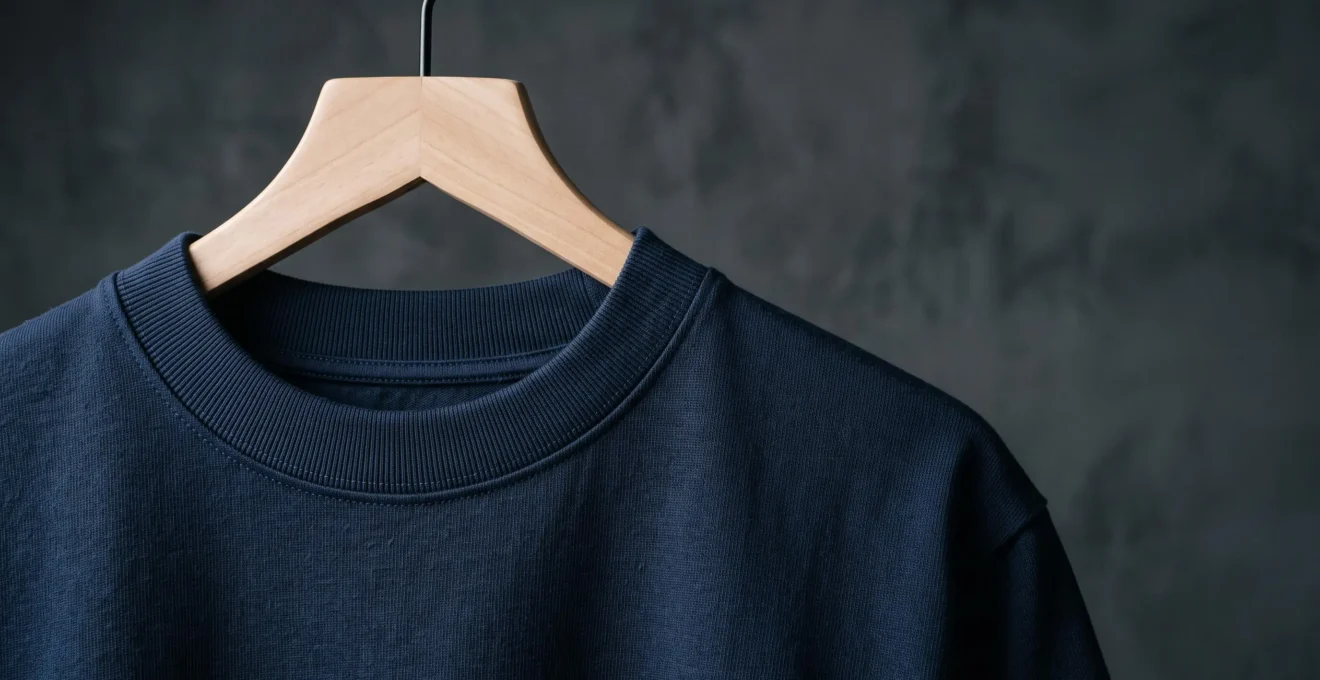
A plain T-shirt looks sharp when its fit, fabric and construction work together. The shoulder seams sit naturally, the sleeves frame the upper arms, the fabric hangs cleanly over the torso and the neckline keeps its shape. Without a graphic or prominent logo, these details become the outfit’s main visual features.
That simplicity makes a good plain tee remarkably useful. A well-chosen shirt can look considered with jeans and trainers, provide a clean foundation beneath an overshirt or sit comfortably under a casual jacket. The same T-shirt can move between different outfits without drawing attention away from the rest of your clothing.
But paying more or choosing the thickest cotton available does not automatically produce a better result. A substantial tee can look awkward when its shoulders are too wide, while a lighter shirt can look excellent when its drape and proportions suit the wearer.
The practical approach is to judge each T-shirt by what it needs to do, how it looks on your body and whether it can maintain that appearance through regular wear.
What makes a plain T-shirt look sharp?
- Prioritise fit: Check the shoulders, sleeves, torso and hem before considering colour or price.
- Choose fabric for its purpose: Lightweight tees suit many layered outfits, while structured midweight and heavyweight options often work well alone.
- Protect your everyday rotation: Follow care labels, inspect collars regularly and replace worn-out staples selectively.
- Why Can Two Plain T-Shirts in the Same Colour Look Completely Different?
- How Can You Tell If a Plain T-Shirt Fits Properly in 60 Seconds?
- Lightweight or Heavyweight T-Shirt: Which Works Better for Everyday Wear?
- The Washing Mistake That Can Ruin a Good Plain T-Shirt After a Few Cycles
- When Should You Retire a Plain T-Shirt From Your Everyday Wardrobe?
- How Can You Plan Five Everyday Tops for a Full Working Week?
- Small Logo or Large Graphic: Which T-Shirt Works Better for Everyday Wear?
- How Can Men Build an Interchangeable Wardrobe Without Making Every Outfit Look the Same?
Why Can Two Plain T-Shirts in the Same Colour Look Completely Different?
Two plain T-shirts in exactly the same colour can look completely different because their fabric construction, collar design and proportions change how they sit on the body. One might have a dense, smooth surface and a structured neckline, while the other looks thin, loose or uneven. Colour alone cannot reveal these differences.
Fabric weight and drape influence the silhouette immediately. A substantial cotton jersey may hang away from the body in relatively defined lines. A lighter, softer knit may fall closer to the torso, following its contours and creating more folds. Neither effect is automatically better, but each produces a different impression.
The construction of the knit matters as well. Yarn characteristics and knitting methods affect fabric weight and appearance, as explained in CottonWorks‘ technical resource on knit textile design.
A compact knit can appear more opaque and visually consistent than a loosely constructed fabric. Under strong lighting, a thinner tee may reveal the outline of an undershirt or the skin beneath it. The apparent depth of a colour can also differ depending on surface texture, finish and the way light interacts with the material.
Collar construction is another immediate signal. Look at the ribbed neckband, the neatness of its stitching and how evenly it sits against the neck. A collar that rolls, twists or spreads unevenly can make an otherwise tidy shirt appear tired.
Finally, consider the cut. Two shirts labelled medium may have very different body widths, shoulder positions and sleeve openings. One might follow your proportions, while another creates unnecessary volume around the waist or arms.
Before buying, compare similarly coloured tees using four simple observations:
- Hold each shirt up and compare its opacity against the same lighting.
- Look at how the fabric falls from the shoulders rather than judging softness alone.
- Gently stretch the neckline within its normal range and check whether it returns to shape.
- Inspect the hem and sleeve stitching for visible twisting, puckering or unevenness.
These checks help identify obvious differences, although they cannot guarantee how a garment will behave after repeated washing.
For everyday dressing, two or three consistent, well-fitting tees can be more useful than five shirts that technically share a colour but behave differently. The next step is determining whether the construction actually suits your body.
How Can You Tell If a Plain T-Shirt Fits Properly in 60 Seconds?
You can assess a plain T-shirt’s fit in about 60 seconds by checking four areas: shoulder seams, sleeve length, chest fit and hem position. The seams should sit naturally near the shoulder bones, sleeves should frame the upper arms, the torso should fall without obvious pulling, and the hem should reach approximately mid-fly.
These are practical starting points rather than universal rules. Your proportions, preferred silhouette and intended use can justify adjustments.
Start at the shoulders. For a conventional fitted or regular-cut tee, the shoulder seam generally sits near the point where the shoulder begins to curve into the upper arm. A seam extending noticeably beyond that point may indicate an oversized cut or a shirt that is too wide. Intentional drop-shoulder styles are a separate choice.
Next, check the sleeves. In a classic fit, they commonly finish around the middle of the upper arm, with enough room to move comfortably. Excessively wide openings can flare outward, while very tight sleeves can distort the garment’s shape.
Then look at the chest and waist. The fabric should skim rather than cling or billow. Horizontal tension lines suggest that the shirt may be too tight. Large folds collecting around the lower torso can indicate unnecessary width or length.
For length, a hem reaching approximately the middle of the trouser fly is a useful reference for a conventional untucked T-shirt. This aligns with the recommendations in The Modest Man‘s visual T-shirt fit guide, which also discusses shoulders, sleeves and torso proportions.
Because a plain tee has no print competing for attention, irregularities in the neckline and silhouette can become more noticeable. That is a styling observation, not a measurable rule that printed shirts necessarily fit better.
Intended use changes the ideal fit. A shirt worn beneath an overshirt can be slightly closer through the body to minimise bunching. A tee worn alone may benefit from a firmer neckline and enough structure to create a clear silhouette without additional layers.
Before deciding, photograph the shirt from the side and behind. A front-facing mirror may conceal fabric collecting above the waistband, a twisted hem or sleeves that flare at the back.
Your five-step T-shirt fit checklist
- Check the shoulders: Stand naturally and confirm where both shoulder seams finish. Record whether they sit correctly, too far inward or too far outward.
- Inspect the sleeves: Relax your arms and check their length and openings. Note whether either sleeve pulls or flares.
- Assess the torso: Turn slightly sideways and look for tension or excess folds. Identify whether the shirt skims, clings or billows.
- Verify the length: Check the hem against your trouser fly while standing and moving. Decide whether it works with your usual trousers.
- Take two photos: Capture side and rear views, then give the shirt a final verdict: keep, try another size or reject.
Once a shirt passes the fit test, fabric weight becomes the next meaningful decision. The best choice depends on whether the tee will mostly be visible or hidden beneath other clothing.
Lightweight or Heavyweight T-Shirt: Which Works Better for Everyday Wear?
Lightweight T-shirts generally work well for warm-weather dressing and layering, while heavyweight T-shirts can provide a more structured silhouette when worn alone. Midweight fabrics often offer a useful compromise for men who want one style to handle both situations. The best everyday option depends on climate, comfort, fit and how you build outfits.
A lightweight tee usually feels less substantial and can sit smoothly beneath a shirt or jacket. Its flexibility makes it practical when multiple layers need to move together without adding excessive bulk.
However, a particularly fine or loosely constructed knit may reveal more of the body beneath it. Some lightweight shirts also cling or develop visible folds, depending on their composition, finish and fit.
A heavyweight tee often has more visual presence. Its fabric may hold a straighter line from the shoulders, making it useful with jeans, casual trousers or shorts when no outer layer is involved.
The trade-off is that substantial fabrics can feel warmer, firmer or bulkier beneath fitted jackets. Weight is only one factor: knit construction, fibre characteristics and finishing also affect comfort and drape.
For everyday decisions, the following comparison is more useful than assuming that heavier always means better.
| Consideration | Lightweight T-shirt | Heavyweight T-shirt |
|---|---|---|
| Warm-weather wear | Often comfortable with less fabric bulk | May feel warmer and more substantial |
| Under an overshirt | Usually layers with less bulk | Can create additional volume |
| Worn alone | Creates a softer, more relaxed drape | Often produces a more defined silhouette |
| Opacity | May be more translucent, depending on construction | Often more opaque, but not always |
| Initial feel | Frequently softer and more flexible | May feel firmer or stiffer |
| Durability | Depends on yarn, knitting, construction and care | Also depends on construction and care; weight alone is no guarantee |
Midweight cotton is a useful everyday starting point when your wardrobe needs to cover both standalone and layered outfits. It can provide sufficient substance without making an open shirt or lightweight jacket feel crowded.
In a shop, hold the garment against the light to examine opacity, then feel the fabric and observe its drape. A heavier label specification should not outweigh a shirt that feels uncomfortable or hangs poorly.
Durability also deserves attention. A substantial fabric can sometimes resist distortion better than a very delicate one, but there is no reliable rule that every heavyweight shirt will outlast every lightweight alternative. Collar construction, stitching, fibre quality and laundering all contribute.
A balanced collection can include different weights without sacrificing consistency. Whatever the weight, proper care is essential if the shirt is expected to retain its original fit and finish.
The Washing Mistake That Can Ruin a Good Plain T-Shirt After a Few Cycles
The most damaging everyday laundry habit is ignoring a T-shirt’s care instructions, particularly when combining unsuitable washing temperatures with aggressive drying. Depending on the fabric and construction, repeated heat and mechanical stress can contribute to shrinkage, distortion and surface wear. The safest routine follows the garment’s label rather than applying identical settings to every shirt.
A tee can look excellent when new but gradually lose the proportions that made it flattering. The body may become shorter, the hem may twist or the neckline may sit differently. These changes do not always happen evenly because the main fabric, ribbing and seams may respond differently to washing and drying.
It is tempting to attribute every distorted collar to tumble drying. However, a poorly constructed neckline may lose its shape even with careful treatment, while a well-made shirt may tolerate regular laundering successfully.
Start with the care label. In the United States, covered manufacturers and importers are subject to the Federal Trade Commission‘s Care Labeling Rule, which addresses instructions for appropriate garment care. Its legal requirements are specific to the US market, but the practical value of checking the label applies more broadly.
Where the manufacturer permits it, a cool or moderate-temperature wash can be a sensible default. Turning a T-shirt inside out may help limit some forms of surface abrasion, although this does not guarantee prevention of pilling.
Avoid allowing open zips or rough hardware to rub unnecessarily against delicate garments. Closing fastenings and separating particularly abrasive items can help reduce avoidable mechanical contact during washing. Iowa State University Extension and Outreach includes related precautions in its textile-care guidance, although its published discussion primarily addresses sports uniforms rather than plain cotton tees.
Drying deserves equal attention. If the care label permits line drying, hanging the garment or drying it flat as appropriate can avoid additional tumble-dryer exposure. If machine drying is allowed, use the recommended heat setting rather than automatically selecting a high-temperature cycle.
Gently smoothing a damp collar and straightening the hem may help the garment dry in its intended shape. Do not forcefully stretch the neckline, as excessive pulling can create further distortion.
A realistic routine therefore involves four habits: checking the label, using suitable wash settings, minimising unnecessary abrasion and drying according to the manufacturer’s instructions.
Consistency matters more than complicated rituals. A manageable care routine is easier to maintain across an entire wardrobe than a demanding process reserved for one expensive shirt.
Even careful washing cannot make a T-shirt last indefinitely. The next decision is recognising when ordinary wear has reduced its usefulness as a presentable everyday staple.
When Should You Retire a Plain T-Shirt From Your Everyday Wardrobe?
Retire a plain T-shirt from your main everyday rotation when its collar no longer sits properly, its sleeves or hem have become permanently distorted, or visible wear makes the fabric look tired. Retirement does not necessarily mean disposal. A structurally sound but less presentable shirt can often move into another role.
Plain tees are particularly easy to keep wearing past their best. Without an obvious damaged graphic to draw attention, gradual changes in the fabric or silhouette may go unnoticed until the entire outfit starts looking less tidy.
Inspect each shirt for five practical signs:
- Collar distortion: The neckline remains stretched, twisted or uneven after washing and drying.
- Sleeve deformation: The openings stay stretched or sit differently from when the shirt was new.
- Surface wear: Persistent pilling, thinning or roughness affects visible areas, particularly across the chest.
- Hem distortion: The bottom edge twists, curls or hangs unevenly enough to change the silhouette.
- Permanent discolouration: Stains or uneven fading make the shirt unsuitable for its usual outfits.
Not every defect has the same consequence. A slightly faded tee may still work with relaxed weekend clothes. A neckline that consistently collapses, by contrast, can undermine a deliberately clean outfit even if the body fabric remains comfortable.
The useful distinction is between retiring a garment from a role and discarding it altogether.
A presentable shirt remains in the main rotation. A clean but visibly worn one may become a sleep shirt, a casual home layer or clothing reserved for messy tasks. A garment with serious damage should be assessed for repair, textile collection or appropriate disposal rather than automatically retained.
Once per season, take a few minutes to lay out your everyday tees and compare them under consistent lighting. Try on those with questionable collars or altered lengths. If a shirt would no longer pass your original buying criteria, consider moving it out of the main rotation.
This audit also makes replacement decisions more deliberate. Instead of purchasing another bundle of similar-looking shirts, identify which specific garment no longer performs its intended job.
Once you know which shirts still qualify for everyday use, arranging them into a weekly rotation becomes much easier. The goal is to maintain enough variety without accumulating unnecessary duplicates.
How Can You Plan Five Everyday Tops for a Full Working Week?
Plan five everyday tops by assigning each T-shirt a specific role across the working week. Two versatile midweight neutrals can handle general wear, one or two structured tees can support standalone outfits, and a lighter option can work beneath additional layers. Coordinate them with your existing trousers, footwear and outerwear rather than treating each shirt as a separate outfit.
The exact combination depends on your workplace dress code and climate. A five-tee plan suits casual environments, but it is not a substitute for shirts or other garments where smarter clothing is required.
Consider this hypothetical weekly rotation for someone whose schedule includes casual work, errands and relaxed evenings.
| Day | T-shirt choice | Outfit and purpose |
|---|---|---|
| Monday | White midweight tee | Dark trousers and an open overshirt for a tidy casual start |
| Tuesday | Charcoal heavyweight tee | Worn alone with straight-leg jeans and clean trainers |
| Wednesday | Light grey lightweight tee | Layered beneath a casual shirt or jacket |
| Thursday | Navy midweight tee | Chinos and a simple jacket for an office-adjacent casual look |
| Friday | Black heavyweight tee | Worn alone with dark denim for daytime and relaxed evening plans |
This example uses two midweight tees, two heavier tees and one lightweight option. Each provides a slightly different function, while the neutral palette allows the shirts to work with overlapping pieces.
The plan becomes more useful when laundry is treated as part of the system. If you have exactly five clean tees on Monday, you need a practical way to wash and dry worn garments before the next rotation begins.
For example, shirts worn early in the week could be washed together once an appropriate load is ready, then allowed to dry fully before reuse. Another laundry session at the end of the week can prepare the remaining garments for Monday.
Actual drying times depend on fabric thickness, humidity, airflow and the care method. Avoid putting a still-damp shirt back into storage simply to maintain a schedule.
Owning only five tees is not a universal requirement. Someone who exercises frequently, changes clothes after work or has limited laundry access may reasonably need additional shirts. The useful principle is to maintain a planned number of dependable options rather than buying identical garments without considering their roles.
A fixed rotation also reveals wear quickly. If your black standalone tee loses its collar shape, replace that particular slot instead of rebuilding the whole collection.
The next refinement is visual restraint. When each tee needs to work across several outfits, the amount of branding or graphic detail can make a significant difference to its versatility.
Small Logo or Large Graphic: Which T-Shirt Works Better for Everyday Wear?
Plain T-shirts and those with small, discreet logos are generally easier to integrate into a versatile everyday wardrobe than large graphic tees. A prominent print creates a focal point that influences the rest of the outfit, while minimal branding leaves more freedom to vary outerwear, trousers and accessories. Graphics can still work well when intentionally styled.
A large graphic directs attention towards the chest. That can be effective with simple jeans and trainers, especially when the print is the main feature of the outfit.
The same shirt may become harder to style beneath an open patterned overshirt or a jacket with distinctive detailing. Competing shapes, colours and visual messages can make the outfit feel busy rather than considered.
A plain tee behaves differently. It creates a relatively quiet surface between the face and the trousers, allowing the silhouette, fabric texture and surrounding garments to carry the outfit.
A small logo can preserve much of that flexibility when its placement and contrast are restrained. However, a small but bright or visually dominant mark may still attract attention, so size alone does not determine subtlety.
Use the intended setting to choose between these approaches:
| Context | Plain or small-logo tee | Large graphic tee |
|---|---|---|
| Casual working week | Usually easier to coordinate discreetly | Depends on workplace expectations |
| Layered outfits | Works beneath a wider variety of outerwear | May compete with visible layers |
| Standalone weekend outfit | Creates a clean, understated look | Can provide an intentional focal point |
| Interchangeable wardrobe | Supports more combinations with fewer restrictions | Requires more deliberate coordination |
There is also a long-term styling consideration. A graphic tied to a particular trend, event or brand aesthetic may feel less relevant to its owner over time. This is not inevitable, especially for personally meaningful designs, but it is worth considering when buying shirts intended for years of regular use.
Versatility does not require eliminating personality. A graphic tee can remain part of the wardrobe without becoming the default foundation for every outfit.
For men who prefer understated dressing, starting with plain or subtly branded shirts makes sense. More expressive pieces can then be added selectively, with attention to how they interact with existing clothing.
Ultimately, a sharp wardrobe is not defined by the complete absence of graphics. It is defined by how easily its garments work together, which leads to a broader question about variety and interchangeability.
Key takeaways for building a versatile wardrobe
- Choose T-shirts that work with several existing layers rather than buying each one for a single outfit.
- Use differences in fabric texture, silhouette and layering to create variety without relying on bold branding.
- Maintain a consistent foundation, then vary one prominent outfit element at a time.
How Can Men Build an Interchangeable Wardrobe Without Making Every Outfit Look the Same?
Men can build an interchangeable wardrobe by keeping dependable basics consistent while varying outerwear, trousers, footwear and accessories. Plain T-shirts provide the foundation because their restrained appearance allows other garments to change without creating visual conflict. Repeating a reliable base does not have to produce identical outfits; it creates more opportunities for controlled variation.
Imagine a wardrobe built around white, charcoal, navy and black tees, with well-fitting jeans, casual trousers, an overshirt and a jacket. These pieces can produce distinctly different combinations even when the same T-shirt appears repeatedly.
For example, a white midweight tee worn with straight-leg jeans and trainers creates a relaxed daytime outfit. Add a textured overshirt and the same foundation becomes more layered and visually interesting.
Alternatively, pair the tee with darker trousers and a structured casual jacket. The foundation stays the same, but the proportions, textures and overall impression change.
The key is to make one noticeable adjustment at a time. Changing the outer layer, trouser silhouette or footwear can refresh an outfit without introducing several competing elements.
Fabric weight offers another way to create subtle differences. A lightweight tee produces a softer line beneath a jacket. A heavyweight tee in the same colour can look more substantial when worn alone. Even without changing the palette, fabric texture and structure alter how the outfit reads.
A practical coordination method is to choose neutral tees that work with the outerwear and trousers you already own. Then identify one variable to rotate:
- Outerwear: Alternate between an overshirt, a casual jacket and no additional layer.
- Silhouette: Combine a fitted tee with relaxed trousers or a structured tee with straight-leg denim.
- Texture: Contrast smooth jersey with denim, twill or textured outerwear.
- Footwear: Switch between understated trainers and suitable casual leather shoes.
- Accessories: Introduce a watch, belt or other restrained detail when it complements the outfit.
Interchangeability works best when the underlying basics remain reliable. A stretched neckline or ill-fitting torso can undermine several combinations, regardless of how carefully the outer layers are selected.
That is why the earlier decisions form a connected system: assess fit before buying, choose fabric weight for its intended purpose, care for each garment appropriately and remove visibly tired shirts from your primary rotation.
A five-shirt plan can make these habits easier to maintain, while minimal branding gives each tee more opportunities to work alongside different clothing.
The aim is not to make every outfit look the same. It is to reduce the number of decisions that produce disappointing combinations, leaving more freedom to vary the details that matter.
Review the plain tees you already own, identify the ones that fit and perform well, and build several outfits around those pieces before buying anything new. A sharp everyday wardrobe starts with dependable clothing, not a larger collection.
Can a plain T-shirt look smart enough for a casual office?
Yes, depending on the workplace dress code. A clean, well-fitting plain tee can look considered beneath an overshirt or casual jacket, especially when paired with tidy trousers and appropriate shoes. A more formal environment may still require a collared shirt or other specified clothing.
Should a plain T-shirt be tucked in or left untucked?
Both can work. Leaving a tee untucked generally suits relaxed outfits when the hem falls at a flattering length. Tucking it into suitable trousers can create a more defined waistline or a deliberate silhouette. Consider the fabric’s bulk, the trouser rise and whether excess material gathers around the waistband.
Does a more expensive plain T-shirt necessarily look better?
No. Price alone does not establish whether a tee will fit well, maintain its shape or suit your wardrobe. Compare shoulder positioning, fabric opacity, neckline construction, stitching and overall comfort. A less expensive shirt that passes those checks may serve you better than a costly alternative with the wrong proportions.
How can you stop a white T-shirt from looking see-through?
Assess the garment’s opacity in natural or bright lighting before buying. Fabric construction, thickness, finish and fit all influence transparency. A more closely constructed or substantial fabric may provide greater coverage, but weight alone is not a guarantee. Checking the shirt against your skin is more informative than relying solely on its label.
How many plain T-shirts does a man actually need?
There is no universal number. Five suitable tees can provide a practical starting rotation for a casual working week, but the ideal quantity depends on laundry frequency, climate, activity level and how often you change clothes. The objective is to maintain enough clean, presentable shirts for your routine without accumulating unnecessary duplicates.